London Student Sustainability Conference 2024

London, a city bustling with energy and innovation, is once again at the forefront of a movement towards a more sustainable future. As the global climate crisis looms ever larger, the need for action has never been more urgent. In the heart of this vibrant metropolis, students from universities across the capital gather for the London Student Sustainability Conference 2024, a beacon of hope and catalyst for change. 

This year students from the University of Greenwich attended, presented and volunteered at the conference. Look below for a few blogs to give you the inside scoop of what the conference was like! 

Sustainable Tourism: Unveiling Challenges and Opportunities in The Gambia 

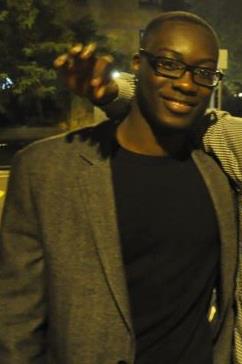
By Ousman Jawneh Jawara

Introduction: My name is Ousman Jawneh Jawara, a third-year student pursuing a BA in Tourism Management. I was thrilled to be selected to present my project, “Tourism in Gambia: Challenges and Opportunities,” at the London Student Sustainability Conference hosted at Imperial College in London. This research topic has been a source of inspiration for me for over six years, shaping not only my academic journey but also my commitment to contributing to sustainable tourism development in my home country. 

Background: The Gambia, nestled in the heart of Africa, boasts a rich tourism history, abundant natural resources, UNESCO heritage sites, stunning beaches, and a delightful climate. Despite its small size, tourism plays a significant role, contributing 20% to the national GDP and fostering overall development. However, this growth is not without challenges, including climate change, environmental degradation, economic leakage, and a lack of comprehensive tourism policies. 

Research Rationale: My project aims to delve into the reasons behind the frustration in tourism development in The Gambia despite its vast natural resources. Key questions include understanding the draw factors for tourists, the impact of tourism on households, and its contribution to the national economy. Additionally, the lack of academic research in this area motivates this study, aiming to bridge the existing gap in knowledge. 

Passion for Sustainable Tourism: What compelled me to present at LSSC24 is the deep-seated passion, love, and dedication I have for my country. I am committed to achieving sustainable tourism development through research and promoting responsible tourism that not only benefits the economy but also safeguards our planet and involves local communities. Representing my university at this level is an added honor and responsibility. 

Acknowledgments: I extend my heartfelt appreciation to Dr. Fatemeh Mohamadi, my project supervisor, for her unwavering support throughout the presentation process. Special thanks to Andres Coca Stefaniak for inspiring me with his knowledge on sustainability, Samantha Chaperon, Lauren Siegel, Isabella Ye, and to all the dedicated lecturers from the Department of Tourism and Events. 

In sharing my research, I aspire to contribute to the discourse on sustainable tourism, fostering positive change in The Gambia and beyond. 

Embracing Sustainability and Student Leadership: My Journey as a Volunteer at LSSC24 

By Ishan Thakkar

Hello, I’m Ishan Thakkar, a student pursuing International Business at the University of Greenwich. With a fervent interest in sustainability and a deep appreciation for nature, I am always on the lookout for opportunities that allow me to make a positive impact. My journey as a volunteer at the London Student Sustainability Conference 2024 (LSSC24), hosted at Imperial College London, was a testament to my proactive approach and commitment to environmental stewardship. 

As I sit down to pen my thoughts on my recent volunteering experience at the LSSC24, I am filled with a sense of pride and fulfilment. This marks my second year of volunteering at this prestigious event, and with each passing year, my passion for sustainability and student leadership grows stronger.  I assisted presenters and organizers in ensuring the smooth execution of the event. One of the most rewarding aspects of volunteering was the opportunity to engage with presenters and learn about their sustainability initiatives first-hand. Their passion and commitment to driving positive change left a lasting impression on me and reinforced my belief in the power of collective action. 

Proudly student-led and organized by ten universities, LSSC24 showcased the collective efforts of students in addressing sustainability challenges. The commitment of the Student Delivery Group was evident in every aspect of the conference, infusing it with a student perspective and ensuring its success. 

It has reaffirmed my commitment to sustainability and ignited a newfound determination to make a meaningful impact. Therefore, I am excited to announce that I will be working on my own sustainability initiative over the coming year. My goal is to develop a comprehensive project that addresses a pressing sustainability issue and showcase it at the upcoming LSSC25. I eagerly anticipate becoming one of the presenters as well. I am eager to contribute to the ongoing dialogue on sustainability and to inspire others to join me in taking action towards a more sustainable future. With determination and passion, I am confident that together, we can create a more sustainable world for future generations. 

My experience in the Student Delivery Group at LSSC24 

By Michelle Kossowski

My name is Michelle Kossowski and I am a first-year international law student from Canada. I joined the university’s Sustainability team as a volunteer in September 2023. Ever since then, I have supported Clothes Swap events and was a member of the Student Delivery Group for the London Student Sustainability Conference 2024!

I am drawn to the sector of sustainability because improving the environment has a direct effect on people’s quality of life. I believe sustainability is not just about improving the current quality of life, but ensuring it keeps to a high standard in the future. The issue of fast fashion interests me because I often see my peers making unsustainable fashion choices due to the rapidly changing trend cycle. I hope to educate others on the social and environmental impacts of unsustainable fashion. I am also intrigued in the intersection between sustainability and law because the law can be a mechanism to prevent environmental misconduct. I heard about the opportunity of joining the Student Delivery Group from the sustainability team at Greenwich.

I wanted to connect and network with like-minded individuals and my first meeting was electric, as we all had ideas about the event. It was a diverse and welcoming space to give and receive feedback. I settled as the conference’s Social Media Manager and my responsibilities were to create promotional content and content on the day. The opening ceremony of the conference was already filled with excitement and hope.

A highlight of the ceremony was a speech given by Dr. Omnia El Omrani, who is a Climate Change and Health Junior Policy Fellow at Imperial College London. She talked about her work in promoting a health-focused approach to sustainability across the world and how she presented youth efforts on climate and health at COP28 UAE. This set an inspirational tone for the day!

Although I was running around the building with the student photographer getting the perfect shots for social media, I found the time to sit down for a presentation. I listened to Niso Khamraeva’s presentation, “Saving the Aral Sea,” which focused on a region of the world that was completely new to me, Karakalpakstan. She discussed the gender and climate impacts of the community’s diminishing water source and finished the speech with the insightful question: “If every specialist brought with them a bucket of water, would the sea be filled again?” After the presentation, I went to conduct short interviews with the workshop leaders. It was a comfortable atmosphere and the lecturers I spoke with were open about their experiences and motivations surrounding the LSSC24. Attending the LSSC24 was an enriching experience to learn more about sustainability from a student perspective and I intend to foster all the connections I made.

LSSC24: Creating opportunities for students to shine 

By Fariha ‘Faz’ Ahmed

Hi, I’m Faz Ahmed, Sustainability Projects Assistant at The University of Greenwich. I became a part of the UoG fabric around 5 months ago and one of the first tasks I got given was to be involved in the London Student Sustainability Conference 2024. Now, in all honesty I had never heard of this conference (which is shameful considering I just recently graduated in sustainability from a London university), so I turned up to the meetings with very little clue and first-day jitters. 

But what I found was an inspiring group of higher education professionals gung-ho in creating the best and most impactful experience for students interested in a topic near and dear; sustainability.  

Steering group leader, Arthur Shearlaw, spear-headed the event to what it is, ensuring everyone was on the same page, and doing a lot of the less than exciting work; the dreaded admin. I was lucky to have UoG Sustainability Manager, David Jackson to hold my hand through the process and make me aware of the ins and outs. Apart from these shout-outs it was just wonderful to meet such an eclectic group of varied people ranging from lecturers, sustainability professionals and people new to higher education, just like me, who were truly enthused to share their knowledge and experiences in sustainability. 

Now, when it comes the actual event, I made the rather rash decision to manage the student volunteers who so kindly gave up their time to make the event what it was. If I’m being honest, the role did make me want to scream at times, especially when I was running around like a headless chicken on the day. However, the screams quickly turned into smiles once I met such a broad range of young, passionate students with real interest in contributing to how our world is shaped.  

The experience was incredible, and I’ll leave it at that. 

Ethical Beauty Buys by Shakela Begum

I love everything to do with beauty. Only several years ago, I had a handful of not-so-good products. It was only when I got my first job that I started to invest in more, better quality makeup.

Recently, I have become more conscious about them though. What ingredients are used to make them? Where are they sourced from? Have they been tested on animals?

As a consumer, I have the power and responsibility to spend my money on whatever I want. So why should I be paying companies that are hurting fluffy, little bunnies? The problem is a lot of us just don’t think too much about what we’re putting into our shopping baskets.

Untitled

I believe that making the first step towards buying ethical or Fairtrade items can be tricky. Where do you start? Well, if we all took some time to read product labels and do some research on the brands that we love, we can learn more about them.

Here’s what I’ve come across in my search for ethical/Fairtrade beauty:

  • Brands that are cruelty free usually show this on their packaging with an image of a bunny or explicitly say so.
  • Brands that are Fairtrade have the logo on their packaging.
  • A lot of the time if you’re unsure about the details, you can easily find your answers online.

Brands that I’ve found:

  • Lush: “Lush consistently works hard to source materials and develop relationships with producers that are as direct and transparent as possible […] Lush uses a variety of ingredients, some of which are not able to be certified Fairtrade.” They also fight against animal testing, hand-make their products and are suitable for vegetarians. (https://weare.lush.com/lush-life/our-policies/fair-trade/)
  • The Body Shop: is leading the way to all things Fairtrade and ethical, as well as running other important campaigns. Their website is jam packed with information with what they are actively doing to help the world. (http://www.thebodyshop.co.uk/values/index.aspx)
  • (by Superdrug): “It’s our vision to be part of what makes you and your life beautiful.” B. is both cruelty free and vegan friendly – the best of both worlds! As well as carrying makeup and skincare items, they also have a range of products for men. (http://www.superdrug.com/brandshop/B)

Sometimes when we think about making the transition to buying ethical/Fairtrade items, we often think about the higher price tag that is attached to them. But, what you should consider is the fact that you’re investing in something positive and supporting these companies.

It has been rewarding to learn so much about ethical/Fairtrade online, and it wasn’t as hard as I thought it would be. There are countless videos on Youtube that talk about it.

When it comes down to the basics, we want to be purchasing from companies that are simply fair. If we all take small step towards investing in better products, we can all live in a better world and know that we are contributing to the greater good.

A week in the life of a Sustainability Projects Officer!

Emily Mason, Sustainability Projects Officer here at the Sustainable Development Unit, gives us a run down of a typical week in the role.

 Monday

I always try and make sure that I start the week at Avery Hill and at my desk. This is my time to catch up on emails and plan out the week ahead. This morning I was reviewing a draft project plan from one of the University’s Sustainability Champions which sets outs what they want to achieve in this years Green Impact program.

Following this I held a meeting with our three Graduate placements Ramone, Jamal and Ryan as we are planning some events and communications for the first every Sustainable Food Fortnight that we are holding at the University in tandem with Fairtrade Fortnight.

Tuesday

The highlight of my Tuesday was meeting with two students from Public Health and Health and Wellbeing, Louise and Denise, who will be undertaking a 40 hour placement with the Sustainable Development Unit. The objectives for the placement are to equip students with some of the soft skills they will needs for employment as well as building up their understanding of sustainability. The outcome of this will be an open forum for students to discuss some of the areas where public health and sustainability overlap.

Wednesday

Wednesday is garden day and although the weather was cold and wet the polytunnel at the garden gives us a perfect base of operations for some planning. All the gardening volunteers get to choose what we plant so now is the perfect time to get the seed order in for anything new we want to plant.

Students from the School of Education getting stuck in at the Edible Garden.

Students from the School of Education getting stuck in at the Edible Garden.

This year we will be trying our hand at some new crops including Melons and Sweet Potatoes. We are also placing our order for some more fruit trees and bushes for the Forest Garden including some Raspberries and Greengages.

Thursday

I spent all of Thursday carrying out internal audits of the catering and cleaning operations at the Medway campus. The internal audits are something that take place across all of Facilities Management’s operations in order to check and improve upon our systems. This is to ensure we are minimising risk to the environment and are able to demonstrate good practice. Our Sustainability Management System which we operated is certified under the British Standard ISO14001 and this March we are up for re-certification.

Friday

A busy day of meetings! First up was the Biodiversity Steering Group where the Head of Grounds and myself presented back to the group on two visits we went on to Canterbury Christ Church University and Kingston University to see how they manage their grounds.

This was followed by the Vice Chancellor’s address where staff got to hear updates about future changes and how we were doing against the University’ strategic plan. Pleased to see the award for our Biodiversity Management was mentioned!

Last meeting of the day was the Sustainable Food and Fairtrade Steering Group which oversees the implementation of the Sustainable Food and Fairtrade policy by all the catering outlets. There are some exciting things coming as part of Sustainable Food fortnight and we shall be sharing more about that over the next few weeks.

Saturday

Now I am not advocating working at the weekend but there were a few interesting things I did on Saturday that overlap with my job. I am lucky to be in a position though where my interests overlap with my work!

I spent an hour in the sunshine with a thermos at the Avery Hill Edible Garden watching and counting birds for the RSPB Big Garden Birdwatch. I have taken part every year since working for them as I know how much the data helps us understand what is happening to our birds. Without a garden of my own the Edible Garden is a lovely space to spend an hour or so at the weekend.

In the evening I took a trip over the river to The Crystal for a piece of interactive theatre called ‘New Atlantis.’ I will try not to spoil the ending here but don’t read on if you don’t want to know any details.

Participants, or agents as we were called, had to gather up as much information about the three departments that make up an organisation ‘New Atlantis,’ which is at the forefront of the fight against Climate Change. It is the year 2050 and the world is very changed, with water resources the centre of much of the human race’s problems. As agents we had to vote on which department we wanted to lead the organisation forward: The Department of Defence, the Department of Reform or the Department of Industry.  I visited each department and quizzed them on their plans and was pleased to find out that some of the people I was talking to were real life scientists from UCL demoing real technologies available to us now and in the near future.

Slightly unsure about what lay ahead!

Slightly unsure about what lay ahead!

I won’t say too much more but there was quite the surprise at the end when the head of the Department of Reform stole all my ideas in her speech and my husband went rogue with ‘Generation Alpha’ and donned a rather scary mask in a bid to take down New Atlantis.

When it came to my vote, I went for the Revolution!unnamed (1)

Sunday

Sundays are for reading and napping!

To find out more about what our staff at the Sustainable Development Unit do please check out the rest of our blog or drop us a question at sustainability@gre.ac.uk or @Sust_Greenwich.

My year as an Avery Hill gardener & forager by Alice Coyle

As the beautiful Autumn colours begin to fade into the stark grey, white and blues of winter, the gardeners’ task changes from a focus on planting, watering, weeding and harvesting to one of replenishing the soil, picking the last of the harvest and tucking the garden in for the winter.

Besides the harvest in the Edible Garden, the campus and its surrounds contains so many edible plants that just ask to be foraged while the internet is a treasure trove of recipe ideas.

We had a bumper crop of blackberries in August, unusually early this year. On my way into work and at lunchtimes, I picked several pounds near Sparrows Farm and along the park cycle tracks.  I took my home made scones, blackberry jelly and cream into work for the Clearing team. Some members had never tasted home-made jelly and all declared it far superior to the bought variety.  The advantage of jelly over jam is that all the not-so-perfect fruit bits get strained out.  I also used  blackberries added to stewed apples and pears, sweetened with honey gathered from the beehives on the campus and sold in the student union shop.

I cooked rhubarb by chopping it into 2-3 cm lengths, spreading the pieces in a baking dish, adding grated ginger and a small amount of water then sprinkling it all with honey or brown sugar before  and baking it for about 20 minutes at 180oC.

Tucked away at  back of the campus I discovered a lone damson plum tree.  These plums are tiny and taking their stones out is a nightmare so I made a batch of damson jelly; just as delicious as the blackberry version and just as nice with scones and cream!

We grew squashes in the garden that made wonderful soup while the courgettes (or zucchinis) were delicious cooked as a main course vegetable. The zucchini cakes I made using a recipe I found online sold like hotcakes at our MacMillan fundraiser during Freshers’ week.

We grew a bumper crop of tomatoes in our polytunnel which are lovely munched straight from the vine, eaten raw with salad or in snacks or cooked with other vegetables spiced with our chilli peppers. I made my first batch of green tomato chutney that I am itching to try but because  it needs to mature it will not be ready until Christmas.

We are still picking the last of the rainbow chard and I have enjoyed steaming it or using it as a substitute for spinach in my spinach and brown rice bake – a family favourite from Delia Smith’s Complete Cookery Course book. My most recent experimentation has been making soup from our Jerusalem artichokes. Combined with onions, garlic, celery, carrots and chicken stock it tasted wonderful.

Spending time in the garden allows me time to relax and recharge away from the busy atmosphere of the Enquiry Unit. I have met so many lovely people there that I would never have met otherwise. Cooking and sharing food that I have helped to grow from seed is a wonderfully rewarding experience, and I cannot recommend it more highly.

Below: homemade jams, chutneys and cakes from garden produce. 

IMG_1359

A walk on the wild side

There is no such thing as a free lunch…perhaps this is not so true especially if you know how to forage.

Foraging for wild food is what humans used to do before we became sedentary and reliant on agriculture. Now people are flooding back to foraging not only for the free food but to connect back with nature and learn more about the different foods that we tend not to find in the supermarket so much.

 Alex and Emily from the Sustainability Team were invited to a foraging day in Abbey Wood by Barracuda Digital, a digital marketing agency. The day was hosted by the Caravan Club and Napiers, to put existing foraging skills to the test and to learn more about what to look out for and the history of these plants in herbal medicine. Below they recount what they learnt and how foraging could become a regular event at the University of Greenwich.

——————————————————————————————

 On a beautiful spring morning we were invited to the Abbey Wood Caravan Club site to meet up with other London bloggers and delve into the world of foraging. We had had some experience of foraging but this was mostly limited to picking Sloes for gin and Blackberries for jam so were looking forward to learning more about the wild food available on our doorstep.

We started the day meeting Monica Wilde who was to be our guide for a 3 hour session around the site and Lenses Abbey Wood.

 Monica is a director at Napiers- the herbal and plant remedy business, as well as an active foraging business.

“I live in a field in West Lothian. 4 wild acres where I am planting and encouraging medicinal and foraging species. I have been fascinated by herbs and plants since childhood. My original interest was sparked by a wild childhood in Kenya, where I was introduced to herbal medicine by a local Kikuyu herbalist at the age of six. We were outdoors most of the time and I remember with joy the freedom of those early years. I love foraging for wild food as well as wild medicine and would happily never visit a supermarket again.”

We started with the innocuous daisy found on most lawns and learnt a fancy dinner party trick that we will definitely be trying out. When picked, daisies will start to close up however once dropped in liquid they begin to slowly open up again. For a spectacular starter you can drop a couple of closed daisies onto your soup and your guests will be impressed as the daisies open up before their eyes.

Alex sampling some bitter cress.

We also took a look at the common dandelion which is a rich source of vitamins, minerals and antioxidants. The leaves can be used in a salad or cooked. Flowers can be made into juice, or added into many recipes.  You can even use the root and dry it to be used in dandelion tea.

There were many things to taste enroute and we sampled wild garlic, wild parsley hawthorn buds, common chickweed, pineapple weed and the favourite of the day which were the buds from a bramble bush which inexplicable taste like coconut!

wild garlic and wild parsely
Foraging for Wild Garlic and Wild Parsley, and learning about the dangers of Hemlock (also known as poison parsley)!

As well as expanding our knowledge in botany we also had a crash course in herbal medicine learning some historical applications of herbs as well as things we could benefit from now. Women have used the seeds from the wild carrot plant for centuries as a contraceptive, the earliest written reference dates back to the late 5th or 4th century B.C.

wild carrot
Wild carrot with its distinctive purple spot.

 Now we may not be trying this one out for ourselves but Emily did try some crushed clove roots on her wisdom tooth and will be reaching for the clove oil in future and not the paracetamol.

clove
Monica cleans and cut some clove roots for Emily’s tooth

Alex found it extremely useful to learn about how to use dock plant sap to sooth stings from nettles. After a lifetime of mindlessly rubbing her hands and legs with the leaves of the dock plant, we learnt how it is actually the sticky sap at the base of the plant that you should rub onto your stings! If you venture into the base of the dock plant, around the point that the leaves divide above ground, you will find a sticky substance ‘as if someone has blown their nose in the middle of the plant’, as Monica described it. It is gross, but very worth it!

dock
Monica ventures into the base of the plant to find some of that magical dock sap

Foraging for food is extremely seasonal, allowing you find a huge variety of foods throughout the year. Successful foraging is also reliant on the ability to follow the food. Summer is a great time to forage on the coast for a huge range of edible seaweeds rich in iodine. Autumn is the perfect time to stock up on mushrooms (reliant on knowing what to pick of course!) and nuts for your winter larder.

We hope to return to Abbey Wood in autumn to see what seasonal changes have done to the wild food available.

emily garlic
The smell of wild garlic gave it away as to what Emily was eating.

Now that we have caught the foraging bug we hope to continue this on our own patch. Learning your area and watching how it changes over the year is a great way to start and we would like to bring together people from around the University who either already know something about foraging and would like to share this knowledge, or people who are interested in learning more.

Foraging is a great way to get outside, enjoy the seasons and connect back with an aspect of nature that was so important in our human history. Foraging can help us connect to history, what we put on our plates, health and or course can be a social event too.

hogsweed
Delving into the hogsweed looking for delicious buds.

Thanks to Monica from Napiers who provided a very interesting and fun day out, and the Caravan Club for having us rummage around the bushes of your site in Abbey Wood. We would like to send special thanks to Barracuda Digital for arranging and running the day and encouraging us to meet other London bloggers!

So if you are interested in foraging at the University or would like to know more about our visit please get in touch at sustainability@gre.ac.uk

Hello from Esin D'Amery! Events and Campaigns Green Ambassador

Esin

Hello, I’m Esin D’Amery. I am a First year Politics and International Relations Student at The University of Greenwich. 20 by age, but many will agree when I say 40 in attitude. Currently I live in the beautiful town of Greenwich, an area I feel extremely excited about due to the beauty and buzz you get when walking around. I come from London and Hertfordshire originally, but my family currently reside by the seaside in Norfolk.

I first encountered the Sustainability Hub via our current Vice President Campaigns and Representation Sabbatical Officer Kyle Marchalleck. Kyle approached and explained about a new opportunity to combine my interest in sustainability and to get more involved with The Students’ Union.  Admittedly I was a tad weary about getting involved with something which is seen to be a brushed under the carpet idea.  However, after attending one of The Sustainability Hub’s Forums, I met the team and saw how enthusiastic they were. They explained the Hub in a way I found completely intriguing.  I quickly applied and got through to the interview. After passing the interview I was offered the job and here I am!

My first opportunity to get hands on came in the shape of the Fairtrade Fortnight and the chance to host a Cooperative Fairtrade Wine and Cheese night. The Cooperative offer many opportunities to work in conjunction with Universities, schools and businesses to share their knowledge and contacts in order to hold events with a great message. The Sustainability Hub applied to hold the event along with many other institutions, and we were successful in our application – we felt it would be a great opportunity to celebrate Fairtrade Fortnight in this manner which we know to be successful. We hope attendees were able to see why it is important to take Fairtrade into consideration with daily life. It is a sad fact that our lack of knowledge and understanding of such controversial and important social issues, cause such drastic drawbacks for the producers we depend on for our daily products. I hoped that by having an actual Fairtrade Producer present for the event, we are able to give attendees a rare face to face opportunity to see the drastic positive change Fairtrade makes to people’s lives.

I worked with the Co-operative to organise the event – it took around 5 weeks to organise it fully. Being a student, I worked around my timetable comfortably and devoted enough time to organise the event without forgetting about my actual degree. The event itself ran perfectly! My amazing team were there helping me out as much as possible and it was fantastic to have them by my side. The Cooperative attended, and along with Daniela Cedron, the Fairtrade wine producer from Argentina. During the event, every last drop of wine was consumed, and every bit of cheese was demolished. All attendees were pleased and I was extremely happy to see such a fantastic turnout! It was great to see something you had initially thought about, actually happen…and successfully! It gave me a great sense of pride in my team and my ability to do my job well!

Hello from Gabriel Aning! Green Impact Green Ambassador

Gabriel

Hey guys! I guess you can never be too late to blog :D! I’m Gabriel, one of the three Green Impact Green Ambassadors. I am a final year Civil Engineering student. Often when I tell people what I study, some of the responses are “WOW!” or “erm, what’s that?”. So I think it’s only fair that I give a brief explanation. According to the Institution of Civil Engineer’s website (ICE) “Civil engineering is all about people. It’s the work that civil engineers do to develop and improve the services and facilities we, the public, all use.”

Civil engineering is relied upon every day for a variety of things: from supplying energy and clean water to our homes, to processing and recycling our waste, to finding solutions to problems like pollution, construction of buildings, bridges, dams, flood defences etc etc. Basically anything that is designed and built a civil engineer has been behind it. (Maybe this wasn’t brief LOL)

Over the period of my studies a passion for the world to have a sustainable future for our water & environment resources grew. Having clean, potable water and sufficient sanitation are vital necessities for a decent standard of living. I know that here in UK that is not a problem but elsewhere in developing countries it is. Therefore, I hope to be a part of creating sustainable water & environment resources worldwide in the future.

So that’s why I’m Green Ambassador! During the time I’ve been a Green Ambassador my understanding and knowledge of sustainability has definitely increased but still there is a long way to go. Learning from my colleagues and various training we have all completed has played a massive contribution. As a Green Ambassador we are working on a unique programme called Green Impact Enterprise which is an environmental awards accreditation scheme run by the university’s student union supported by the National Union of Students (NUS). Currently, we are attempting to promote Greenwich as a centre of sustainable tourism. As a Green Ambassador for this particular programme we offer businesses support and guidance, to achieve recognised Green Impact accreditation for their environmental efforts. It involves a lot of meetings with businesses and organisations which has given me experience I’ve never had before.

I hope to be blogging about the progress we’ve made very soon!

Thanks

Gabriel

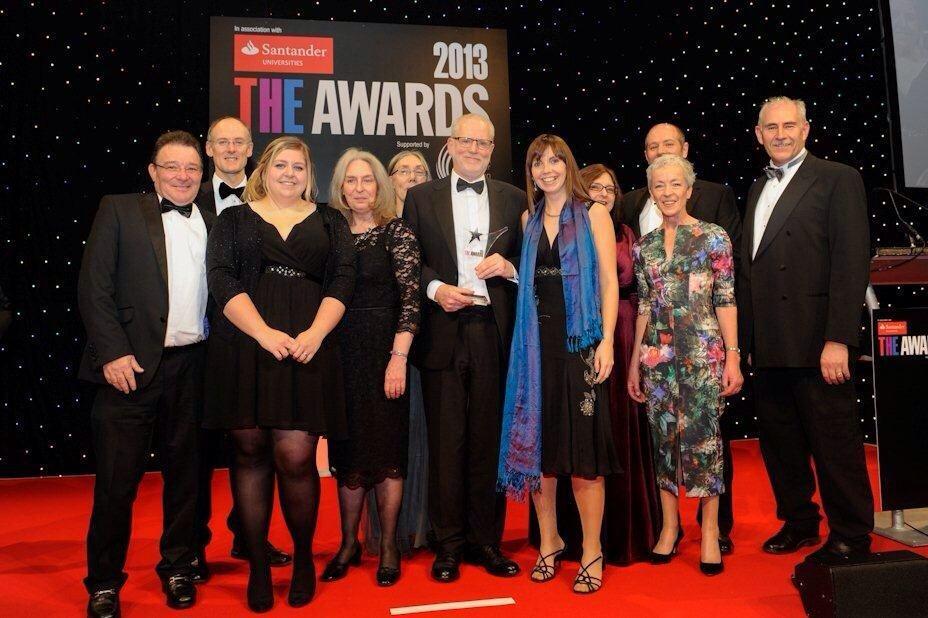
The ‘Outstanding Contribution to Sustainable Development goes to.. … The University of Greenwich’

Last Thursday evening the University of Greenwich was recognised again for its leading work of putting sustainability at the heart of its operations, teaching and strategy. Building on the University topping the Green League, this Times Higher award further recognises the commitment, passion and action of all those people we would like to thank for getting us to where we are:

Our 50 committed and effective Champions are actively integrating sustainable behaviour change through their departments and throughout the University. So far 1,500 Green Impact Tasks have been undertaken and this is set to further increase, helping make sustainability improvements in a whole range of areas, including resource use, curriculum development and student engagement.

The Carbon Management Team, led by Nigel Heugh have helped reduce 22% of our carbon footprint since 2005 and we are expecting a 40% reduction by 2020. This has included investment in scores of energy efficiency projects, plus the installation of 200 solar panels and the planned installation of a ground breaking University of Greenwich innovation for its glycerol Combined Heat and Power system in Medway. Further collaborations with the ILS department have enabled 100% of the university’s PC’s to power down after use.

Pictured from left: Keith Jones, Nigel Heugh, Emily Mason, Mary McCartney, Debbie Bartlett, Peter Fotheringham, Kat Thorne, Amanda Hatton, Gerry Bildstein, Pat Harvey, Patrick Finch (one of the judges).

Staff throughout the institution have been essential to helping us deliver on our sustainability commitments and responsibilities and in achieving our covered leadership status. Without support from throughout the Facilities Management Team, Finance and Procurement, plus staff from departments ranging from EDU to Student Affairs, from Architecture to the Business School and the NRI to Health and Social Care; illustrating that sustainability is relevant and cuts across every department and school here in Greenwich.

We continue to work with the Students Union and students identifying and providing placements and support for applied research illustrating how sustainability is the thread that connects everything we do. We also continue to work actively with and are grateful for the support of the University’s management. Senior support and the integration of sustainability into the University’s strategy is vital to meeting the needs of the future. Our University is now in a great position to continue building on it strengths, to maintain its leadership in sustainability and helping deliver the learning a future sustainable planet requires.

Our expert, supportive and enabling sustainability team (Emily Mason, Alex Giles (plus our SUUG colleague Ana Lopez plus past staff Kat Thorne and John Bailey)) have been essential to the University’s sustainability successes. I’d like to thank them all and invite the University to continue to join us in our exciting plans to take our University through the rest of its sustainability journey.

Overall we have seen sustainability being welcomed as a way of motivating staff, providing meaning and helping meet the needs and values of staff and students. As the NUS HEA report on student attitudes towards, and skills for sustainability states; 80% of students expect sustainability to be included not just the operations of the University sector but also the curriculum. We are well on the way, yet there is still much more do to. The University of Greenwich will only remain a leader with its continued inspired innovation and committed actions to reduce our impacts and help research and teach to enable the sustainable innovations a successful future demands. We hope to help you in this inspiring journey.

Simon Goldsmith (the new) Head of Sustainability

Remember remember the 5th of November: University of Greenwich Sustainability Awards 2013!

Alex Giles gives us her highlights from her first University of Greenwich Sustainability Awards.

—————————————————————————————————-

Although I have only been with the University of Greenwich for 3 months, when it came to hosting the Sustainability Awards 2013 I could really appreciate the cross-departmental buy-in and support. Everyone in the room had contributed or been involved with Sustainability in one way or another, and there were many others dotted around the University who could not make it on the day.

We kicked off the day by updating the attendees on sustainability at the University of Greenwich, including our carbon management plan, water, waste and reuse, biodiversity, food, travel, curriculum, student engagement and Green Impact.  We also reflected on our current accreditation of ISO14001, the business school’s perusal of ISO2012(1) sustainable events accreditation and our Fairtrade University status. We proudly spoke of our sustainability achievements of coming 6th place in the People & Planet Green League 2013 and that we’ve been shortlisted for the Times Higher Education Award for Outstanding Contribution to Sustainable Development. Quite a list I’m sure you’ll agree. It is a KPI of the University to stay in the top 10 in the Green League, but we’ll have to prioritise where to focus our efforts. Our top 3 priorities looking forward will be scope 3 carbon emissions, sustainable procurement and ethical finance.

hub bannerWe also introduced our new Sustainability Hub, a partnership between the Student’s Union and the University that will engage students in sustainability and provide outreach to the local community.  The Hub will employ four students this year and eight students next year to act as Green Ambassadors. These Ambassadors will work with local businesses, colleges and schools to deliver sustainability training and, for those lucky shops and colleges, the Green Impact behaviour change project. Amongst other projects, the hub will also expand food growing at Greenwich, with a vision to open up a student- led farmers market.

The awards! C. Patrick Hollins

The awards! C. Patrick Hollins

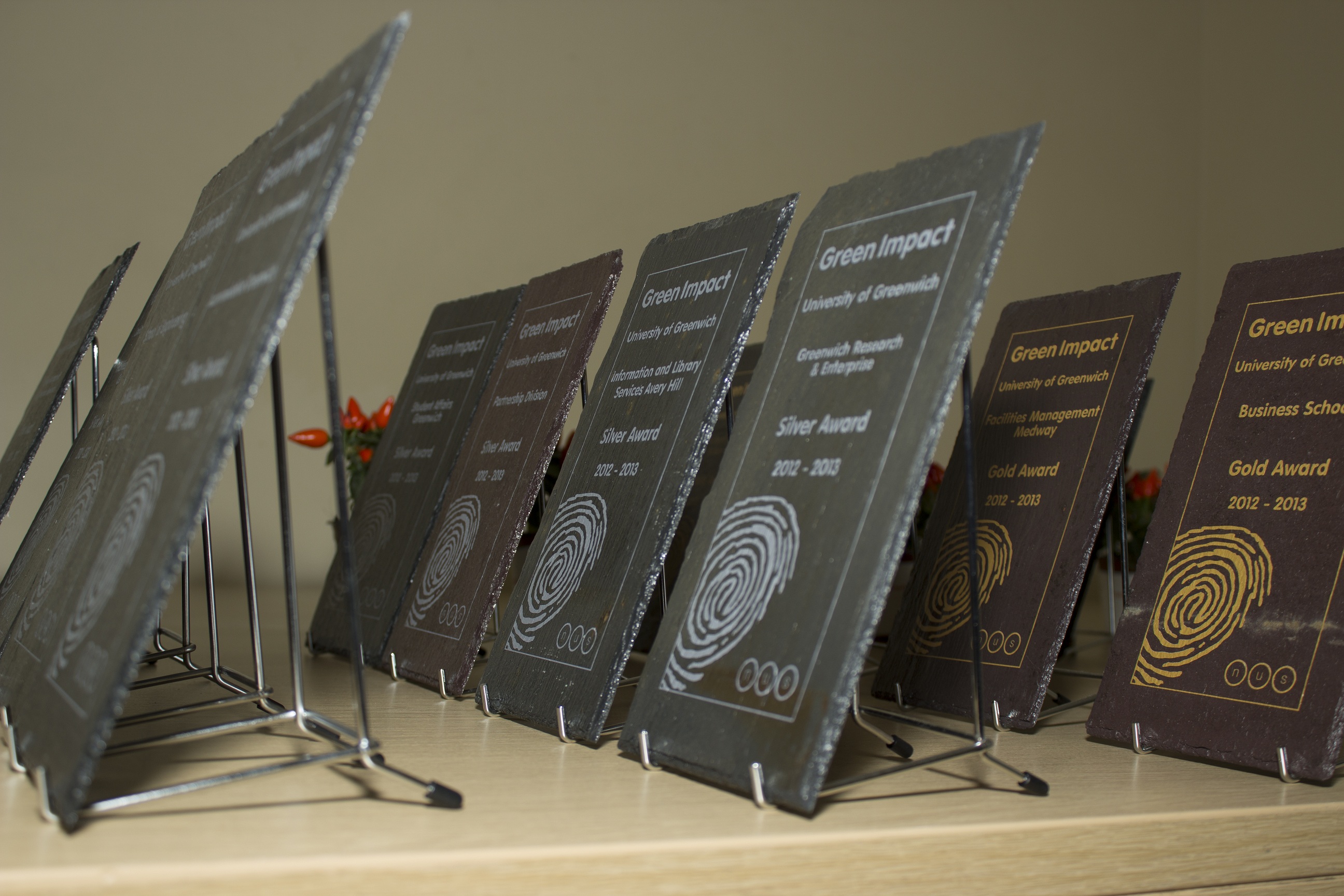
For our Green Impact Awards, we gave out 6 ‘Working towards Bronze’ awards, 7 Bronze Awards, 8 Silver Awards and an outstanding 5 Gold Awards! This year we are introducing the ‘Green Impact Excellence’ Award, which will give the opportunity for Gold-winning departments to create and manage a sustainability project within their department. These teams have demonstrated that sustainable behaviours are embedded in their department through achieving their Gold Awards; their excellence project will allow them to explore how to enrich sustainability in their department, whether that is through the curriculum or communication. We already have a couple of interested teams exploring and planning potential projects, so watch this space for more updates of how they’re getting on.

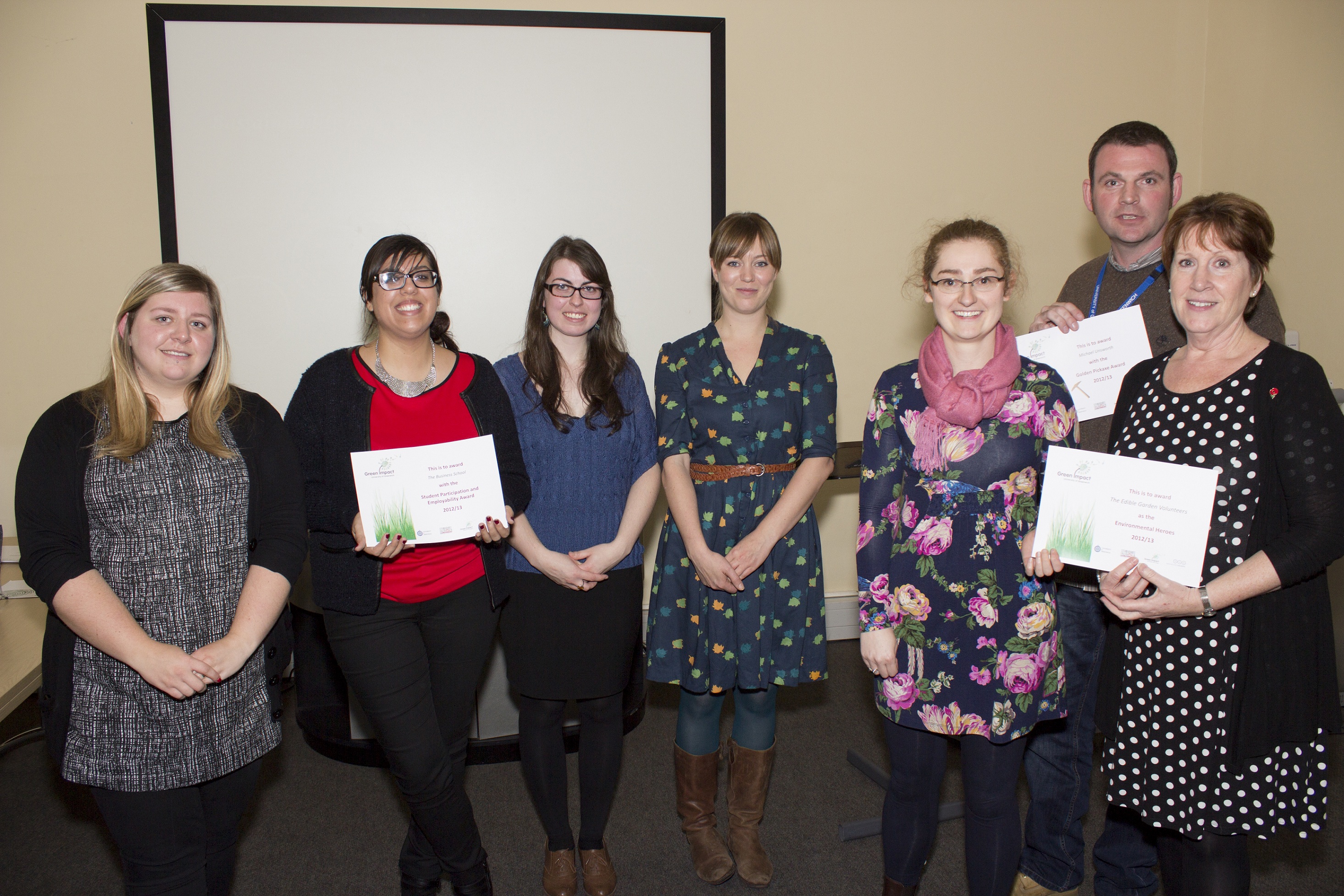
In addition to our Green Impact Awards, we gave out 9 Special Awards to individuals or departments for their continued and dedicated contribution to sustainability in their department. These included:

–          Be the Change Award – Paul Harvey from Sodexo

–          Carbon Reduction Award – Jon Hudson from the Building Services Team

–          Sustainability in the Curriculum Award – Charlotte Jeavons from Public Health

–          Environmental Hero Award – The volunteers of the Edible Garden

–          Golden Pickaxe Award – Michael Unsworth, Head of Grounds

–          Green Impact Golden Labs Criteria Award – The Natural Resources Institute

–          Student Participation and Employability Award – The Business School

–          Positive Deviant Award – Caroline Troy from the Natural Resources Institute

–          Student Sustainability Champion Award – Lauren Newberry

Some of our Special Award Winners. C. Patrick Hollins

Some of our Special Award Winners. C. Patrick Hollins

For more information about the awards please contact the Sustainability Team sustainability@gre.ac.uk


Welcoming our new Sustainability Projects Assistant…

Hi, I’m Alex and I’m excited to be joining the sustainability team for a year as the new Sustainability Projects Assistant!

Alex enjoying the views of the fjords in Norway

Alex enjoying the views of the fjords in Norway

I’ve got a background in Physical Geography, so I am a geek in anything from climate change to natural hazards to glaciers. For the past year I’ve been doing an MA with Forum for the Future in ‘Leadership for Sustainable Development’.

forum for the future

My masters course has allowed me to sample sustainability in a range of organisations, from a charity to a local authority, from Bank of America to a multi-national company. It also allowed me to look at the idea of ‘systems change’, for example, how can we cause change for sustainability in the complex food system, or the energy system? I’m looking forward to putting my learning into practice at Greenwich.

I’ll be looking after the Sustainability Management System and helping Emily out with other sustainability projects. These projects include Green Impact and the Carbon Management Plan, and I’ll also be helping with sustainability events such as the Green Week. Green Impact is a behaviour change project where teams are rewarded for their efforts, so get in contact with the sustainability team if you would like to know more! I’m especially looking forward to getting to know the sustainability champions and spotting new opportunities for sustainability at Greenwich.

Greenwich is a leader in Sustainability within Higher Education, coming 6th this year in the People & Planet’s ‘Green League’, and this is what made me so attracted to working here. So far everyone has been friendly and welcoming and I’m very impressed with the garden!

As I settle in, you may see me wandering round the campuses so I hope to meet as many staff and students as possible on my travels. If you have any questions, please feel free to email me at a.giles@greenwich.ac.uk, or if you have any questions about Sustainability at the University of Greenwich then email sustainability@greenwich.ac.uk.