Campus Beehives

At Greenwich, we are committed to sensitively managing our grounds, with our Biodiversity Action Plan (BAP) 2020-2025 outlining how this occurs. To help engagement, education and conservation we have beehives across all three campuses. All of our beehives are managed by external licenced beekeepers.

Read below to find out more about our different apiaries.

Avery Hill – Apiary One – Eltham Bees

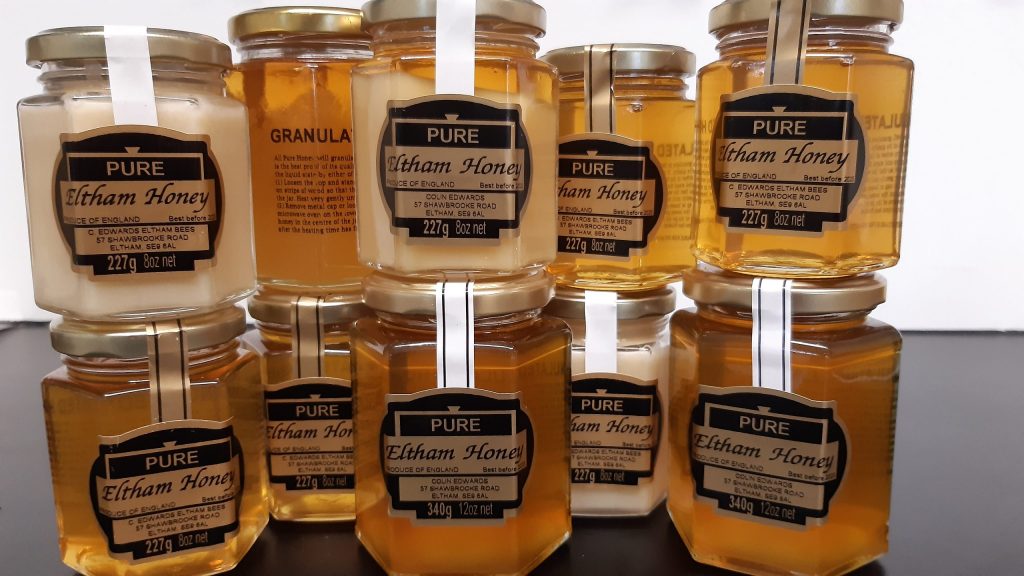
Apiary One is situated behind our pond of the Edible Garden, and is managed by Colin Edwards and Eltham Bees. Eltham Bees are a small family business running 80+colonies around Eltham down as far as Wilmington.

“I’ve always loved working with the bees having worked alongside a beefarmer in my teens!!” Colin Edwards

Sustainability is a big part of their ethos. Their hives are made in the UK from local red cedar. Over the years they moved away from foreign queens and now run all UK bred queens. Our breeders’ queens are UK mated using the Buckfast strain from the West Country & Scotland. They try to recycle and upcycle equipment when possible and recycle their our own beeswax for new wax foundation sheets adding to our sterilised wooden frames that have been in service before.

Eltham Bees produces 100’s of honey jars, find out where to buy them (though we do have some donated for competition prizes!) by checking out their website!
Avery Hill – Apiary Two – John & Christine Hird

Located in the green behind Southwood House, John and Christine Hird have been looking after this apiary since 2012. They have trained a number of staff and students to help over the years, and donate a few jars each year for prizes.

Producing about 80 jars a year, you will also find this honey for sale within the SU Village Shop!

Greenwich – Apiary One – Paul Youthed

This apiary is located by Devonport Hotel, with Paul Youthed kindly taking on its upkeep in October 2020 (following previous keeper Camilla’s move to Scotland).

Paul has apiaries across London and is a National Park City Ranger working with community, business and local government to help make London a better place for bees and people. We cannot wait to try the first jars of honey produced from these hives! You can find out more about Paul on his website.

Greenwich – Apiary Two – Bee-Naturals

Paul Vagg, aka Bee-Naturals is our newest keeper, looking after the apiary that can be found in a truly unique location, roof garden 1 on our Stockwell Street Library. Paul has looked after this area since June 2021. He also boosts the recognition of being awarded the Best Beekeeper of the year, twice! You can find out more about Bee-Naturals including their products for sale from his website.

Medway – Apiary

Medway only has one apiary; known locally as ‘John the bee man’, John has been looking after this apiary for nearly 10 years.

The honey produced from these hives are sold internally through staff in the Natural Resources Institute (NRI), but you will find some as donated prizes from time to time. Around 20 people have been trained through these hives over the years, making it a valuable education tool.

My year as an Avery Hill gardener & forager by Alice Coyle

As the beautiful Autumn colours begin to fade into the stark grey, white and blues of winter, the gardeners’ task changes from a focus on planting, watering, weeding and harvesting to one of replenishing the soil, picking the last of the harvest and tucking the garden in for the winter.

Besides the harvest in the Edible Garden, the campus and its surrounds contains so many edible plants that just ask to be foraged while the internet is a treasure trove of recipe ideas.

We had a bumper crop of blackberries in August, unusually early this year. On my way into work and at lunchtimes, I picked several pounds near Sparrows Farm and along the park cycle tracks.  I took my home made scones, blackberry jelly and cream into work for the Clearing team. Some members had never tasted home-made jelly and all declared it far superior to the bought variety.  The advantage of jelly over jam is that all the not-so-perfect fruit bits get strained out.  I also used  blackberries added to stewed apples and pears, sweetened with honey gathered from the beehives on the campus and sold in the student union shop.

I cooked rhubarb by chopping it into 2-3 cm lengths, spreading the pieces in a baking dish, adding grated ginger and a small amount of water then sprinkling it all with honey or brown sugar before  and baking it for about 20 minutes at 180oC.

Tucked away at  back of the campus I discovered a lone damson plum tree.  These plums are tiny and taking their stones out is a nightmare so I made a batch of damson jelly; just as delicious as the blackberry version and just as nice with scones and cream!

We grew squashes in the garden that made wonderful soup while the courgettes (or zucchinis) were delicious cooked as a main course vegetable. The zucchini cakes I made using a recipe I found online sold like hotcakes at our MacMillan fundraiser during Freshers’ week.

We grew a bumper crop of tomatoes in our polytunnel which are lovely munched straight from the vine, eaten raw with salad or in snacks or cooked with other vegetables spiced with our chilli peppers. I made my first batch of green tomato chutney that I am itching to try but because  it needs to mature it will not be ready until Christmas.

We are still picking the last of the rainbow chard and I have enjoyed steaming it or using it as a substitute for spinach in my spinach and brown rice bake – a family favourite from Delia Smith’s Complete Cookery Course book. My most recent experimentation has been making soup from our Jerusalem artichokes. Combined with onions, garlic, celery, carrots and chicken stock it tasted wonderful.

Spending time in the garden allows me time to relax and recharge away from the busy atmosphere of the Enquiry Unit. I have met so many lovely people there that I would never have met otherwise. Cooking and sharing food that I have helped to grow from seed is a wonderfully rewarding experience, and I cannot recommend it more highly.

Below: homemade jams, chutneys and cakes from garden produce. 

IMG_1359

A walk on the wild side

There is no such thing as a free lunch…perhaps this is not so true especially if you know how to forage.

Foraging for wild food is what humans used to do before we became sedentary and reliant on agriculture. Now people are flooding back to foraging not only for the free food but to connect back with nature and learn more about the different foods that we tend not to find in the supermarket so much.

 Alex and Emily from the Sustainability Team were invited to a foraging day in Abbey Wood by Barracuda Digital, a digital marketing agency. The day was hosted by the Caravan Club and Napiers, to put existing foraging skills to the test and to learn more about what to look out for and the history of these plants in herbal medicine. Below they recount what they learnt and how foraging could become a regular event at the University of Greenwich.

——————————————————————————————

 On a beautiful spring morning we were invited to the Abbey Wood Caravan Club site to meet up with other London bloggers and delve into the world of foraging. We had had some experience of foraging but this was mostly limited to picking Sloes for gin and Blackberries for jam so were looking forward to learning more about the wild food available on our doorstep.

We started the day meeting Monica Wilde who was to be our guide for a 3 hour session around the site and Lenses Abbey Wood.

 Monica is a director at Napiers- the herbal and plant remedy business, as well as an active foraging business.

“I live in a field in West Lothian. 4 wild acres where I am planting and encouraging medicinal and foraging species. I have been fascinated by herbs and plants since childhood. My original interest was sparked by a wild childhood in Kenya, where I was introduced to herbal medicine by a local Kikuyu herbalist at the age of six. We were outdoors most of the time and I remember with joy the freedom of those early years. I love foraging for wild food as well as wild medicine and would happily never visit a supermarket again.”

We started with the innocuous daisy found on most lawns and learnt a fancy dinner party trick that we will definitely be trying out. When picked, daisies will start to close up however once dropped in liquid they begin to slowly open up again. For a spectacular starter you can drop a couple of closed daisies onto your soup and your guests will be impressed as the daisies open up before their eyes.

Alex sampling some bitter cress.

We also took a look at the common dandelion which is a rich source of vitamins, minerals and antioxidants. The leaves can be used in a salad or cooked. Flowers can be made into juice, or added into many recipes.  You can even use the root and dry it to be used in dandelion tea.

There were many things to taste enroute and we sampled wild garlic, wild parsley hawthorn buds, common chickweed, pineapple weed and the favourite of the day which were the buds from a bramble bush which inexplicable taste like coconut!

wild garlic and wild parsely
Foraging for Wild Garlic and Wild Parsley, and learning about the dangers of Hemlock (also known as poison parsley)!

As well as expanding our knowledge in botany we also had a crash course in herbal medicine learning some historical applications of herbs as well as things we could benefit from now. Women have used the seeds from the wild carrot plant for centuries as a contraceptive, the earliest written reference dates back to the late 5th or 4th century B.C.

wild carrot
Wild carrot with its distinctive purple spot.

 Now we may not be trying this one out for ourselves but Emily did try some crushed clove roots on her wisdom tooth and will be reaching for the clove oil in future and not the paracetamol.

clove
Monica cleans and cut some clove roots for Emily’s tooth

Alex found it extremely useful to learn about how to use dock plant sap to sooth stings from nettles. After a lifetime of mindlessly rubbing her hands and legs with the leaves of the dock plant, we learnt how it is actually the sticky sap at the base of the plant that you should rub onto your stings! If you venture into the base of the dock plant, around the point that the leaves divide above ground, you will find a sticky substance ‘as if someone has blown their nose in the middle of the plant’, as Monica described it. It is gross, but very worth it!

dock
Monica ventures into the base of the plant to find some of that magical dock sap

Foraging for food is extremely seasonal, allowing you find a huge variety of foods throughout the year. Successful foraging is also reliant on the ability to follow the food. Summer is a great time to forage on the coast for a huge range of edible seaweeds rich in iodine. Autumn is the perfect time to stock up on mushrooms (reliant on knowing what to pick of course!) and nuts for your winter larder.

We hope to return to Abbey Wood in autumn to see what seasonal changes have done to the wild food available.

emily garlic
The smell of wild garlic gave it away as to what Emily was eating.

Now that we have caught the foraging bug we hope to continue this on our own patch. Learning your area and watching how it changes over the year is a great way to start and we would like to bring together people from around the University who either already know something about foraging and would like to share this knowledge, or people who are interested in learning more.

Foraging is a great way to get outside, enjoy the seasons and connect back with an aspect of nature that was so important in our human history. Foraging can help us connect to history, what we put on our plates, health and or course can be a social event too.

hogsweed
Delving into the hogsweed looking for delicious buds.

Thanks to Monica from Napiers who provided a very interesting and fun day out, and the Caravan Club for having us rummage around the bushes of your site in Abbey Wood. We would like to send special thanks to Barracuda Digital for arranging and running the day and encouraging us to meet other London bloggers!

So if you are interested in foraging at the University or would like to know more about our visit please get in touch at sustainability@gre.ac.uk

Public Health final year placements in the Sustainable Development Unit

Charity Imagor

WP_000758

Greetings to you all, my name is Charity Imagor a 3rd year undergraduate Public Health student at the University of Greenwich. It is indeed a great pleasure to be a part of the University of Greenwich Sustainability Team.

Pursuing a Public Health course at the University of Greenwich   has greatly enhanced and extended my knowledge in acquiring   skills on how to promote health through   the environment, for example, encouraging walking and cycling is a good way of increasing physical activities. Regular physical activities reduce incidences of coronary heart diseases, stroke and   chances   of being obese. Therefore, creating    active, safe and accessible greens spaces   such as parks and community gardens   will   encourage individuals to participate more in physical activities and gaining knowledge in   growing their own fruit and vegetables hence promoting a healthy lifestyle.

In my second year one of the modules   that I undertook was environmental health and Housing. The information and knowledge I   acquired during these lectures raised my awareness that there are certain circumstances that impact greatly on our health if our environment is not cared for appropriately. For example human behaviour that causes   air pollution such pollution from cars and highly industrialised areas, is a leading environmental threat to human health. Particles in the air such as dust, dirt, soot, and smoke are one kind of air pollution that is known to cause health problems.  People exposed to fine particles over a long period of time have more heart and lung problems such as Asthma   than people who are not breathing this kind of air pollution.

The environment is one of the determinants of health and closely links to Public Health. For example the Physical environment   which includes safe water and clean air, healthy workplaces, safe houses, communities and roads all contribute to good health among individuals and communities at large.

I hope through being on placement with the sustainability team, I will gain more Public Health knowledge and skills required to promote environmental issues and personal health including for those around me. I will also be able to share my knowledge and skills in combating the determinants of health with other Health Students on placement and with the Sustainability Team

I am so   enthusiastic and cannot wait to meet with the sustainability team, to learn more from others about the environment in particular its benefits to the community. including how it could be conserved and preserved for the future generations.


Nnenna Nzeh

NnennaHi, I’m Nnenna and I am currently writing my final year project in Public Health. I complement my studies with being one of the Green Impact Assistants and I’m also doing my work experience with the sustainability department. Great! Work experience is one of the requirements needed for the award of the degree that I have undertaken and to help prepare me for the roles ahead. I’ve been allocated to work with the Grey building team. I have undertaken an induction course with an amazing staff of the Green impact Team at the Grey building and this is in relation with the objectives that I have agreed with my tutor and sustainability. The objectives in a nutshell include; examine the interrelationship between behaviour change and health as part of a green impact process; to identify different areas that form part of Green Impact and to highlight other areas of personal improvement.

It’s been great working with Emily and Alex and I’m looking forward to working with the team at the Grey building and to upgrade my experience. The placement will give me a window of opportunity to see different aspects of sustainability and to apply these aspects in public health practice and more over to meet people from other fields of work.


Esther Oyeniran

estherHello, my name is Esther I am currently in my final year studying Public Health at the University of Greenwich.  I love listening to classical music and also play the Viola.  I also love travelling and exploring new places.  My studies at University of Greenwich has been very exciting so far and has widened my knowledge about public health issues both locally and globally

It is a great privilege to be part of the sustainability team working towards protecting the environment from pollution and the effects of climate change.   Necessary to achieving this goal is a clear understanding of how the integrated social, economic and environmental aspects of our world affect sustainability.  These aspects represent a related set of concepts that when considered together form a solid basis from which major decisions and actions can be made with regards to public health.  The issue of sustainability is extremely important because of its immense impact on the present and in particular the future world.  The choices we pursue and all the actions that we make today will affect how we live in the future. We need to make sound decisions at present in order to avoid limiting the choices of generations to come.

As an undergraduate undertaking a work placement with the sustainability team I hope to acquire the necessary skills that will help me in my future job role as a Public Health Practitioner.


Elizabeth Conteh

My name is Elizabeth Conteh. I will be doing my forty hours work experience with Sustainability team. I am a final year student at the University of Greenwich and I study Public Health in the School of Health and Social Care.

I love music and going to church with friends and family. I have no previous experience in sustainability, therefore doing this work experience with the sustainability team means so much because I want to learn more about growing food.

Additionally, I wish to work as health promoter in my future career to promote and increase awareness of the benefits of healthy eating, so for this placement I would also like to gain skills and knowledge in relation to organic gardening and healthy eating that can help me increase my knowledge of healthy eating.


Ruth M’bayo

Hi my name is Ruth, a final year public health student at the University of Greenwich. I’m so excited to join the sustainability team this February and March as part one of my courses. My objectives for this placement are:

  • To be able to identify the significance of the natural environment to public health and wellbeing. In other to achieve this objective, whilst doing my research on different edible gardens, I will try and explore some of the benefit and importance of the edible garden.  This will include identifying how the edible garden promote mental wellbeing, social inclusion, healthy eating and life style and also community development.
  •  To be able to explore the application of environmental policies to public health practice, in particular community gardening. The policies that will be observed during this placement with the sustainability team, whiles researching on the edible gardens will be, the sustainable development food and environmental policies. However I will be exploring the link between the policies and the localism agenda and how it relate to public health practices.  Also I will be able to explore how they are similar and what goals they are all aiming to achieve.
  •  To be able to demonstrate my public health knowledge and skills and highlight any areas for further personal improvement. In other to achieve this objective I will use the knowledge and skills acquired throughout the three years of my course to do research and bring back ideas to the team. Also whilst on this placement I will highlight any area I need to improve on, and develop this as it will be beneficial for future job roles.

I hope this experience will help broaden my knowledge in the sustainability field, by making me understand what sustainable development is all about. Also to understand what link it has to public health. Furthermore I hope this experience will lead to exciting opportunities in the future, and also enable me put my public health knowledge in to practices in terms of what will be required of me in my future job role.  I look forward to meet and be a part of the team.

If you would like anymore information about work experience or internship opportunities within the team, please get in contact: sustainability@gre.ac.uk 

Health and Social Care New Arrivals Event

Once you start asking the question: ‘what are the links between sustainability and health?’, you can find yourself with endless answers. The sustainability team and the department of Health and Social Care here at Greenwich are dedicated to exploring some of those links for the students and research. For example, did you know that NHS England spend £630 million a year on energy? Or that outside gardening is good for well-being? How will the UK health sector adapt to a changing climate and environment, and what are the knock on impacts?

We believe that students should have an understanding of sustainability from their first year at University, including those studying in the Health and Social Care department. So on the afternoon of 4th December 2013, we ran a joint event between the sustainability team and the departments in Health and Social Care. We wanted to get the new students engaged in the fun elements of sustainability and to educate them about how the impacts of their lifestyle choices. The students participated in 2 workshops: carbon speed dating and a festive quiz.

student grp speed datingconvo

During Carbon Speed dating both staff and students were rated as having a low, medium or high carbon footprint through answering some lifestyle questions: ‘how much do you spend on clothes and shoes a month?’ or ‘how would you describe your diet?’. They were then matched with someone with the opposite rating, so people with high carbon footprints spoke to people with lower ones, to share lifestyle choices and experiences. With a goal of networking in mind, the students also attempted a bingo exercise with each other, where they tried to find others with particular habits. For example, have you volunteered at Avery Hill Community Garden, or do you leave electrical items on standby?staff2

In the festive quiz the students battled it out in teams and answered questions on the social, economic and environmental impacts of the festive period. We discussed what easy lifestyle changes we could all make and shocked the group with some figures. Did you know that 60,000 were predicted to be reliant on a Trussell Trust food bank over the festive period? Or that 80,000 tonnes of old clothes would have been thrown away over this period in the UK (that’s 4 million suitcases)?

We would like to thank Veronica Habgood and the rest of the organisation team, as well as the volunteers on the day, for their hard work and enthusiasm. Furthermore,  congratulations on putting on a very tasty bake sale!staff group


Chelsea Fringe 2013

The University of Greenwich held its first community event at the Avery Hill Community Garden as part of the Chelsea Fringe festival. Dragos Buharu, a 2nd year Business School student studying BA Business with Marketing was in attendance and here he gives you his perspective of the day.

Chelsea Fringe 2013 –Even the weather couldn’t ruin our fun!!

The Chelsea Fringe Community Event was hosted by the University of Greenwich at the Avery Hill Campus on the 7th of June. As an intern with the sustainability team I was there to find out what makes this event special.

“The Fringe is all about harnessing and spreading some of the excitement and energy that fizzes around gardens and gardening. The idea is to give people the freedom and opportunity to express themselves through the medium of plants and gardens, to open up possibilities and to allow full participation.” Chelsea Fringe.

The event at Avery Hill in keeping with the Fringe’s ethos aimed to celebrate the spirit of community, mixing the unique excitement that can be found around a beautiful edible garden.

Chelsea Fringe Event 2013: A group of people in a park gathered around vegetable planters.

Chelsea Fringe Event 2013

Dragos’ Chelsea Diary

After having turned up early to help out with last minute touches, I accompanied James Hallybone from Roundfield and some of the University’s Sustainability Champions on a tour of the forest garden.

The tour was interesting, educational and very surprising. At first, when you look around you just see tiny trees but when you learn about what they are the effect is jaw dropping. At one point we came across what looked to me like just a ball of twigs looking slightly out of place, then it was introduced as pomegranate tree! The same experience followed when faced with almonds and bamboo. All I could think was: “Seriously?!” while looking left and right for some panda to jump out at us!

Mulch matting round one of our forest garden trees

Having been ‘very’ tired after my exertions we went on to enjoy the fresh foods that Greenwich Community Food Coop and the University had to offer. Let me add there was some very good and refreshing wine present. Greenwich Community Food Co-op (GCFC) was established in 2002 as a co-operative run by the community for the community and started life on the Ferrier Estate, Kidbrooke.

Paul Harvey from Sodexo who cater for the University at the Avery Hill Southwood Site was pleased to be part of the event.

“Sodexo are very committed to sustainable food offers & are always looking at ways of taking this forward.”

The Transport Team enjoying the Sustainable Food Menu from Sodexo

During all of this excitement there was a living wall being constructed by students from the School of Architecture, Design and Construction only feet away, and yes there was a lot of green in there.

Newcome Edwards from the School of Architecture, Design and Construction

Afterwards I decided to check out the bees in the observation hive, brought in by our resident beekeepers from the Ruxley beekeeping group, Colin and Patrick. The Queen was easy to spot from the yellow mark put on her back, and it was clear to see that she was bigger than the rest!

As the event kept going we were joined 2 groups of kids from the Crafty Wizard’s Nursery. They went on a mini beast hunt, accompanied by our very own Emily Mason from the Sustainability Team. The children were very cool and I even got a thumbs up from one of tiniest members of the group. When discovering an earwig and asked why they are called as such, the majority decided: “Because they wear wigs”. Sensible enough answer, right? They also did some planting of their own.

These are only some of the activities that went on, throughout the day there was:

Competitions
Planting
Young beekeepers from Corelli’s School
Seed and Plant Swapping
Orchard tours
Workshops


Who can get the longest peel?

Throughout the day I spoke to lots of people and decided to get some feedback on why people had come and long and what they had enjoyed the most. A staff member from the School of Architecture, Design and Construction came to see what was growing in the garden and to learn more about sustainable food sources. She was particularly impressed with the scale of things, the diversity present and with the maintenance of our raised beds. And yes, a lot of work goes into making them look that good, I myself spent quite a lot of time mowing the grass round the site with a rather temperamental push mower.

While approaching another person I was thinking: “Hmmmm, she looks like she’s having a good time”. Apparently she is pro sustainability and her parents have had an allotment for about 40 years. She was also surprised by the diversity present in the forest garden and believes it to be a very good idea. She was also very impressed by the bees and growth present in general.

The British weather was as unpredictable as ever and after a heat wave all week we encountered a rather heavy downpour but this did not stop us for sure. And what is a bit of gardening without a bit of rain?

Let’s hope the garden continues to grow and more people get to benefit from this project though volunteering and purchasing the fresh produce. It is also a lovely place to hang out as a student and you never know when there might be free food up for grabs!

For more information about the event of the garden in general please contact Emily Mason at sustainability@gre.ac.uk

Forest Garden Plans

As the cold weather persists across London we are waiting for the sun and warmth before we get planting in the community garden again. Volunteers, members of the Sustainability Team and James Hallybone from Roundfield have been discussing what to do for when the springtime arrives.

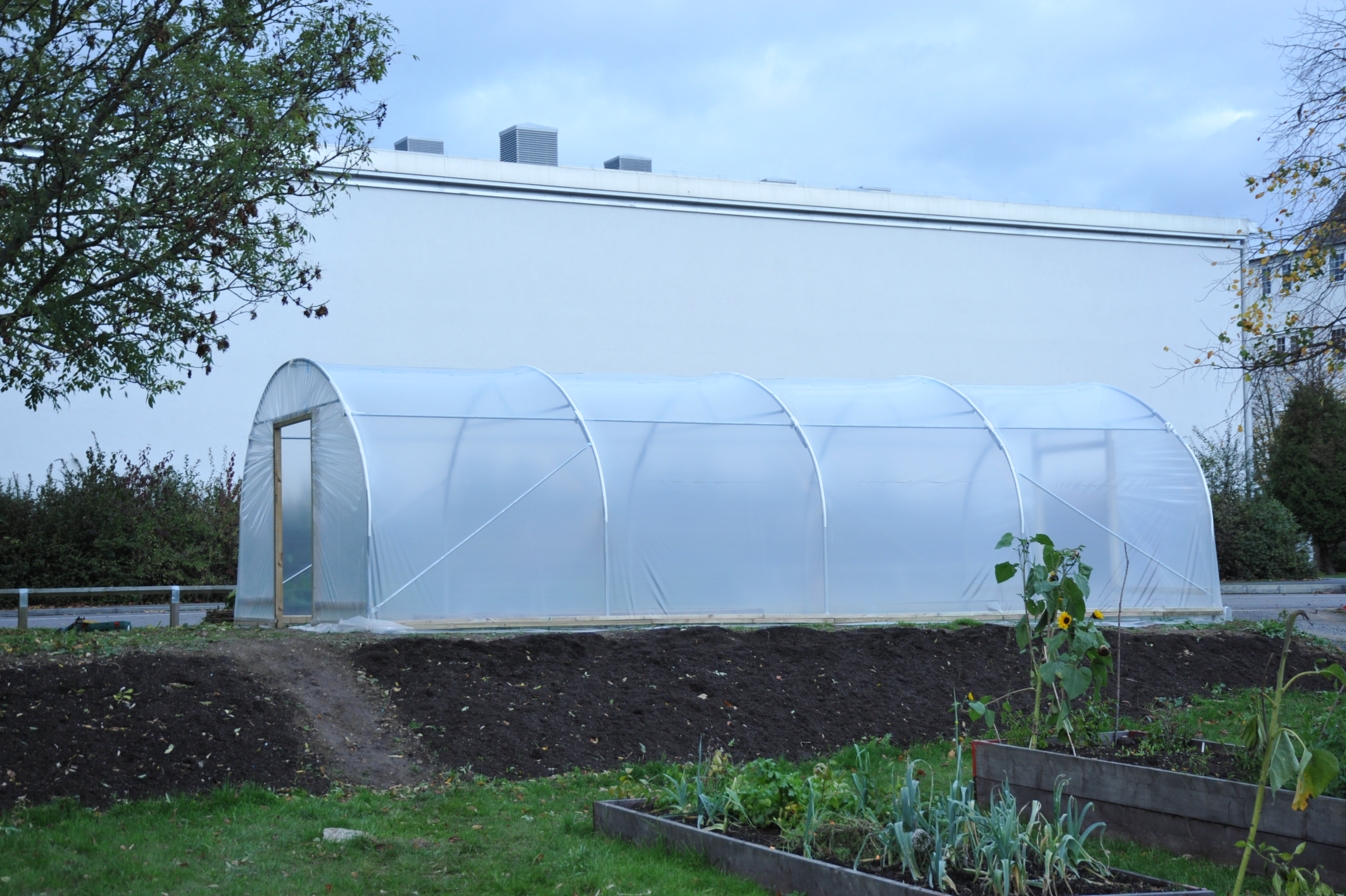
With the addition of a polytunnel to the site late last year the growing season has been significantly extended for us, on top of this we can look forward to starting to plant some varieties that we would have previously been unable to in the local climate and get much better yield from plant like tomatoes and cucumbers that appreciate a little bit of extra warmth.

As we look to the start of 2013 though the first major project we will undertake is the planting of a ‘forest garden.’ Forest gardening is a method adapted from tropical regions in the 1960s for temperate climates whereby the garden is planted to mimic the ecosystem of a forest. The idea is that it creates a low-maintenance garden with yields of fruit, herbs, vegetables and nuts that can be harvested throughout the year.

Here we have the first designs created by Roundfield for the forest garden:

Forest Garden Plans Image
The Forest Garden Plans at Avery Hill
Forest Garden Key
Forest Garden Key

Exciting times at the community garden!

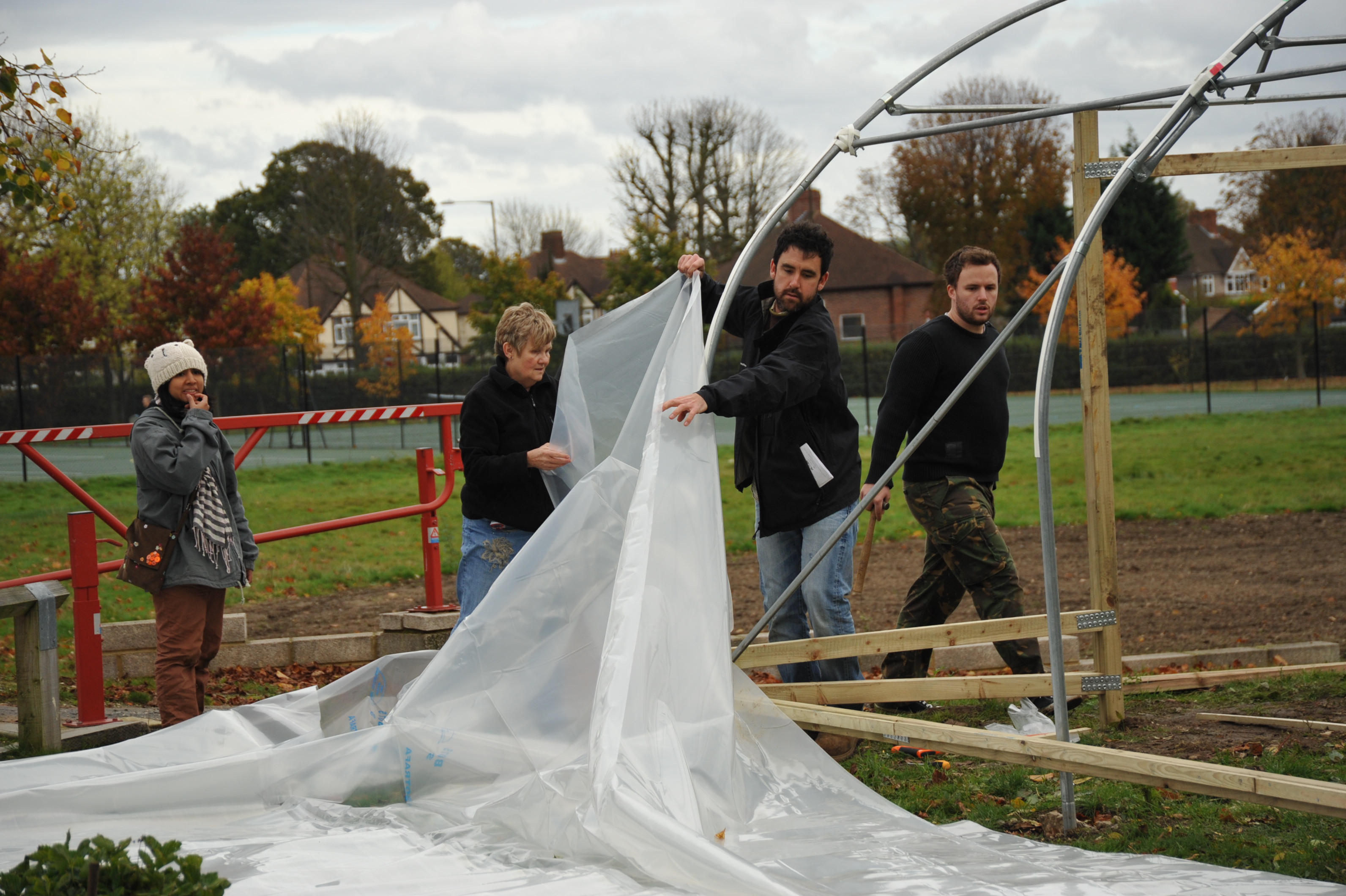
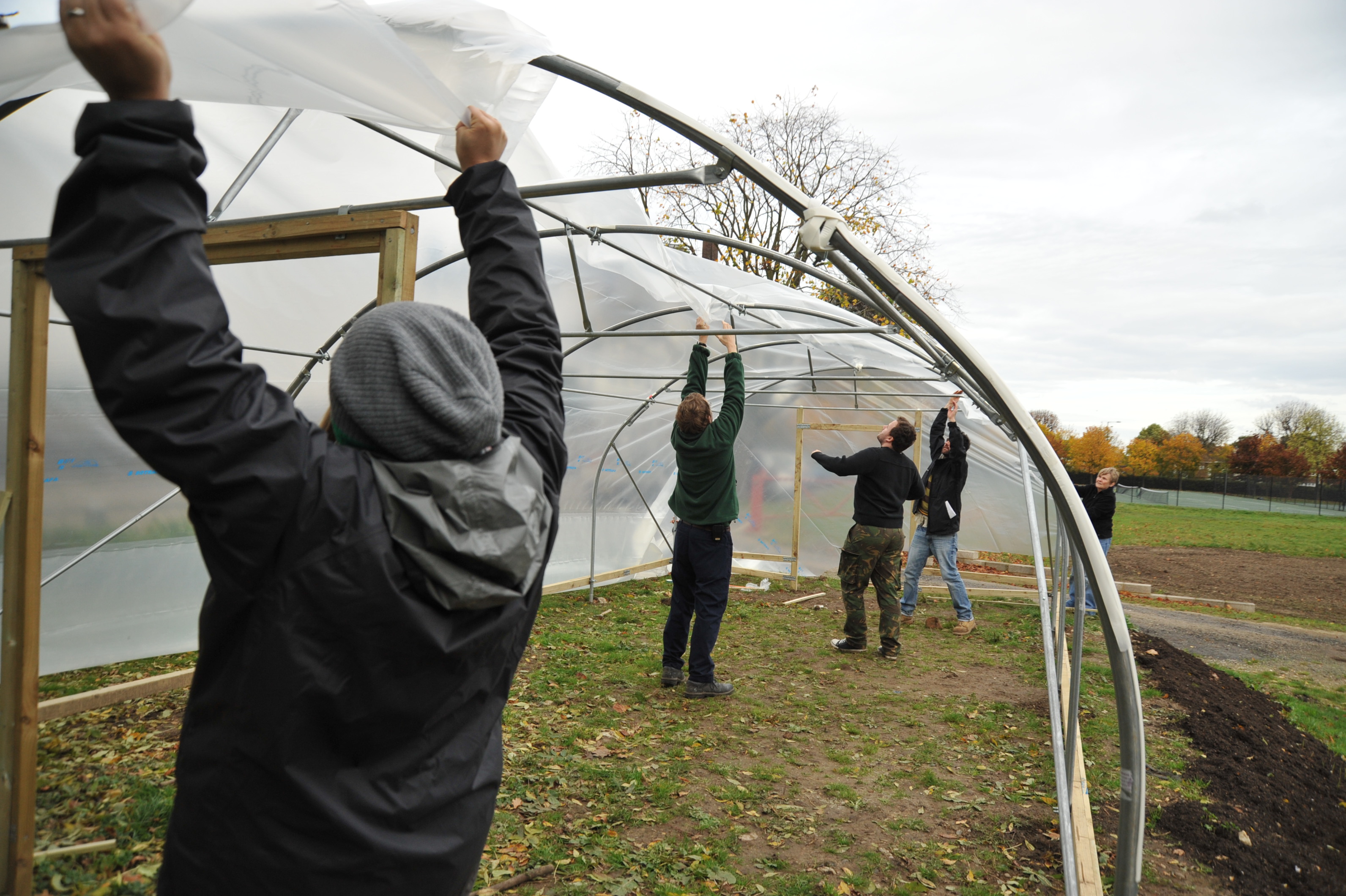
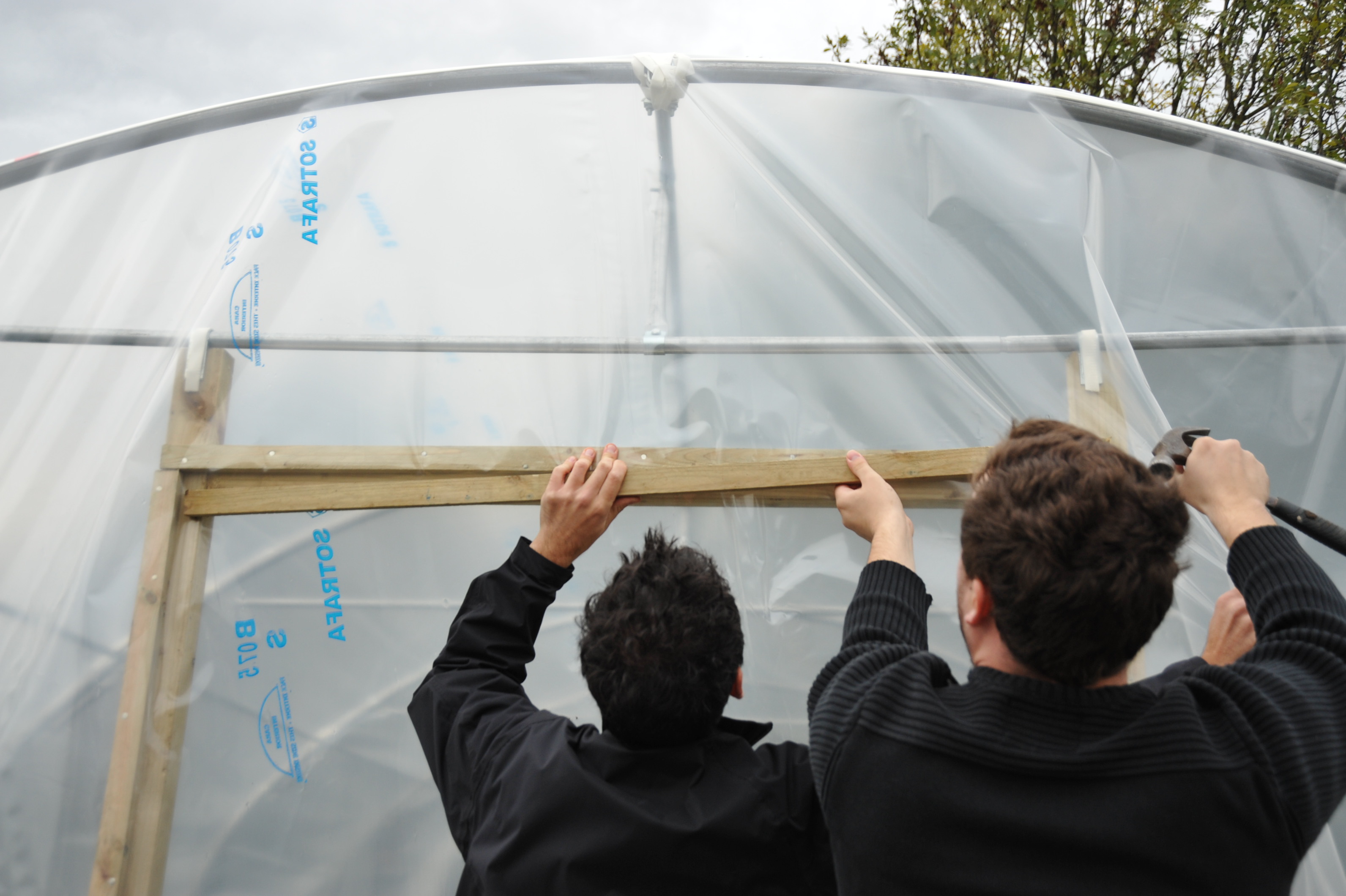
It has been a little bit of a roller coaster constructing the polytunnel for the community garden. We have battled digging through concrete, less than helpful weather and more than a few missing pieces. Last week, however, we managed to prep the frame ready for the polythene covering and despite the high winds and failing light we finally got the cover up and over the frame and secured!

Unfolding the polythene cover

Up and over!

Securing the cover into place

The polytunnel will allow us to extend the growing season and try new varieties of fruit and veg that are a little more sensitive to our British weather!

All the volunteers who have worked on the polytunnel and who have helped keep the garden green while we have been building deserve a massive thank you and congratulations on their perseverance.

The final product - now we just need to put the doors on!

University of Greenwich Bees

This week we are given an update from the various bee hives we have across the  University of Greenwich. Since getting hives at Southwood House on the Avery Hill Campus (looked after by John & Christine Hird) a couple of years ago we have added further hives at Avery Hill, managed by local beekeeper Colin Edwards, hives at Greenwich looked after by Camilla Goddard of Capital Bee and now the Natural Resources Institute (NRI) have installed some hives at Medway too. We here how some of our bees have been getting on this year, starting with the ones at Medway where Jeremy Cooper explains how their first season has gone:

‘After arriving as flat packs, the three bee hives were assembled and installed on the Medway Campus in June, which was later than ideal, but season started slowly and the colonies of bees arrived later than expected. The bees have been busy since then, operating from their hives situated between Hawke and Grenville buildings.

This month saw our first harvest of 37 jars of lovely clear honey, which were distributed to members of the beekeeping group and some NRI managers.

NRI Beekepers group inspecting their hives

NRI Beekepers group inspecting their hives

Since June, we have been learning as we go about bee husbandry. By a happy coincidence, a local bee expert was on the campus when we were making one of our first hive inspections and he (known locally as John the bee man) has been very helpful in training and advising the group of volunteers. All 20 group members have now had the chance to handle frames which are full of bees, and to learn how to tell the queen from workers and drones.

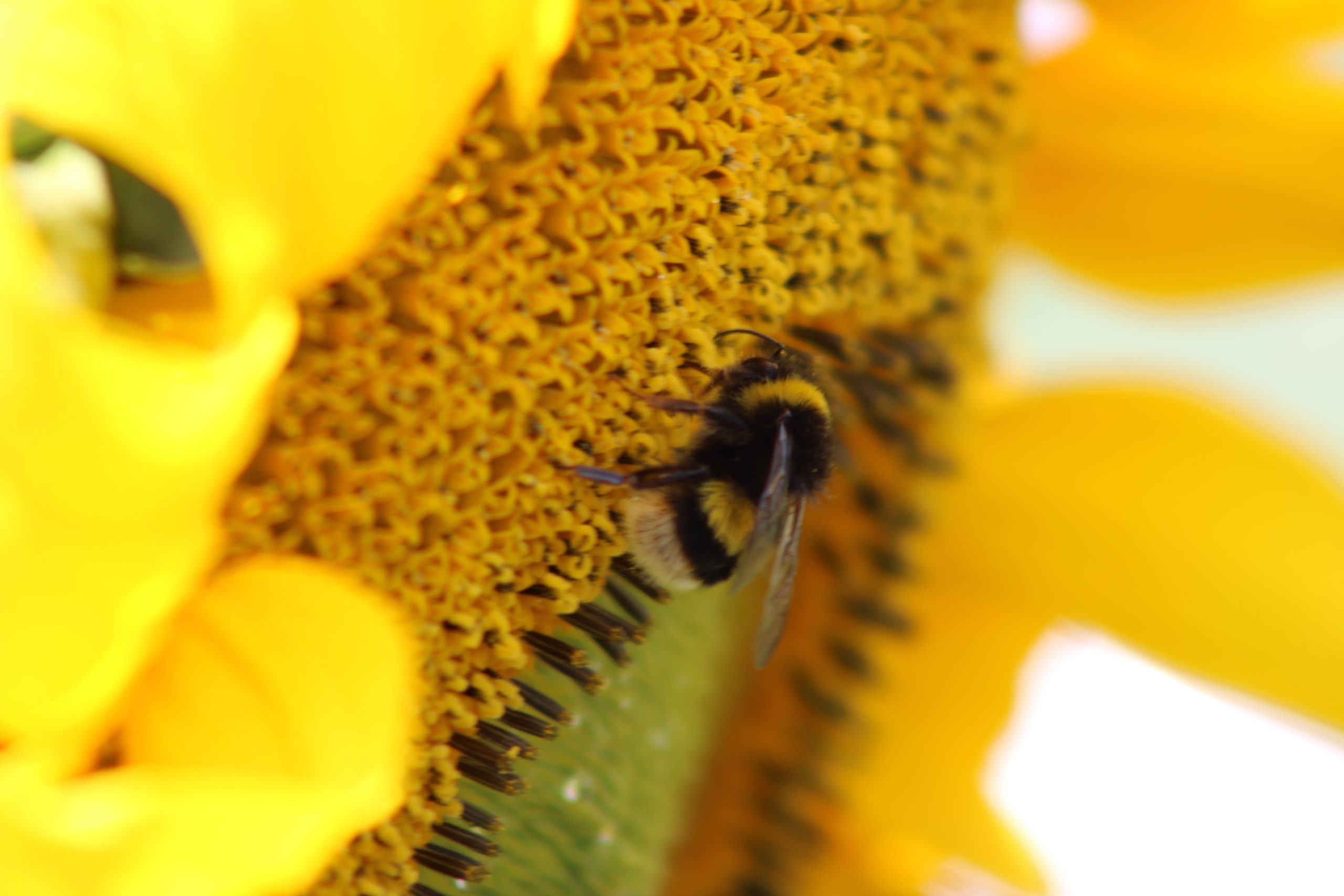
Several people in the group took photographs of bees on flowers, and some have been used on labels for our first harvest. This picture, taken by Mark Parnell’s wife Sue, is one of eight that featured on the labels this first season.

NRI honey bee

NRI honey bee

For the rest of the year there are several jobs to be done, including treating the hives against the deadly mite Varroa, that has been one of the factors to have reduced bee populations in recent years. Other factors as less straightforward, and if we can get the support, members of NRI may do some research in future years to find out more about how to safeguard these important pollinators. In the meantime we are marveling at the way the bees operate (and enjoying the honey!)’

John & Christine let us know how our original hives at Southwood House have fared this year, ‘We extracted [honey] at the end of July, it wasn’t a brilliant yield but better that 2011. As you may have read in the press the weather hasn’t been very kind to bees this year. After extraction it was time for putting the varroa treatment into practice, which takes four weeks.  Varroa is a parasite we cant eradicate but hopefully can keep under control.

After the treatment was complete we then start to feed, we feed the bees as we need to make sure they have enough stores to overwinter.  We feed a solution of white cane sugar mixed with warm water so it dissolves and the bees can then store it.

So now we are up to date, we have been down to see the bees and have hefted (lifted to feel the weight) the hives which seem fine for stores. Within the next few weeks we will put the mouse guards on the entrance and a protective cover round each hive to prevent woodpecker damage.’ In total we have received 60 jars of honey from the bees at Southwood house and still have a few leftover – get in contact with sustainability@greenwich.ac.uk if you fancying buying a jar.

John & Christine looking for the Queen earlier this year

John & Christine looking for the Queen bee earlier this year

Colin Edwards, another local beekeeper also keeps hives at the Avery Hill Campus, ‘The Avery hill bees, having had a rough start this season due to weather conditions, the spring crop of honey was zero.  However, after introducing a few new queens Italian and Buckfast, and a few of my own,  all the colonies have built up well, but the second crop was very low due to lack of nectar flow. All the bees are now feeding well and looking promising for the winter season spent on the meadow,  so we are hopefully looking forward to a better honey crop next year!

Lastly I would just like to thank the staff of the Avery hill campus  for all the help and support throughout the year.’

Avery Hill Meadow Beehive

Avery Hill meadow beehive with woodpecker protection

Camilla Goddard’s bees at the Greenwich Campus were removed on the request of LOCOG and they spent a few months on holiday in London Fields in Hackney and Covent Garden in central London. They are being moved back into the hives as we speak and will be looking forward to being back in Greenwich!

August Progression in the Community Allotment

Our community garden at the Avery Hill campus continues to progress and expand! We now have a beautiful shed where we keep our tools:

painting the shed!

Over the course of the last few week some of the Brassicas crops were badly attacked by nasty cabbage caterpillars. These are often found in large clusters and are easily spotted thanks to their distinctive yellow and black patterns (they can grow up to 2 inches!). Plants should be examinated regularly to prevent the damage or gown under fine mesh netting to stop butterflies laying eggs. Beneficial wasps are particularly effective at controlling these pests, or else they can be picked off by hand. Unfortunately we had to remove some badly damaged plants, such as cabbage and radishes.

leaf damage from cabbage caterpillars

radishes were cleared - because damaged by caterpillars

In the meantime, all of the cucurbits are growing particularly vigorous, they require a lot of space and therefore are expanding out of the bed:

cucurbitaceae family bed

The resuts are some delicious courgettes, pumpkins and squashes coming in different varieties and shapes:

growing courgette

discovering a massive squash hidden among the leaves!

very heavy!!

This summer the weather has been particularly wet and tomatoes and peppers have struggled but are now slowly ripening:

ripening tomatoes

shiny pepper

We also harvested our first carrot!

very long carrot (though a little bit pale!)

We also decided to experiment a bit and sow some peas where potatos and tomatoes used to be. In a rotation system, leguminosae plants (such as peas) follow the “heavy feeders” plants (such as tomatos) which use up a lot of the nutrients in the soil: peas roots in fact will fix nitrogen, promoting soil fertility. August is probably not ideal time to sow peas because they often struggle in cold wet soil – we might have to grow them under cloches. However we hope the weather will be relatively mild until October – just like last year – and even if the plants will not produce many pea pods, they will still function as green manure that improve soil fertility.

sowing peas

We also transplanted some young tiny leeks into another bed:

lifting the leeks cluster - they were closely spaced in this patch of soil

As a general rule, when transplanting young plants it is important to minimize root damage: for this reason we should always handle them by the leaves and try to keep as much soil on the roots as possible.

Pam transplanting the leeks

Before transplanting, we first made 6 inches deep holes, 8 inches apart in the bed; we watered well the group of leeks, these were then divided one by one with the help of a fork; each leek was dropped into a hole and watered in order for the soil to gently settle around the roots.

job done! after transplanting, wilting is common but plants will eventually recover

And finally, some beneficial wildlife: a hoverfly

tiny hoverfly checking on the pumpkins