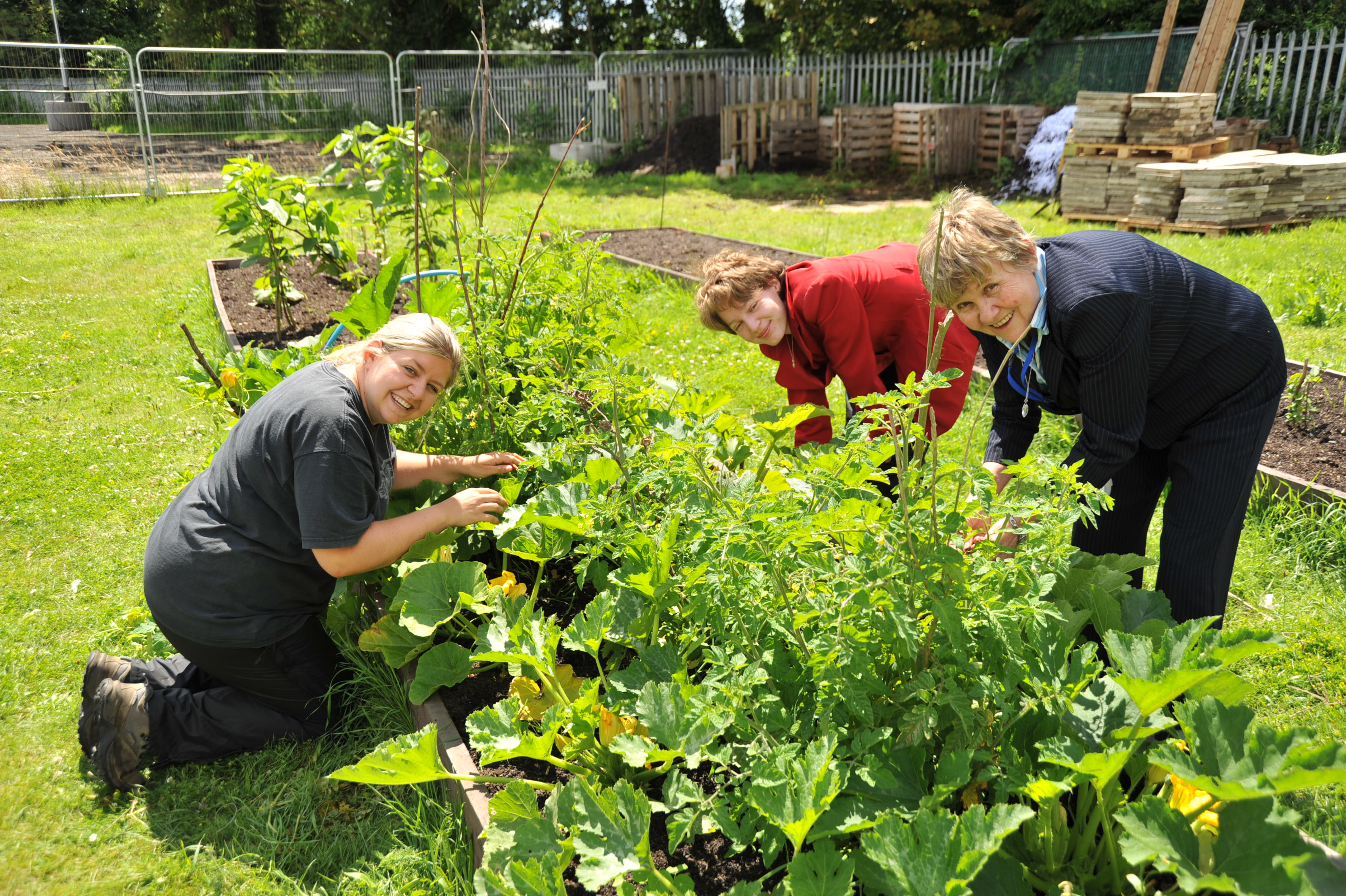
Introducing Patrick: an education and training Green Ambassador in the Greenwich Sustainability Hub!

Hi, my name is Patrick and I am one of the new Education and Training Green Ambassadors at the recently established Greenwich Sustainability Hub.

PatrickA little bit about myself 

I am a third year Building Surveying (Commercial Management) student at the University of Greenwich. Originally from Stoke on Trent, I have a firm understanding of sustainability and green issues from my school education, which carried a heavy environment emphasis, as well as studying sustainability modules at university.

My passion for the environment has change forms over the past few years, from an academic side, through to my work as a photographer. Working as a photographer I found a new appreciation for the environment and a greater understanding of why it’s important for us to look after it. Many people across the university will recognise me for my photography work at events, but not many know that the real creative, hobby side of this interest is based on nature photography.

My hope is that in the future as a built environment professional I can merge my passions for construction and sustainability to help drive a positive impact on the industry, towards a sustainable future.

My role at the hub

Working with my colleague Maria I will be creating and delivering workshops on a wide variety of sustainability topics to students and communities across all ages.

This is an ambitious project that forms part of the Hub’s bid for funding from the NUS. We hope that, over two years will we connect with and deliver workshops in 11 schools or colleges. We are just beginning our work now to contact and get involved with these schools.

We hope to engage with many different people from all backgrounds to help to educate them on sustainability and why it is important for us to enact a behaviour change in our lives.

To the future

I will be trying to blog as much of our journey as possible, as well as my own journey to improve my own sustainability. There will hopefully be, chilli growing, workshop ideas and examples and updates of our success in delivering education and training on sustainability.

Feel free to follow the journey and drop us a line with any comments, questions or ideas.

Thanks for reading.

Patrick Hollins

Introducing our new Fairtrade intern: Daniela Gangan!

daniela photoI am Daniela Gangan and I will be joining the Sustainability team as a Fairtrade intern.

I am a first year student at the University of Greenwich, currently studying Business with Law. I moved from Romania to the UK for a change of environment, educational system and way of thinking. I like challenges and getting involved in a variety of projects in order to gain experience. Sometimes I volunteer and I like getting to know new people from different backgrounds. I am passionate about sport, music and photography.

I consider this internship to be a great opportunity to get involved with sustainability at Greenwich and to learn more about ethical business and the importance of supporting local producers. Furthermore, I am excited about the chance of studying sustainability in more detail, a growing movement in the UK. In addition to the knowledge gained from my course, my Fairtrade internship will allow me to understand better the consumer insight of ethical brands and give me experience of event organization for Fairtrade Fortnight. Studying Business with Law, I would like to develop professional skills that can help me in my future career. Similarly, ethical and positive businesses are essential to sustainability. I believe that getting more people involved in sustainability will improve the chances of moving to a sustainable society.

What is Fairtrade?                                            FT logo

Fairtrade is about better wages, decent working conditions, local sustainability and fair terms of trade for producers in developing countries. It has a strong vision of justice and sustainable development in all trade structures and practices.

The Fairtrade Foundation is a charitable organization that has expanded to Europe, Japan, North America, and Mexico, with the launch of the first Fairtrade label Max Havelaar in 1988. The Fairtrade major principles are to cope with poverty and injustice through trade, and to bring together producers and consumers in a vision to move to a more sustainable society. Therefore, for certain products (such as coffee, cocoa, cotton and rice) Fairtrade only certifies small farmer organisations. Fairtrade standards protect workers’ rights according to International Labour Organization conventions, including health and safety standards, freedom of association, collective bargaining, no discrimination and no bonded or illegal child labour. Since Fairtrade’s beginnings in the 1980s and the launch of the current Fairtrade Mark in 2002, Fairtrade has become the most widely recognized ethical label in the world and is a growing brand in the UK. It is a chance to start protecting natural resources, to produce goods with care and to convince customers that Fairtrade products are better in the longer-term. However, it needs a lot of dedication and involvement to find and to create best deals for farmers and to gain the trust of people who would invest in a brighter future, thus the Fairtrade Foundation work hard in order to do this.

Fairtrade is about trust and transparency. It is a social initiative that has opportunities for students to get involved in a wide range of projects, such as Fairtrade Fortnight.  I am very concerned about the ethical and the social responsibility in business.

Therefore, Fairtrade is a great method to promote awareness and create an alliance of ethically thinking people who will help build community.


Fairtrade Fortnight!

Fairtrade Fortnight (24 February – 9 March 2014) marks the launch of a special campaign that aims to transform the banana industry. It is a campaign initiating the movement Make Food Fair.

fairtrade bananas

To support the Fairtrade Fortnight everyone can pre-order event packs, stickers, T-shirts, ethically sourced bananas suits and inflatable bananas. Moreover, there is free access to recipes, quizzes, presentations and a media toolkit.

The University will be participating in Fairtrade Fortnight, and if you would like to get involved please email sustainability@gre.ac.uk!

stick with foncho


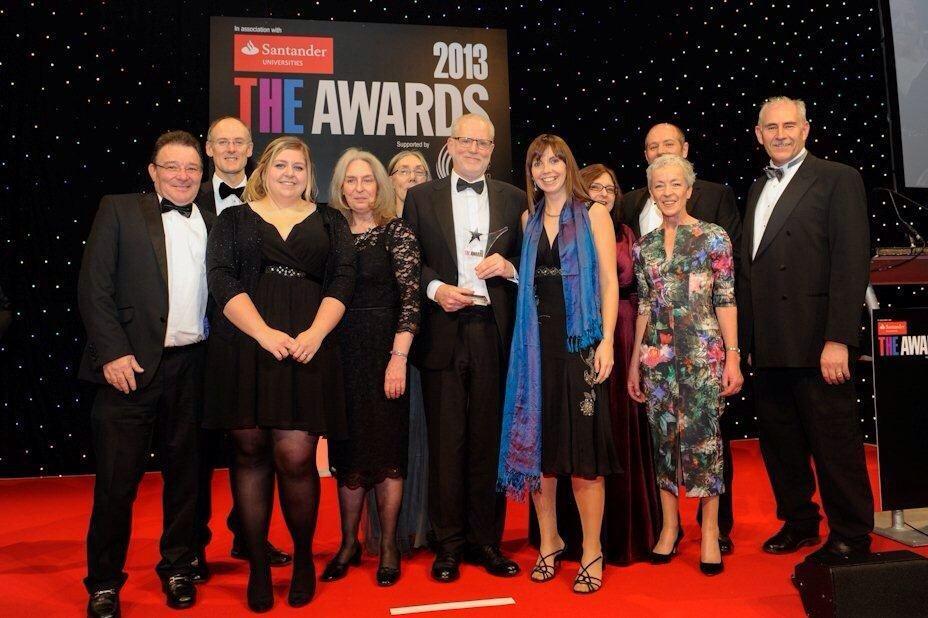
The ‘Outstanding Contribution to Sustainable Development goes to.. … The University of Greenwich’

Last Thursday evening the University of Greenwich was recognised again for its leading work of putting sustainability at the heart of its operations, teaching and strategy. Building on the University topping the Green League, this Times Higher award further recognises the commitment, passion and action of all those people we would like to thank for getting us to where we are:

Our 50 committed and effective Champions are actively integrating sustainable behaviour change through their departments and throughout the University. So far 1,500 Green Impact Tasks have been undertaken and this is set to further increase, helping make sustainability improvements in a whole range of areas, including resource use, curriculum development and student engagement.

The Carbon Management Team, led by Nigel Heugh have helped reduce 22% of our carbon footprint since 2005 and we are expecting a 40% reduction by 2020. This has included investment in scores of energy efficiency projects, plus the installation of 200 solar panels and the planned installation of a ground breaking University of Greenwich innovation for its glycerol Combined Heat and Power system in Medway. Further collaborations with the ILS department have enabled 100% of the university’s PC’s to power down after use.

Pictured from left: Keith Jones, Nigel Heugh, Emily Mason, Mary McCartney, Debbie Bartlett, Peter Fotheringham, Kat Thorne, Amanda Hatton, Gerry Bildstein, Pat Harvey, Patrick Finch (one of the judges).

Staff throughout the institution have been essential to helping us deliver on our sustainability commitments and responsibilities and in achieving our covered leadership status. Without support from throughout the Facilities Management Team, Finance and Procurement, plus staff from departments ranging from EDU to Student Affairs, from Architecture to the Business School and the NRI to Health and Social Care; illustrating that sustainability is relevant and cuts across every department and school here in Greenwich.

We continue to work with the Students Union and students identifying and providing placements and support for applied research illustrating how sustainability is the thread that connects everything we do. We also continue to work actively with and are grateful for the support of the University’s management. Senior support and the integration of sustainability into the University’s strategy is vital to meeting the needs of the future. Our University is now in a great position to continue building on it strengths, to maintain its leadership in sustainability and helping deliver the learning a future sustainable planet requires.

Our expert, supportive and enabling sustainability team (Emily Mason, Alex Giles (plus our SUUG colleague Ana Lopez plus past staff Kat Thorne and John Bailey)) have been essential to the University’s sustainability successes. I’d like to thank them all and invite the University to continue to join us in our exciting plans to take our University through the rest of its sustainability journey.

Overall we have seen sustainability being welcomed as a way of motivating staff, providing meaning and helping meet the needs and values of staff and students. As the NUS HEA report on student attitudes towards, and skills for sustainability states; 80% of students expect sustainability to be included not just the operations of the University sector but also the curriculum. We are well on the way, yet there is still much more do to. The University of Greenwich will only remain a leader with its continued inspired innovation and committed actions to reduce our impacts and help research and teach to enable the sustainable innovations a successful future demands. We hope to help you in this inspiring journey.

Simon Goldsmith (the new) Head of Sustainability

Remember remember the 5th of November: University of Greenwich Sustainability Awards 2013!

Alex Giles gives us her highlights from her first University of Greenwich Sustainability Awards.

—————————————————————————————————-

Although I have only been with the University of Greenwich for 3 months, when it came to hosting the Sustainability Awards 2013 I could really appreciate the cross-departmental buy-in and support. Everyone in the room had contributed or been involved with Sustainability in one way or another, and there were many others dotted around the University who could not make it on the day.

We kicked off the day by updating the attendees on sustainability at the University of Greenwich, including our carbon management plan, water, waste and reuse, biodiversity, food, travel, curriculum, student engagement and Green Impact.  We also reflected on our current accreditation of ISO14001, the business school’s perusal of ISO2012(1) sustainable events accreditation and our Fairtrade University status. We proudly spoke of our sustainability achievements of coming 6th place in the People & Planet Green League 2013 and that we’ve been shortlisted for the Times Higher Education Award for Outstanding Contribution to Sustainable Development. Quite a list I’m sure you’ll agree. It is a KPI of the University to stay in the top 10 in the Green League, but we’ll have to prioritise where to focus our efforts. Our top 3 priorities looking forward will be scope 3 carbon emissions, sustainable procurement and ethical finance.

hub bannerWe also introduced our new Sustainability Hub, a partnership between the Student’s Union and the University that will engage students in sustainability and provide outreach to the local community.  The Hub will employ four students this year and eight students next year to act as Green Ambassadors. These Ambassadors will work with local businesses, colleges and schools to deliver sustainability training and, for those lucky shops and colleges, the Green Impact behaviour change project. Amongst other projects, the hub will also expand food growing at Greenwich, with a vision to open up a student- led farmers market.

The awards! C. Patrick Hollins

The awards! C. Patrick Hollins

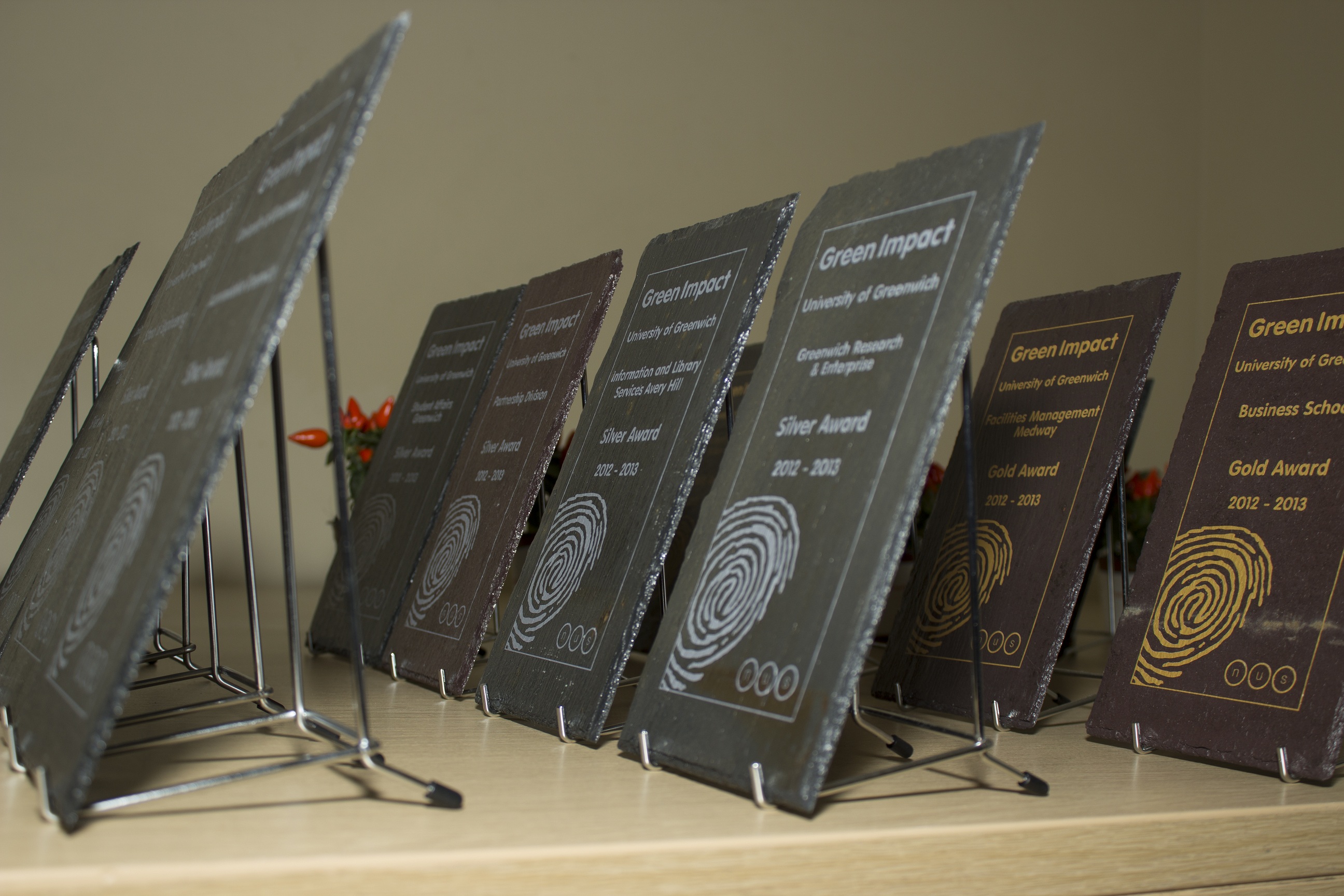
For our Green Impact Awards, we gave out 6 ‘Working towards Bronze’ awards, 7 Bronze Awards, 8 Silver Awards and an outstanding 5 Gold Awards! This year we are introducing the ‘Green Impact Excellence’ Award, which will give the opportunity for Gold-winning departments to create and manage a sustainability project within their department. These teams have demonstrated that sustainable behaviours are embedded in their department through achieving their Gold Awards; their excellence project will allow them to explore how to enrich sustainability in their department, whether that is through the curriculum or communication. We already have a couple of interested teams exploring and planning potential projects, so watch this space for more updates of how they’re getting on.

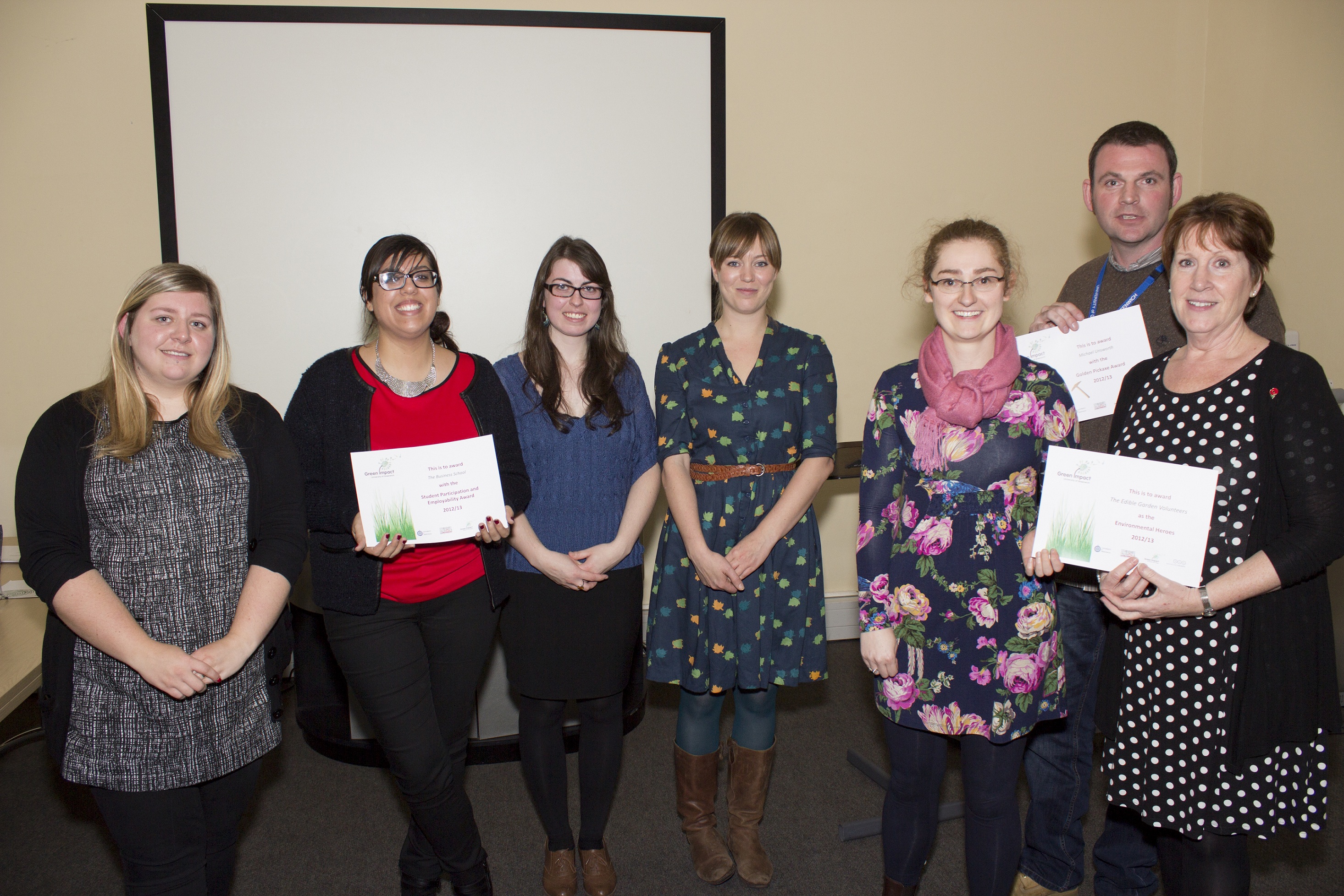
In addition to our Green Impact Awards, we gave out 9 Special Awards to individuals or departments for their continued and dedicated contribution to sustainability in their department. These included:

–          Be the Change Award – Paul Harvey from Sodexo

–          Carbon Reduction Award – Jon Hudson from the Building Services Team

–          Sustainability in the Curriculum Award – Charlotte Jeavons from Public Health

–          Environmental Hero Award – The volunteers of the Edible Garden

–          Golden Pickaxe Award – Michael Unsworth, Head of Grounds

–          Green Impact Golden Labs Criteria Award – The Natural Resources Institute

–          Student Participation and Employability Award – The Business School

–          Positive Deviant Award – Caroline Troy from the Natural Resources Institute

–          Student Sustainability Champion Award – Lauren Newberry

Some of our Special Award Winners. C. Patrick Hollins

Some of our Special Award Winners. C. Patrick Hollins

For more information about the awards please contact the Sustainability Team sustainability@gre.ac.uk


Welcoming our new Sustainability Projects Assistant…

Hi, I’m Alex and I’m excited to be joining the sustainability team for a year as the new Sustainability Projects Assistant!

Alex enjoying the views of the fjords in Norway

Alex enjoying the views of the fjords in Norway

I’ve got a background in Physical Geography, so I am a geek in anything from climate change to natural hazards to glaciers. For the past year I’ve been doing an MA with Forum for the Future in ‘Leadership for Sustainable Development’.

forum for the future

My masters course has allowed me to sample sustainability in a range of organisations, from a charity to a local authority, from Bank of America to a multi-national company. It also allowed me to look at the idea of ‘systems change’, for example, how can we cause change for sustainability in the complex food system, or the energy system? I’m looking forward to putting my learning into practice at Greenwich.

I’ll be looking after the Sustainability Management System and helping Emily out with other sustainability projects. These projects include Green Impact and the Carbon Management Plan, and I’ll also be helping with sustainability events such as the Green Week. Green Impact is a behaviour change project where teams are rewarded for their efforts, so get in contact with the sustainability team if you would like to know more! I’m especially looking forward to getting to know the sustainability champions and spotting new opportunities for sustainability at Greenwich.

Greenwich is a leader in Sustainability within Higher Education, coming 6th this year in the People & Planet’s ‘Green League’, and this is what made me so attracted to working here. So far everyone has been friendly and welcoming and I’m very impressed with the garden!

As I settle in, you may see me wandering round the campuses so I hope to meet as many staff and students as possible on my travels. If you have any questions, please feel free to email me at a.giles@greenwich.ac.uk, or if you have any questions about Sustainability at the University of Greenwich then email sustainability@greenwich.ac.uk.

Chelsea Fringe 2013

The University of Greenwich held its first community event at the Avery Hill Community Garden as part of the Chelsea Fringe festival. Dragos Buharu, a 2nd year Business School student studying BA Business with Marketing was in attendance and here he gives you his perspective of the day.

Chelsea Fringe 2013 –Even the weather couldn’t ruin our fun!!

The Chelsea Fringe Community Event was hosted by the University of Greenwich at the Avery Hill Campus on the 7th of June. As an intern with the sustainability team I was there to find out what makes this event special.

“The Fringe is all about harnessing and spreading some of the excitement and energy that fizzes around gardens and gardening. The idea is to give people the freedom and opportunity to express themselves through the medium of plants and gardens, to open up possibilities and to allow full participation.” Chelsea Fringe.

The event at Avery Hill in keeping with the Fringe’s ethos aimed to celebrate the spirit of community, mixing the unique excitement that can be found around a beautiful edible garden.

Chelsea Fringe Event 2013: A group of people in a park gathered around vegetable planters.

Chelsea Fringe Event 2013

Dragos’ Chelsea Diary

After having turned up early to help out with last minute touches, I accompanied James Hallybone from Roundfield and some of the University’s Sustainability Champions on a tour of the forest garden.

The tour was interesting, educational and very surprising. At first, when you look around you just see tiny trees but when you learn about what they are the effect is jaw dropping. At one point we came across what looked to me like just a ball of twigs looking slightly out of place, then it was introduced as pomegranate tree! The same experience followed when faced with almonds and bamboo. All I could think was: “Seriously?!” while looking left and right for some panda to jump out at us!

Mulch matting round one of our forest garden trees

Having been ‘very’ tired after my exertions we went on to enjoy the fresh foods that Greenwich Community Food Coop and the University had to offer. Let me add there was some very good and refreshing wine present. Greenwich Community Food Co-op (GCFC) was established in 2002 as a co-operative run by the community for the community and started life on the Ferrier Estate, Kidbrooke.

Paul Harvey from Sodexo who cater for the University at the Avery Hill Southwood Site was pleased to be part of the event.

“Sodexo are very committed to sustainable food offers & are always looking at ways of taking this forward.”

The Transport Team enjoying the Sustainable Food Menu from Sodexo

During all of this excitement there was a living wall being constructed by students from the School of Architecture, Design and Construction only feet away, and yes there was a lot of green in there.

Newcome Edwards from the School of Architecture, Design and Construction

Afterwards I decided to check out the bees in the observation hive, brought in by our resident beekeepers from the Ruxley beekeeping group, Colin and Patrick. The Queen was easy to spot from the yellow mark put on her back, and it was clear to see that she was bigger than the rest!

As the event kept going we were joined 2 groups of kids from the Crafty Wizard’s Nursery. They went on a mini beast hunt, accompanied by our very own Emily Mason from the Sustainability Team. The children were very cool and I even got a thumbs up from one of tiniest members of the group. When discovering an earwig and asked why they are called as such, the majority decided: “Because they wear wigs”. Sensible enough answer, right? They also did some planting of their own.

These are only some of the activities that went on, throughout the day there was:

Competitions
Planting
Young beekeepers from Corelli’s School
Seed and Plant Swapping
Orchard tours
Workshops


Who can get the longest peel?

Throughout the day I spoke to lots of people and decided to get some feedback on why people had come and long and what they had enjoyed the most. A staff member from the School of Architecture, Design and Construction came to see what was growing in the garden and to learn more about sustainable food sources. She was particularly impressed with the scale of things, the diversity present and with the maintenance of our raised beds. And yes, a lot of work goes into making them look that good, I myself spent quite a lot of time mowing the grass round the site with a rather temperamental push mower.

While approaching another person I was thinking: “Hmmmm, she looks like she’s having a good time”. Apparently she is pro sustainability and her parents have had an allotment for about 40 years. She was also surprised by the diversity present in the forest garden and believes it to be a very good idea. She was also very impressed by the bees and growth present in general.

The British weather was as unpredictable as ever and after a heat wave all week we encountered a rather heavy downpour but this did not stop us for sure. And what is a bit of gardening without a bit of rain?

Let’s hope the garden continues to grow and more people get to benefit from this project though volunteering and purchasing the fresh produce. It is also a lovely place to hang out as a student and you never know when there might be free food up for grabs!

For more information about the event of the garden in general please contact Emily Mason at sustainability@gre.ac.uk

Health and Social Care Sustainability Day

On Wednesday the 30th January the sustainability team joined forces with the School of Health and Social Care for a community building and sustainability awareness event.
All new arrivals of the 2012/2013 academic year were invited to an afternoon of activities centred around meeting others from across the School’s different disciplines and finding out why the University is first in the People and Planet Green League.

Veronica Habgood, Director of Learning and Quality at the School of Health and Social Care, describes the background of the event.

“The aim of the New Arrivals Event was to develop a sense of community, enabling students to meet informally with staff and to mix with students other than those on their programme.  ‘Sustainability’ was chosen as a theme as it is something that is relevant to all students and staff.  An appreciation of the importance of behaving sustainably is an aspect of the Greenwich Graduate Attributes project, and, as a school, we find this aspect more challenging to meet within our programmes due to the need to ensure that we are also meeting the demands of professional, statutory and regulatory bodies.  Through this event, we hoped to raise the awareness of students (and staff).”

Students (and staff!) were challenged to complete 3 activities throughout the afternoon. The first was an icebreaker that asked each group to share three positive aspects of their first term at Greenwich. A few common themes emerged with the most popular answers being: The support and guidance they received from friendly University staff and students; the experience of being on placement and learning new skills in the working environment; and meeting other students and making friends.

Enjoying the sustainability day in the compost!

The second activity was to complete a sustainability activity sheet which took students on a sustainability trail around the campus taking in some of the projects and features of the Avery Hill campus such as the Brompton bike dock and the community garden. The activities and questions tested their knowledge of many sustainability themes and prompted them to research current University targets such our carbon reduction commitment. The activity sheets along with answers can be found at http://tinyurl.com/abd7n9a which takes you to a Prezi presentation.

The third task was a photo competition. Each student group was asked to take a picture that they thought summed up sustainability at the university. These pictures went on display in Mary Seacole from the 11th Feb as part of Green Week and a winner was chosen by the sustainability team.

The winning photograph taken by Sarah Marling, Sairish Rashid, Rianne Williams, Violet Withanage, Shelly Law, Emer O'Hagan, Phoebe Ohwodo and Oluwatoyin Obigbesan of the School of Health and Social Care.

Staff and students commented after the event that they had enjoyed the experience and perhaps more importantly had learnt something about sustainability, from how much money the University spends on its electricity and gas bills to bringing in your own mug gets you 10p off tea and coffee at The Dome!

The sustainability team actively engages with staff through its champion network and the Green Impact project and is working hard to engage with as many students as possible. Over the course of the afternoon the team was able to talk with over 200 students about why sustainability is important to the University and how it will be important in their future careers.

The content of the afternoon’s activities were tailored to suit the department’s needs featuring questions and information on the NHS’s Sustainable Development Unit (SDU). Many of the School’s students will go on to work with the NHS so it was a good opportunity to show that sustainability features heavily in many of the UK’s large institutions which may be a part of their future careers.

The NHS SDU’s aim is to “help the NHS fulfil its potential as a leading sustainable and low carbon healthcare service.”

“The Sustainable Development Unit provides expert advice and support to the NHS to help it become a more sustainable organisation environmentally, financially and socially.  At an environmental level this includes addressing particular issues such as energy, travel, waste, procurement, water, infrastructure adaptation and buildings. Considering sustainability more broadly expands our work into the wider long term needs of the health service including adaptation of health service delivery, health promotion, tackling the wider determinants of health, corporate social responsibility and developing new sustainable models of care. We look to provide practical help to NHS colleagues in meeting carbon reduction targets and also engaging with individuals and organisations to change attitudes and behaviours to embrace a more sustainable lifestyle.”

To find out more about the NHS SDU please visit their website at http://www.sdu.nhs.uk/. The Sustainable Development Unit is running a consultation and engagement programme open to the public to produce a new Sustainable Development Strategy for the Health, Public health and Social Care System to 2020.  The consultation closes at 5.00pm on 31 May 2013 and you can find out more and have your say here.

If you would like more information about how the Sustainability Team can work with your department in delivering engagement activities please contact Emily Mason at e.mason@gre.ac.uk.

Exciting times at the community garden!

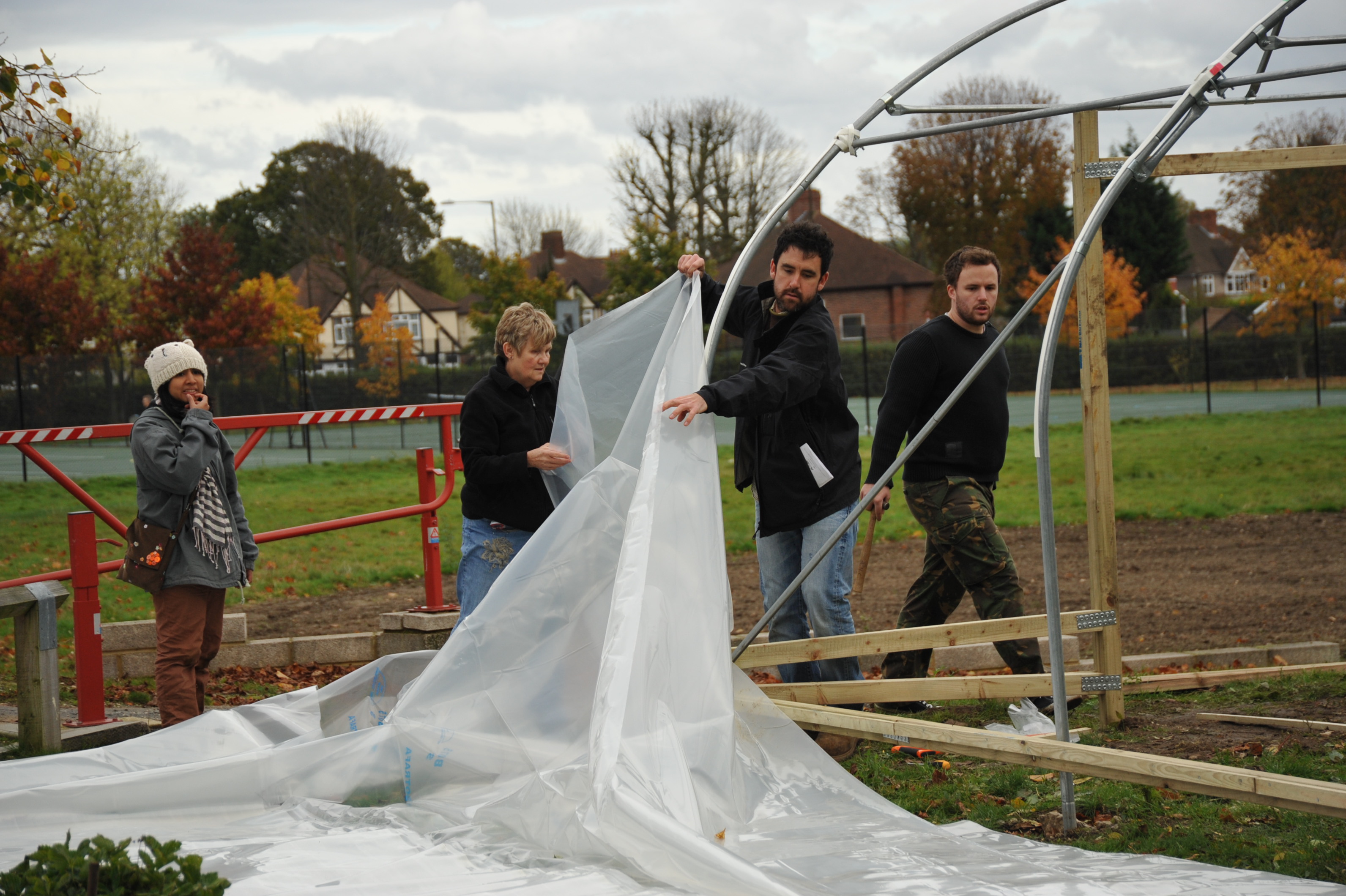
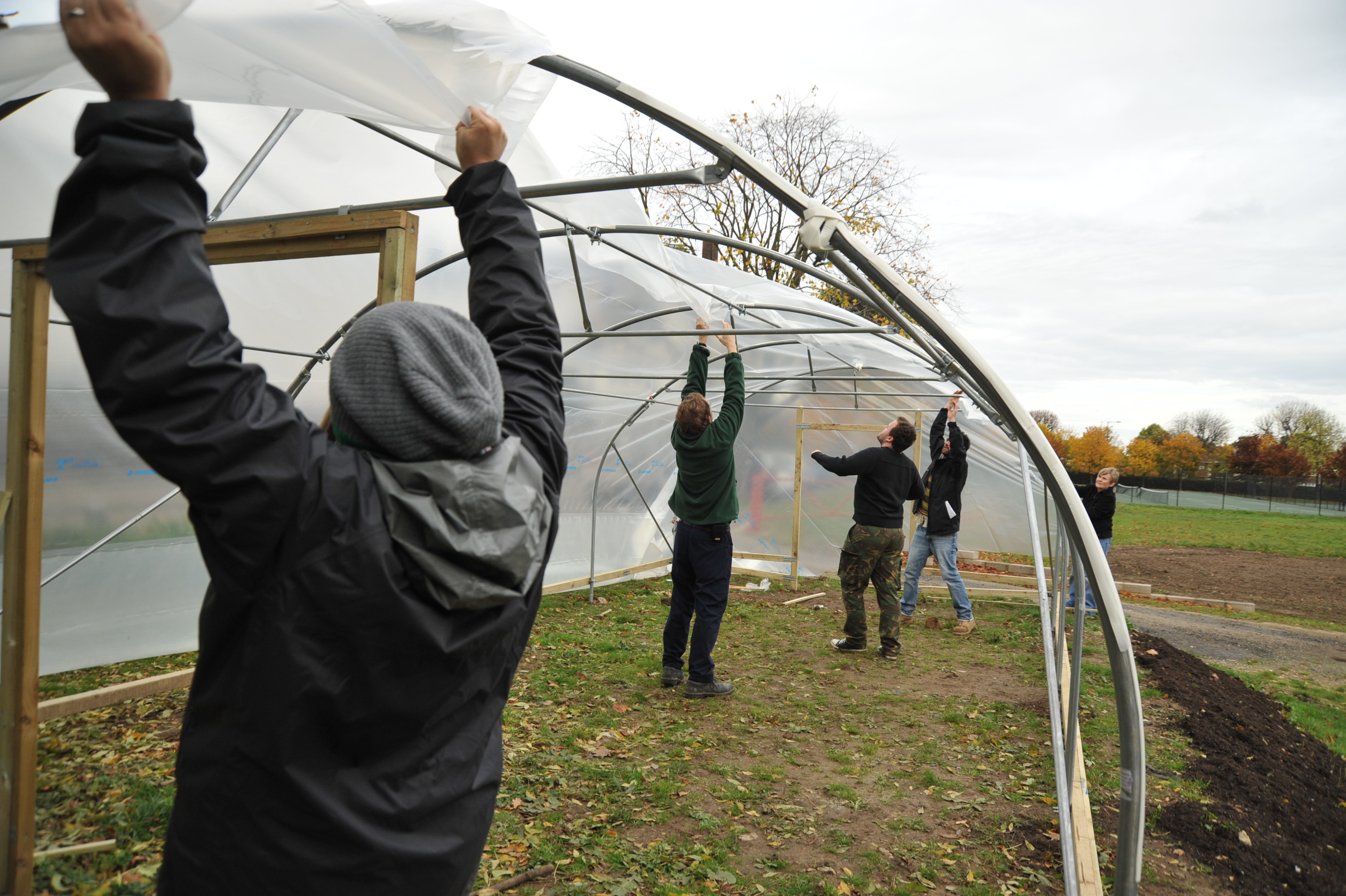
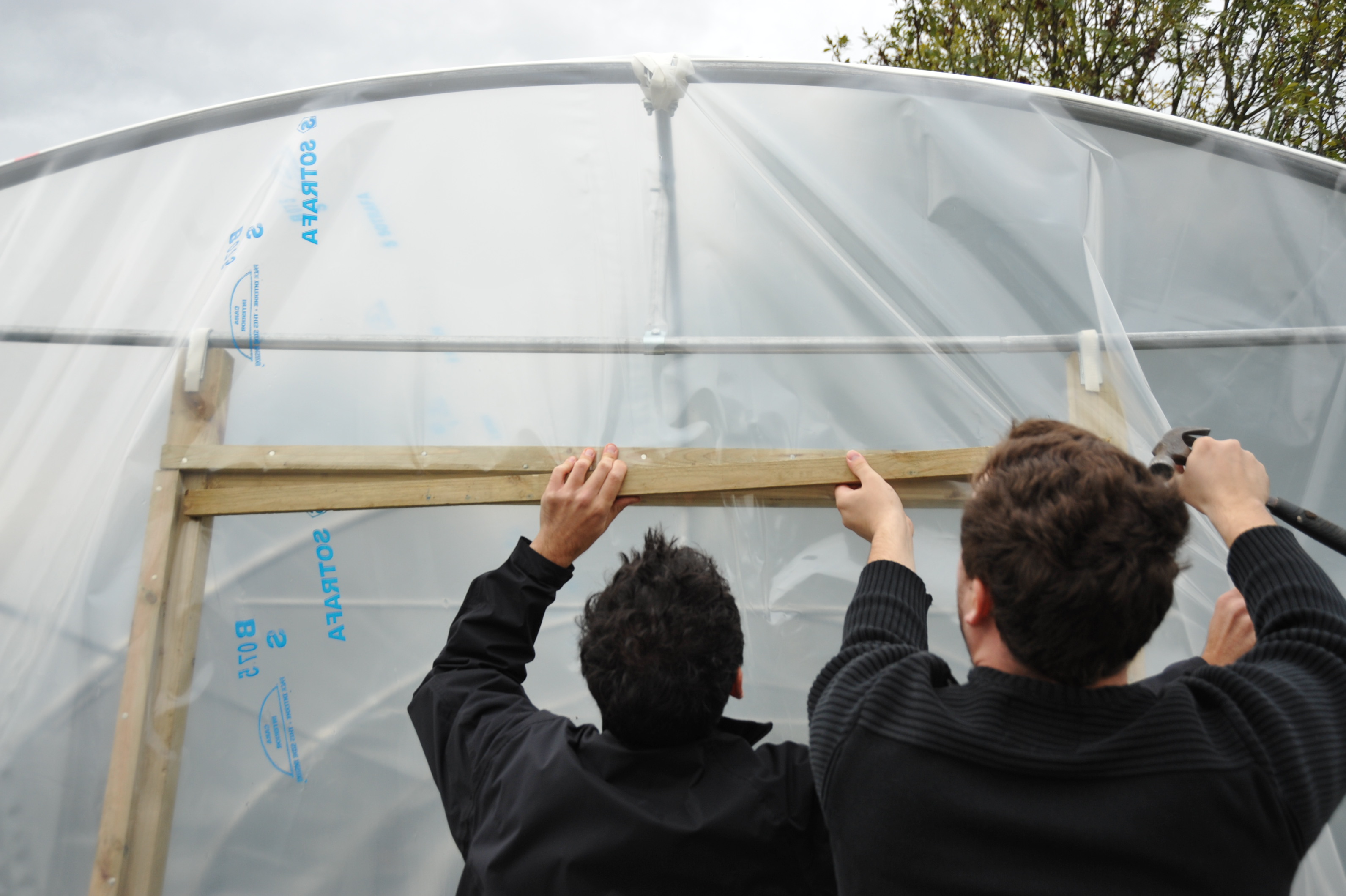
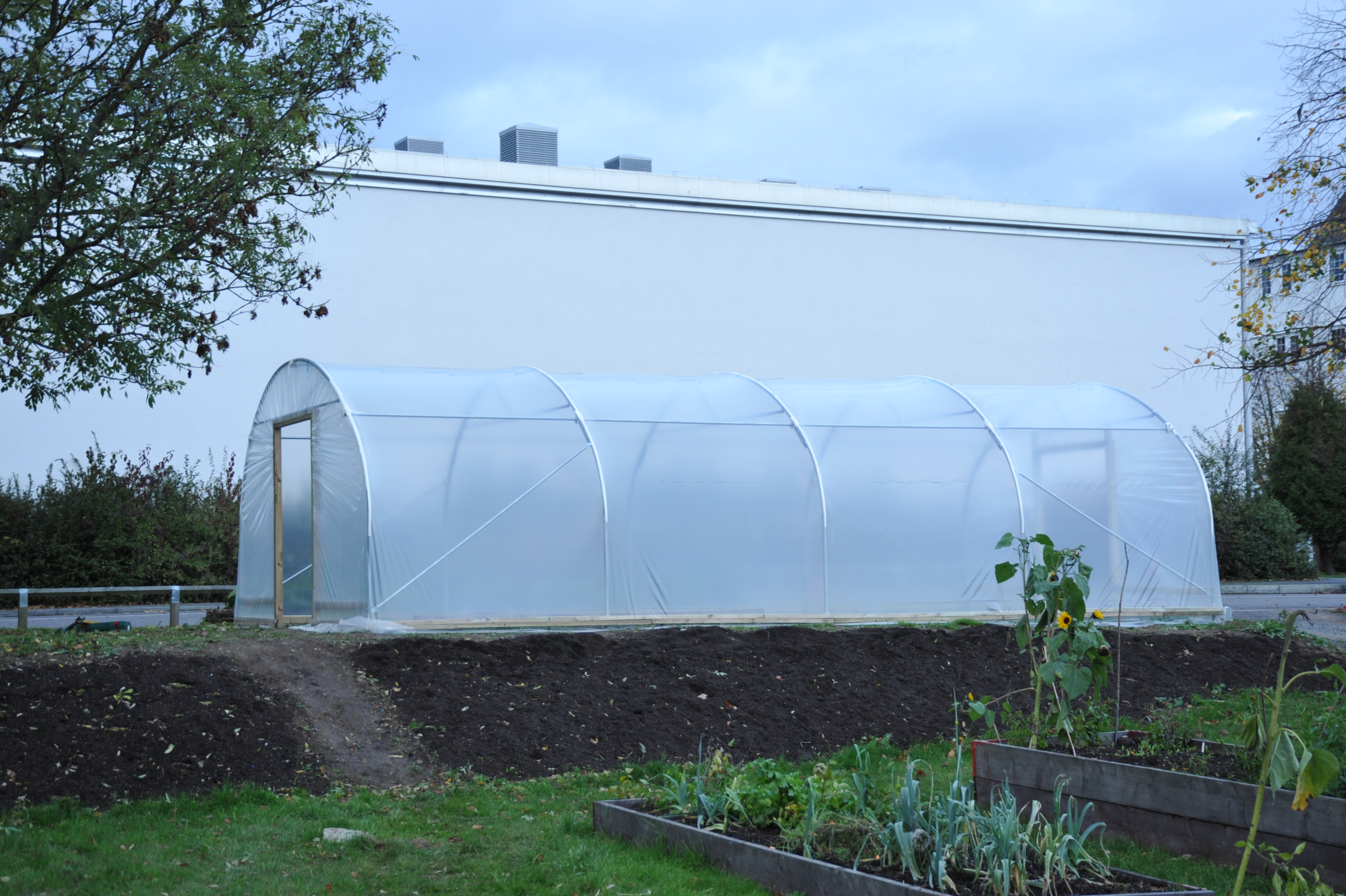
It has been a little bit of a roller coaster constructing the polytunnel for the community garden. We have battled digging through concrete, less than helpful weather and more than a few missing pieces. Last week, however, we managed to prep the frame ready for the polythene covering and despite the high winds and failing light we finally got the cover up and over the frame and secured!

Unfolding the polythene cover

Up and over!

Securing the cover into place

The polytunnel will allow us to extend the growing season and try new varieties of fruit and veg that are a little more sensitive to our British weather!

All the volunteers who have worked on the polytunnel and who have helped keep the garden green while we have been building deserve a massive thank you and congratulations on their perseverance.

The final product - now we just need to put the doors on!

August Progression in the Community Allotment

Our community garden at the Avery Hill campus continues to progress and expand! We now have a beautiful shed where we keep our tools:

painting the shed!

Over the course of the last few week some of the Brassicas crops were badly attacked by nasty cabbage caterpillars. These are often found in large clusters and are easily spotted thanks to their distinctive yellow and black patterns (they can grow up to 2 inches!). Plants should be examinated regularly to prevent the damage or gown under fine mesh netting to stop butterflies laying eggs. Beneficial wasps are particularly effective at controlling these pests, or else they can be picked off by hand. Unfortunately we had to remove some badly damaged plants, such as cabbage and radishes.

leaf damage from cabbage caterpillars

radishes were cleared - because damaged by caterpillars

In the meantime, all of the cucurbits are growing particularly vigorous, they require a lot of space and therefore are expanding out of the bed:

cucurbitaceae family bed

The resuts are some delicious courgettes, pumpkins and squashes coming in different varieties and shapes:

growing courgette

discovering a massive squash hidden among the leaves!

very heavy!!

This summer the weather has been particularly wet and tomatoes and peppers have struggled but are now slowly ripening:

ripening tomatoes

shiny pepper

We also harvested our first carrot!

very long carrot (though a little bit pale!)

We also decided to experiment a bit and sow some peas where potatos and tomatoes used to be. In a rotation system, leguminosae plants (such as peas) follow the “heavy feeders” plants (such as tomatos) which use up a lot of the nutrients in the soil: peas roots in fact will fix nitrogen, promoting soil fertility. August is probably not ideal time to sow peas because they often struggle in cold wet soil – we might have to grow them under cloches. However we hope the weather will be relatively mild until October – just like last year – and even if the plants will not produce many pea pods, they will still function as green manure that improve soil fertility.

sowing peas

We also transplanted some young tiny leeks into another bed:

lifting the leeks cluster - they were closely spaced in this patch of soil

As a general rule, when transplanting young plants it is important to minimize root damage: for this reason we should always handle them by the leaves and try to keep as much soil on the roots as possible.

Pam transplanting the leeks

Before transplanting, we first made 6 inches deep holes, 8 inches apart in the bed; we watered well the group of leeks, these were then divided one by one with the help of a fork; each leek was dropped into a hole and watered in order for the soil to gently settle around the roots.

job done! after transplanting, wilting is common but plants will eventually recover

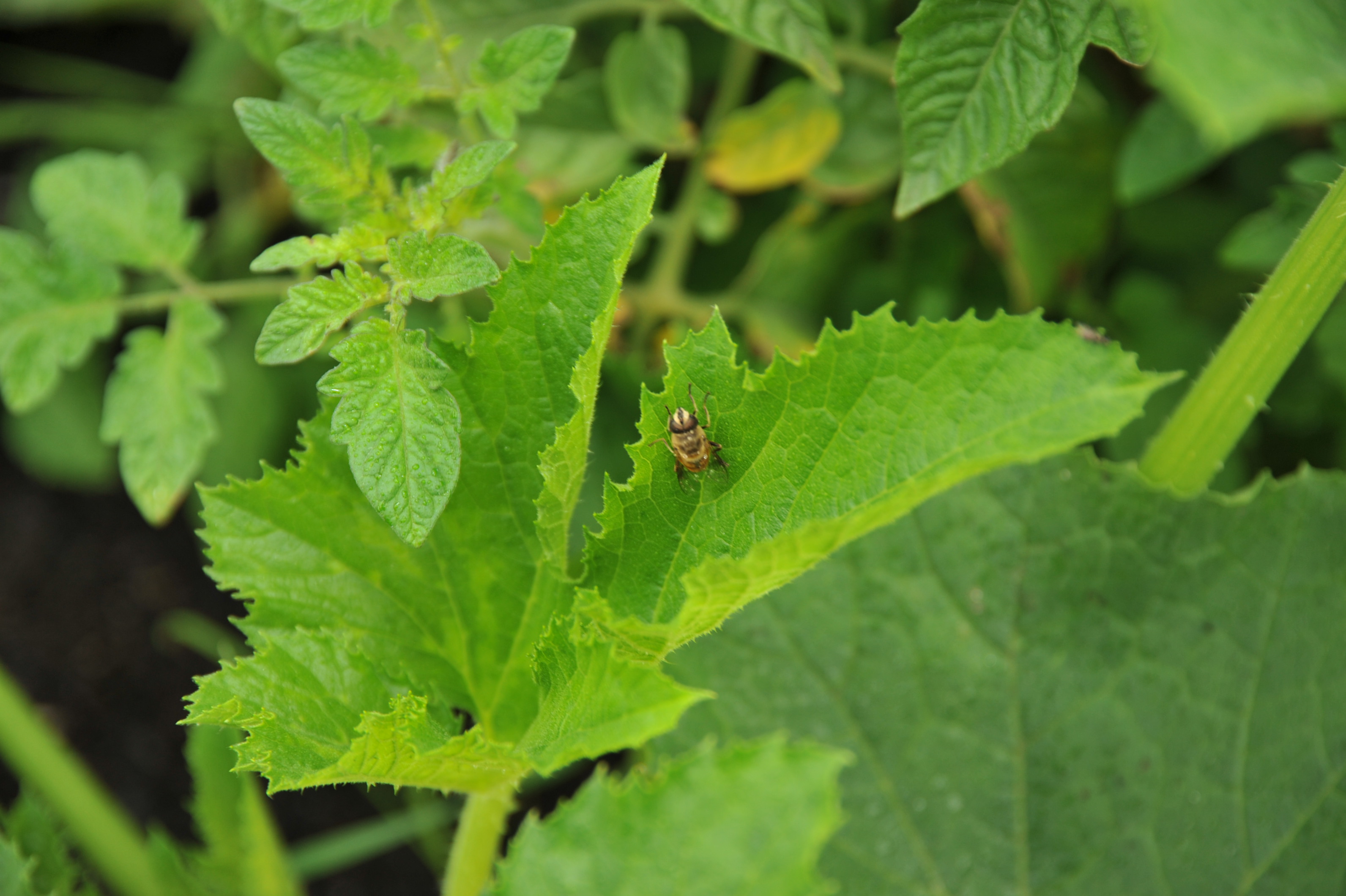
And finally, some beneficial wildlife: a hoverfly

tiny hoverfly checking on the pumpkins

11th July Garden Work Day

Last Wednesday’s weather was a little undecided but gave us some time to do some work in the garden – in between shiny sunny spells and torrential showers of rain.
The tasks of the day included weeding, harvesting and pruning:

the queens of the garden: Lexie, Alexandra and Emily

There were many vegetables to harvest as everything kept growing since last week– such as the radishes, the spinach, the peas, the courgettes, cabbages and kale.

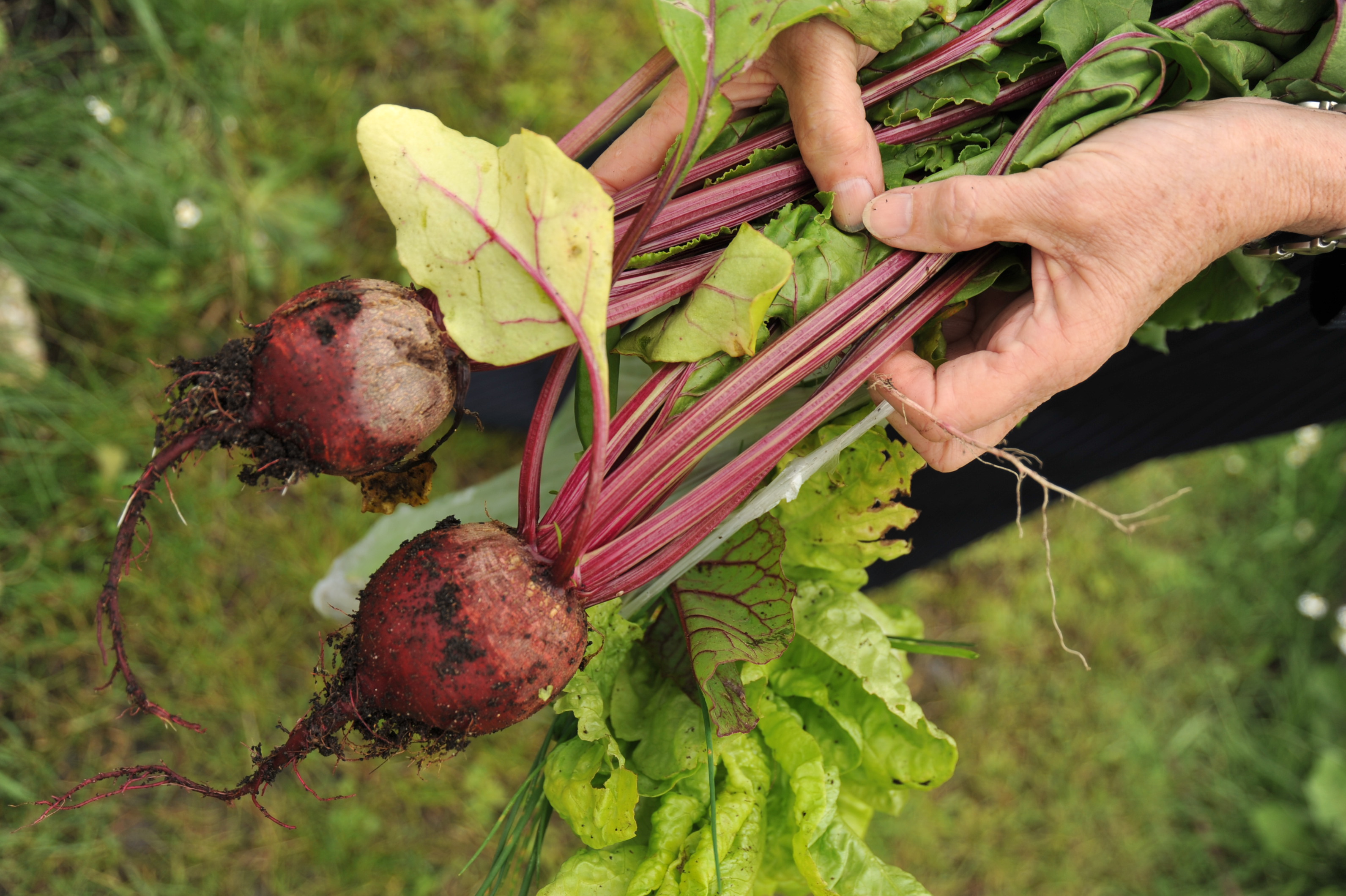
the size of the beetroots, a nice surprise

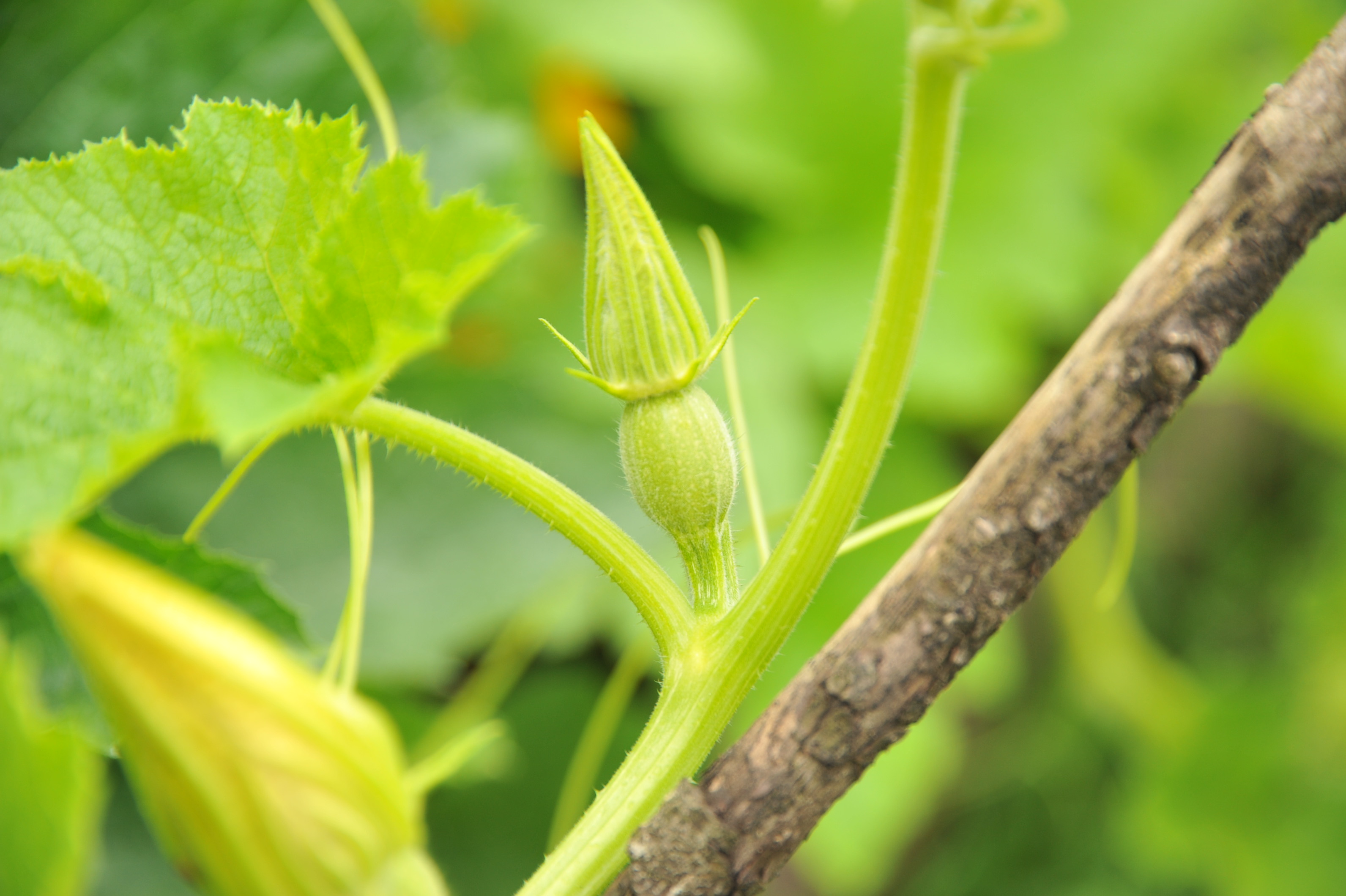
baby marrows keep growing!

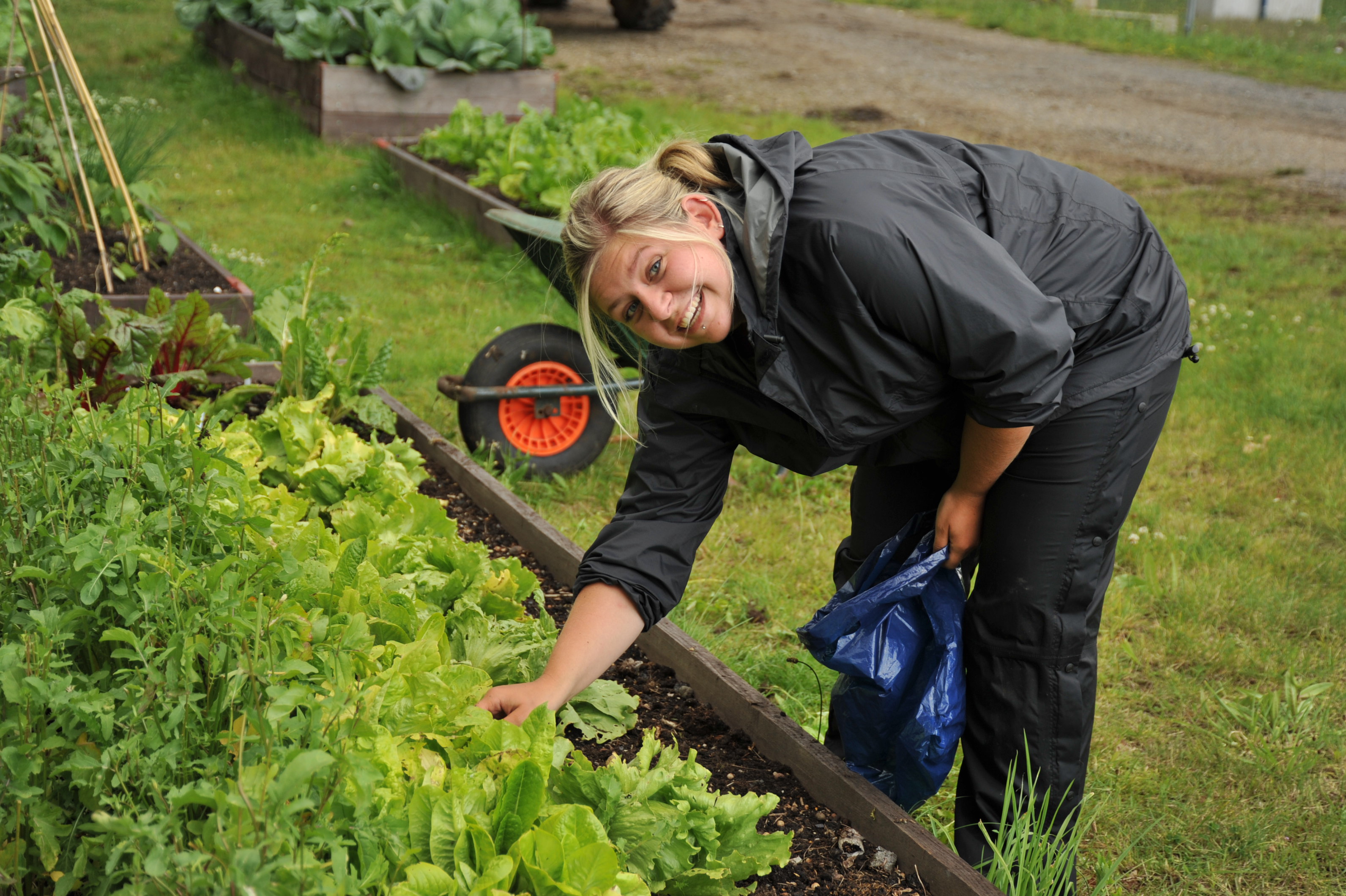
harvesting is always the favourite job

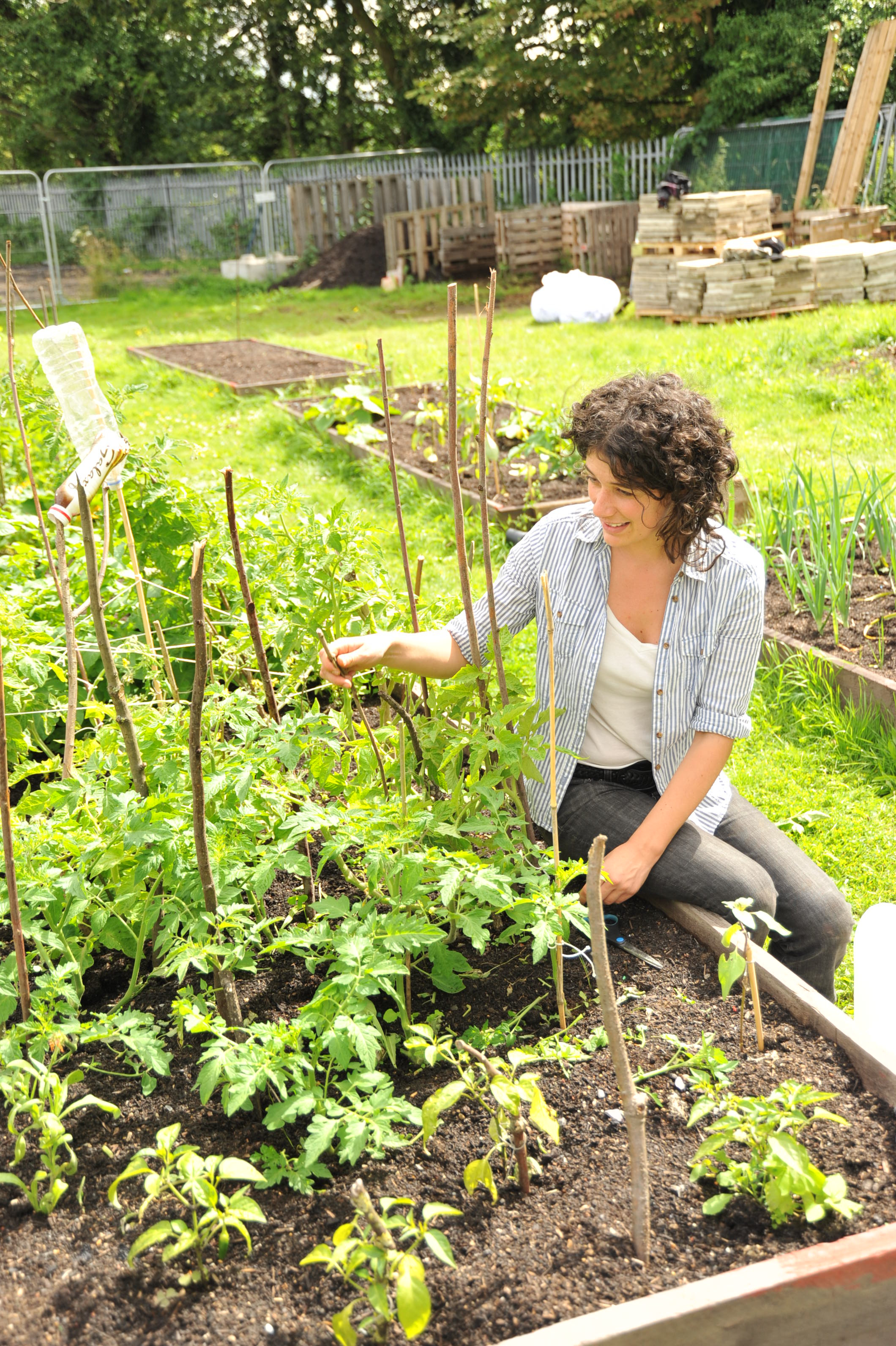
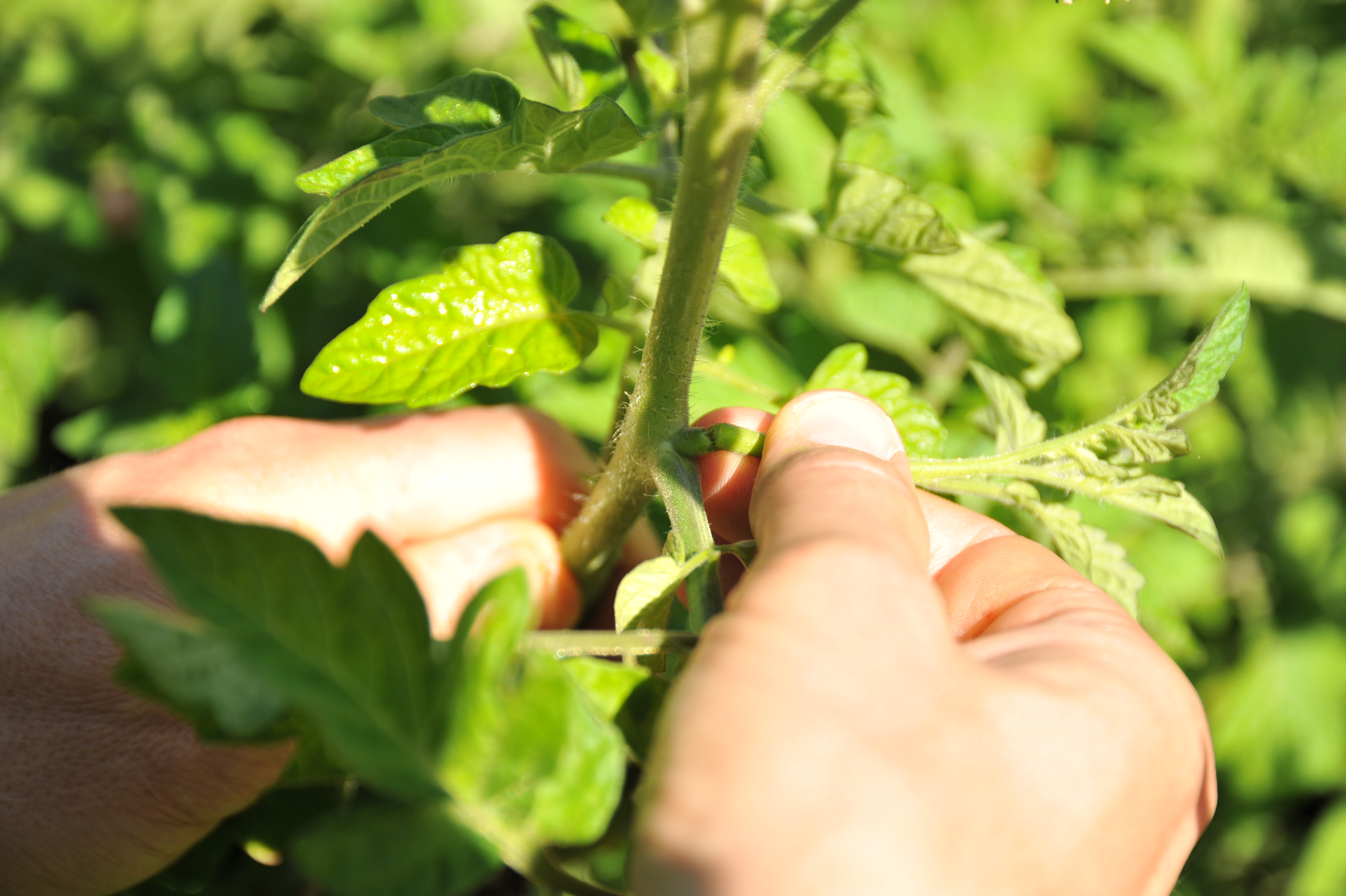
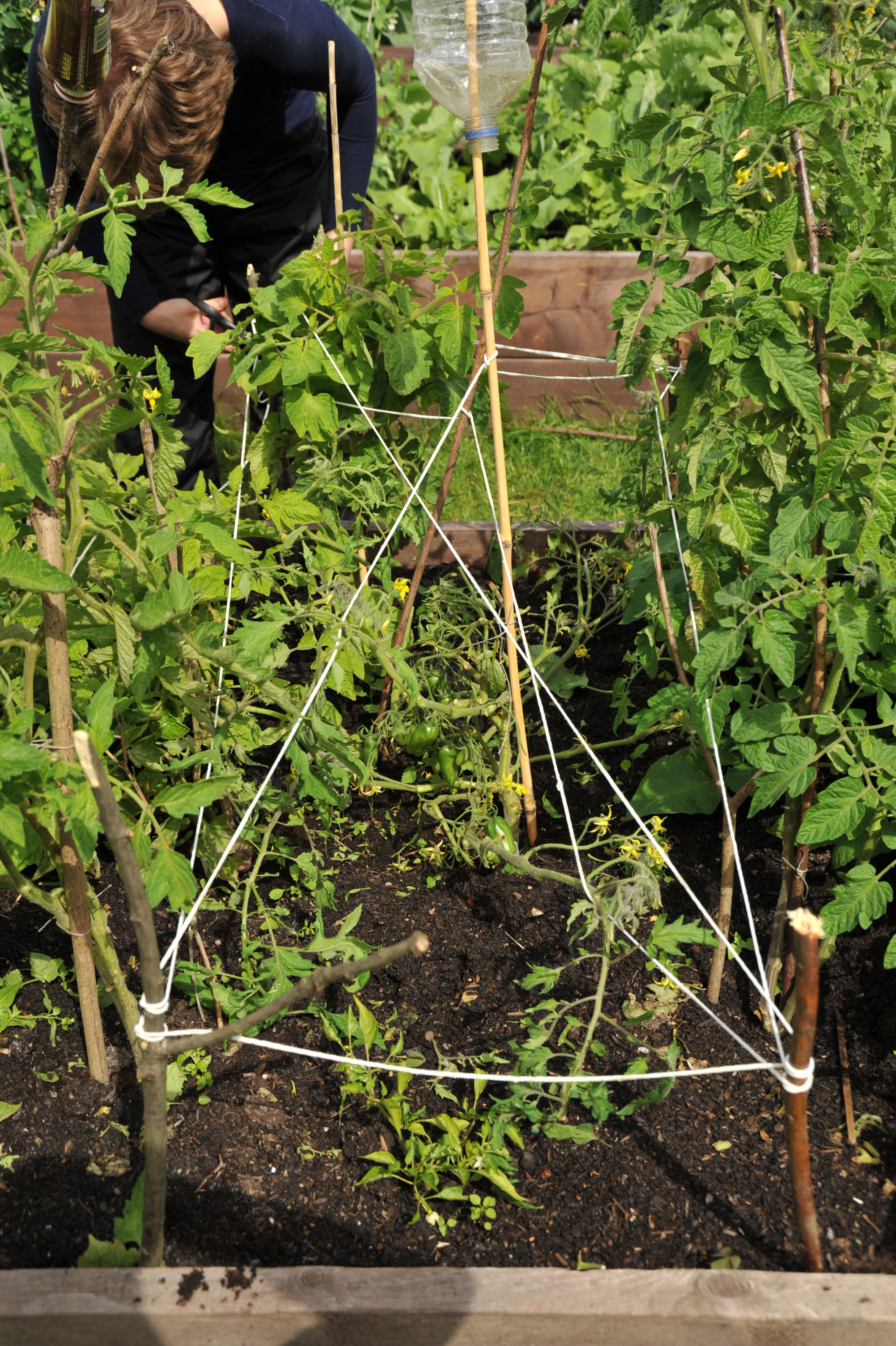
We continued to prune the tomato plants as these were so leafy and bushy it looked as if no space/light was left for our fruits to ripen: we kept on removing the leaves from the lower part of the stem and the lateral suckers until all plants looked nicely shaped and tidied up. We also improved their structure by helping them with sticks – for them to grow up high and strongly.

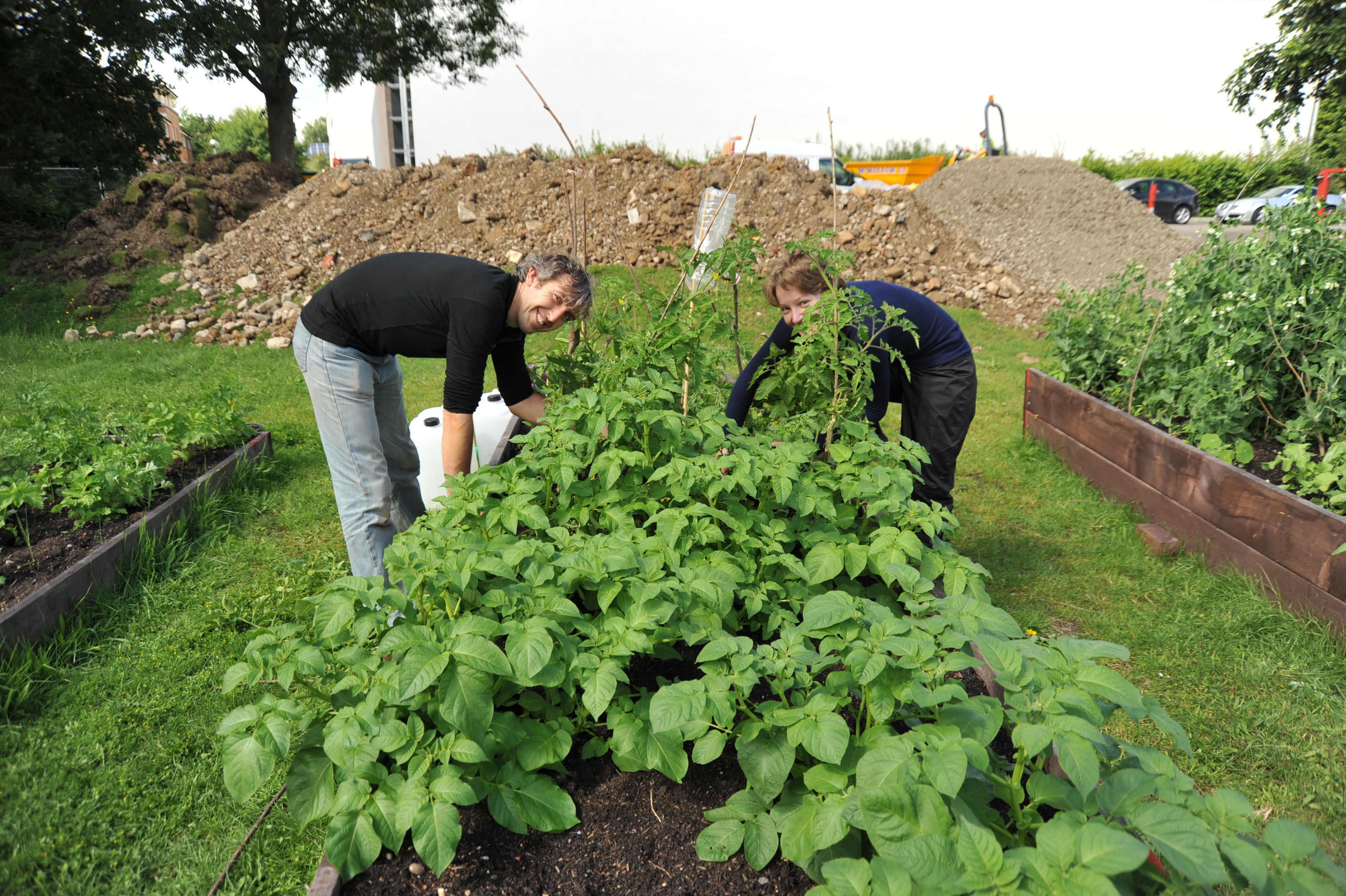
Stefan and Alexandra pruning tomato plants

still pruning!

how to remove lateral suckers from tomato plants

we built this structure around a bushy tomato plant in order to hold it up high from the ground while the fruits will hung from the wires

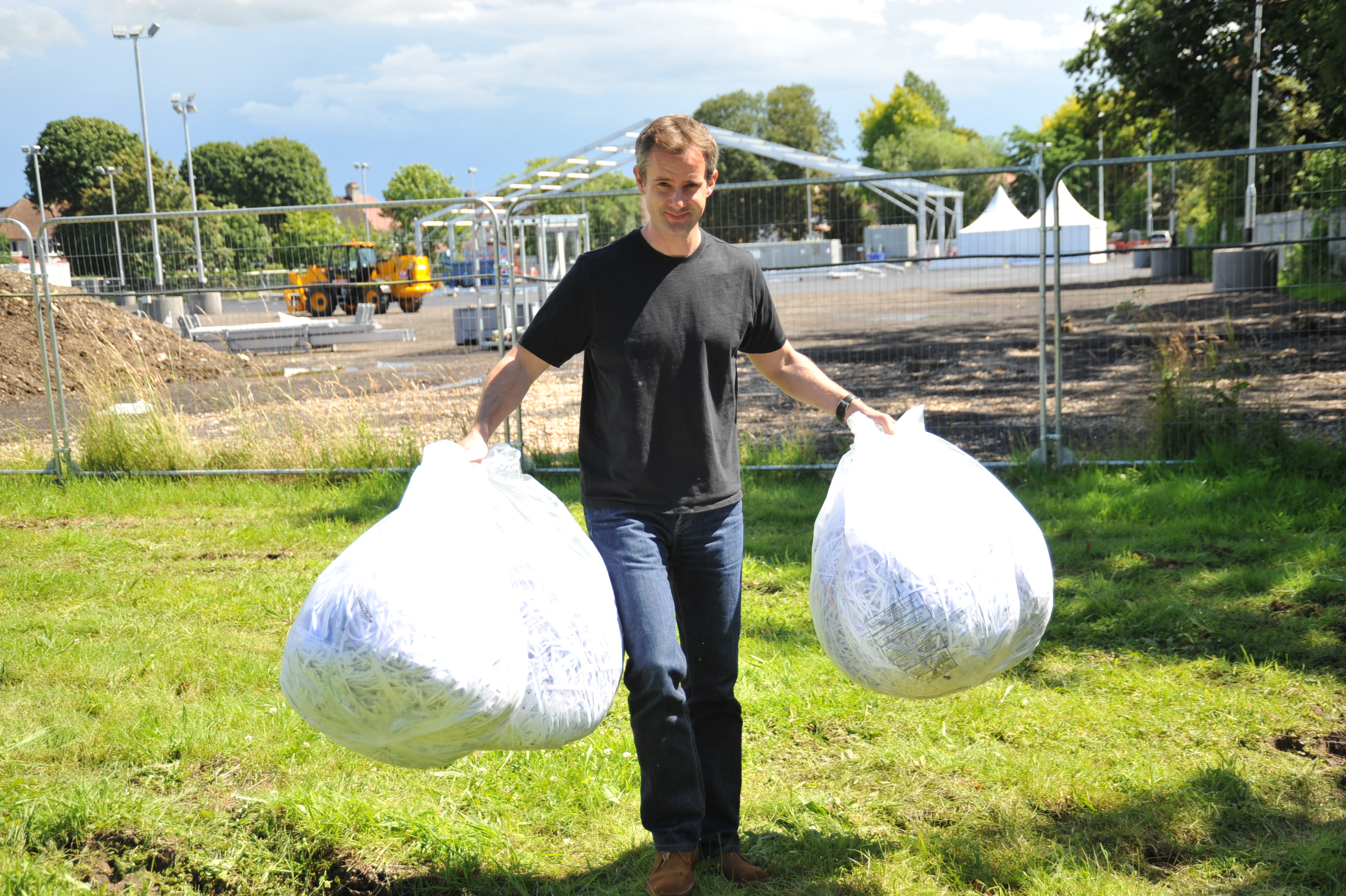
In the meantime Julian brought from the office some more paper shredding that we can use as ingredient in the compost mix – it will provide aeration and a good source of carbon as it breaks down:

bags of paper shredding

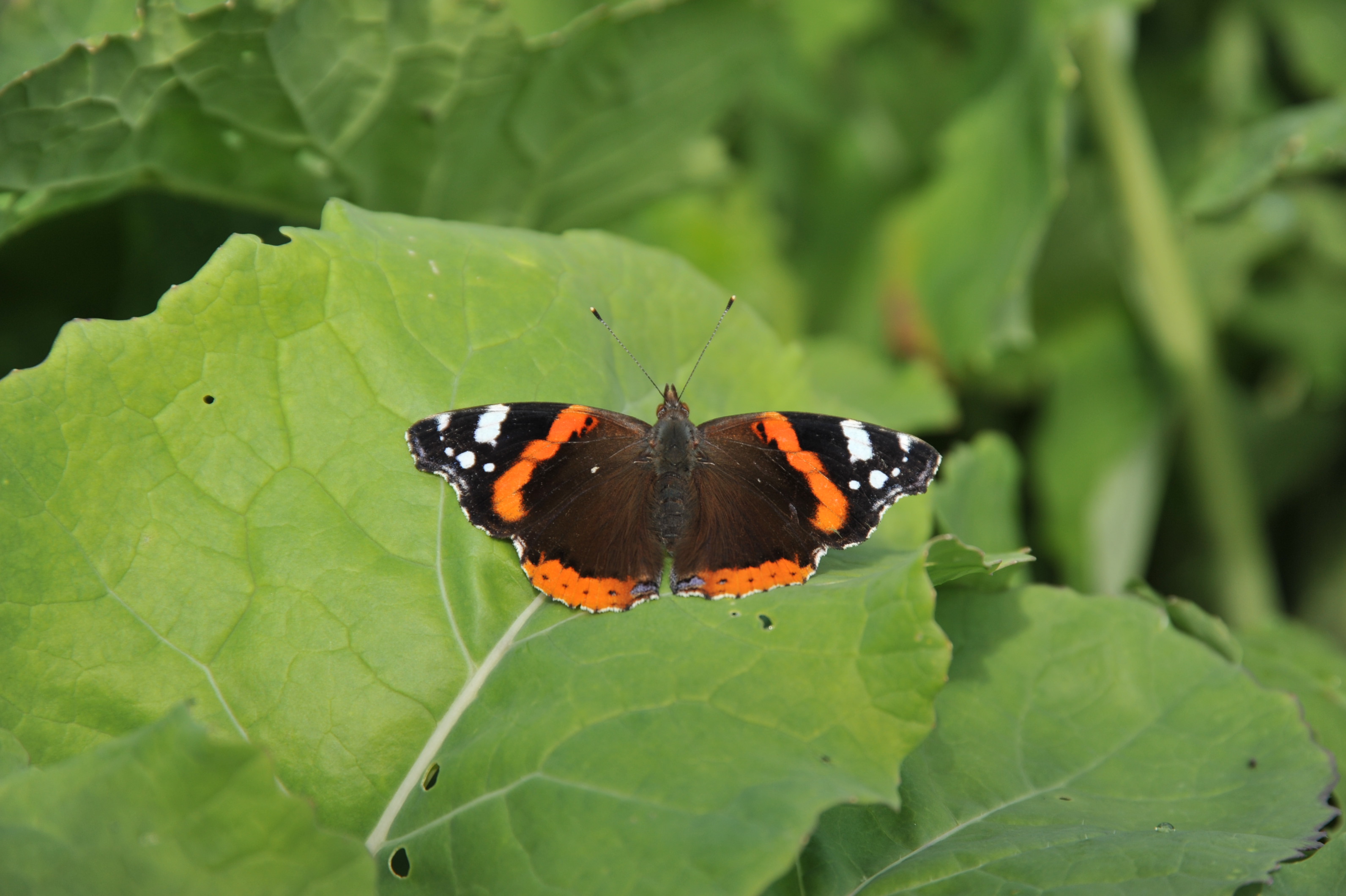
Some wildlife came to visit too:

the admiral butterfly

an unidentified character - a bee?! a wasp?! a fly?! - shielding from the rain

See you next Wednesday!