
From October to December 2025, I undertook a two-month artist residency at the Sound/Image Research Centre, University of Greenwich developing Descent into Concealment: Derinkuyu—a web-based 360° work that combines a recreated 3D model of the ancient Derinkuyu Underground City with an “ancient” spiritual soundscape. The residency provided a focused context for research-and-development, supported by the centre’s immersive production infrastructure, including spatial audio facilities and immersive projection environments.
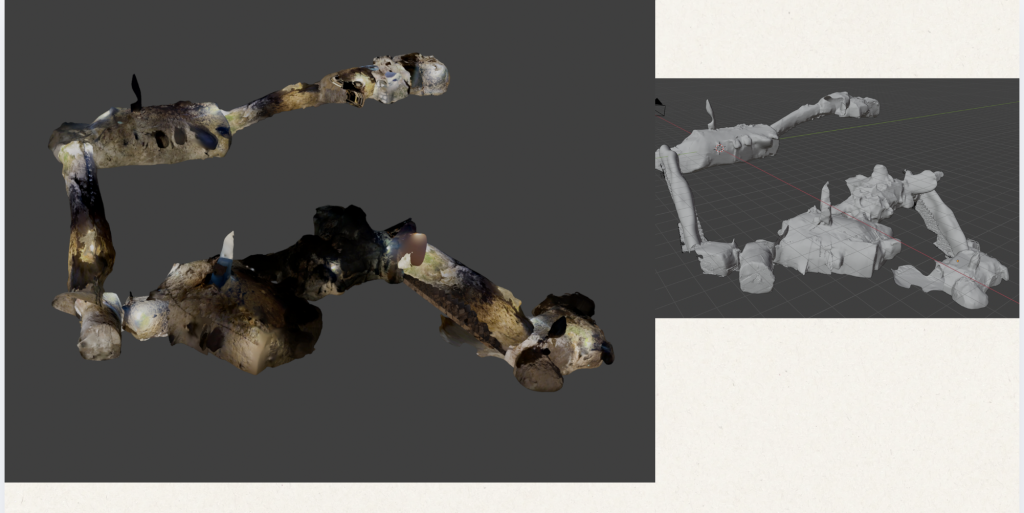
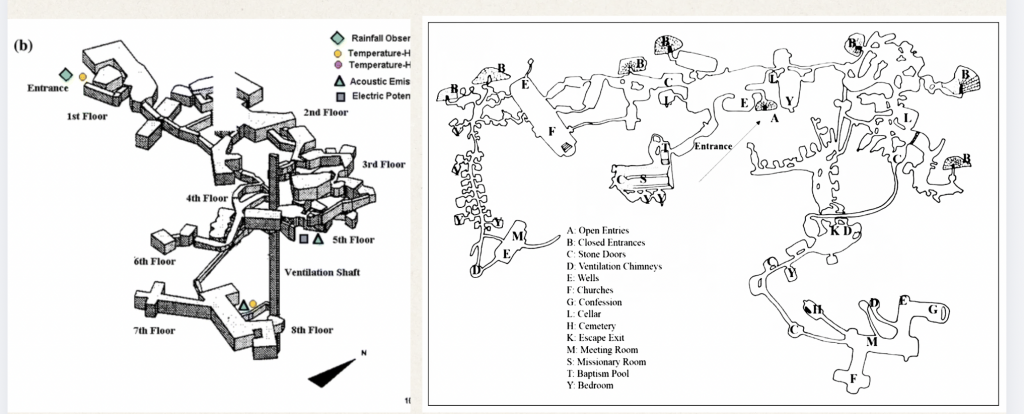
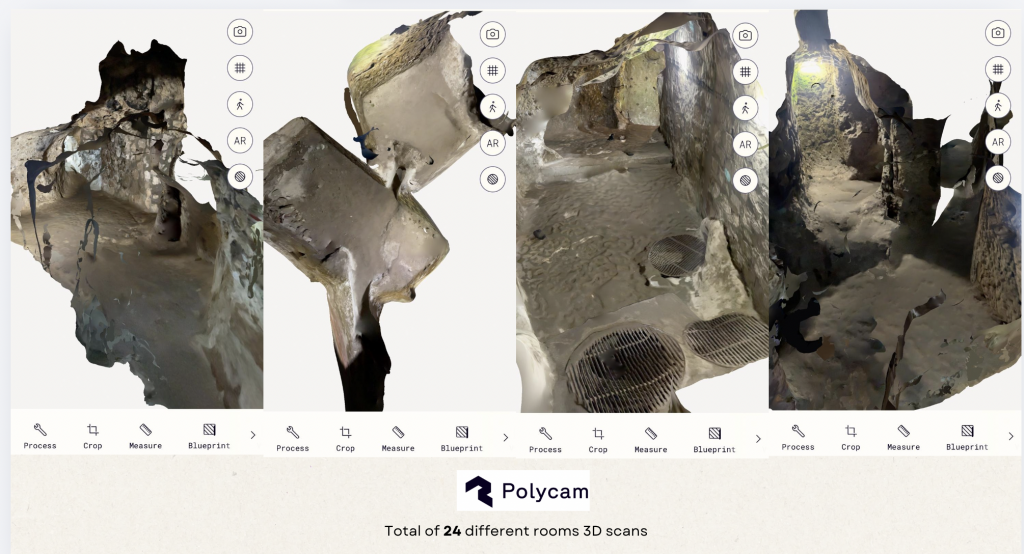
The project’s visual foundation was built from my own poly-metric 3D scans, translated into a coherent architectural reconstruction that could be navigated and filmed as a 360° experience. Using scan data as a foundational point, matching it with the architectural maps and details, and I remodeled the structure involved a constant negotiation between evidence and legibility. This reconstruction approach treated Derinkuyu as infrastructure—organized around airflow, water access, thresholds, and communal space—while remaining transparent about the model’s interpretive status as a research-based visualization.
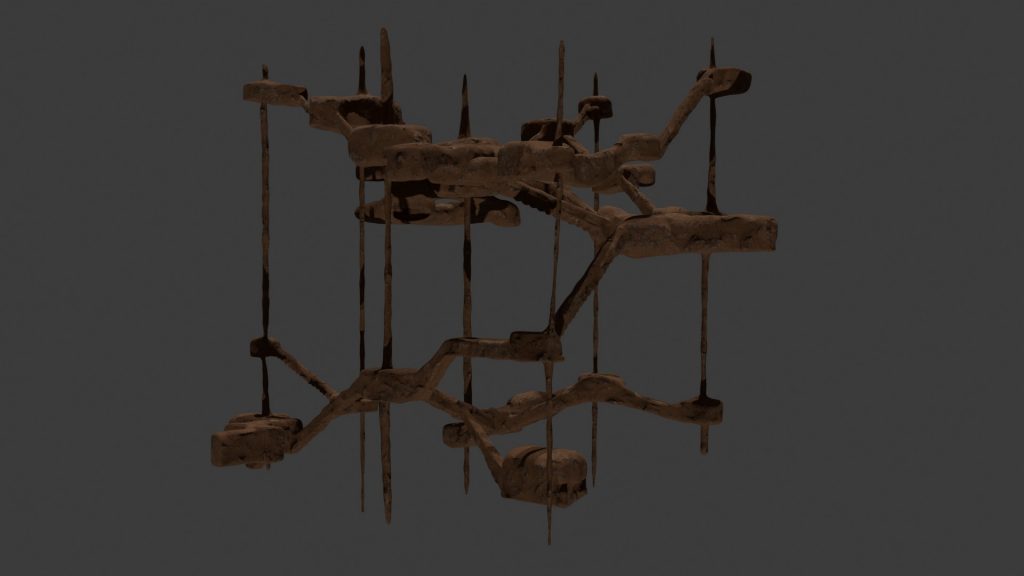
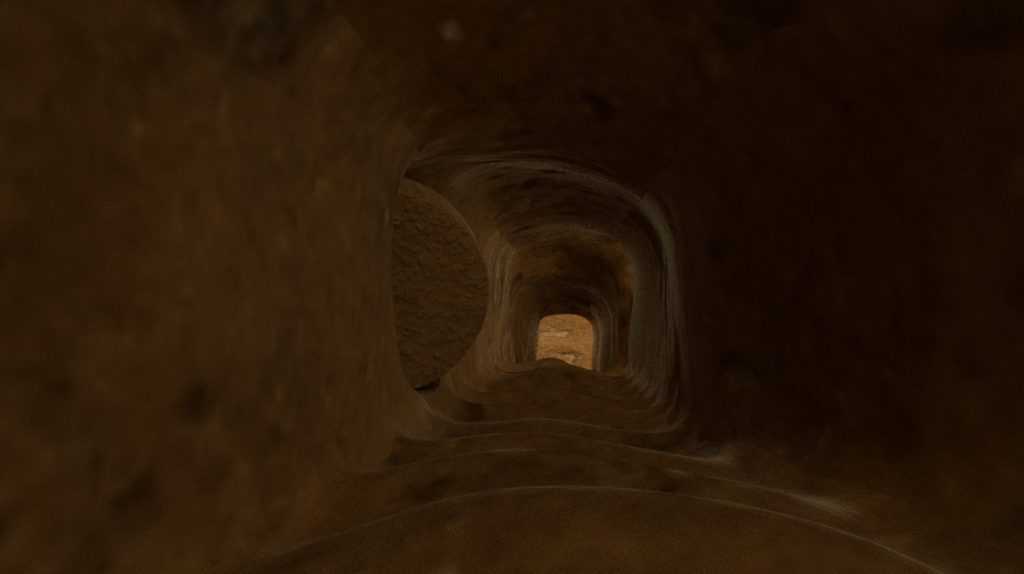
During the residency, I produced a 360° YouTube video that serves as the project’s central encounter. The 360 format required a different kind of composition—less about framing a single shot, more about choreographing attention through spatial cues, pacing, and light. The resulting “descent” emphasizes compression and release: narrow corridors opening into rooms, vertical shafts anchoring orientation, and repeated thresholds that signal how the underground city could be sealed, divided, and occupied in moments of threat.
It was a valuable opportunity to collaborate with the Sound/Image Research Centre colleagues—sharing methods, exchanging ideas across disciplines, and testing the work through dialogue—which directly strengthened the project’s conceptual clarity, technical approach, and overall presentation. During my residency, I worked closely with Professor Andrew Knight-Hill. I attended his sound class to learn about Impulse Responses—how the acoustic fingerprint of a space can be captured and used to simulate spatial character in audio production. After having an amazing conversation with Dr. Rosamund Davies about historical storytelling, I decided to use my captured soundscape of the underground city (a national museum) instead. I focused on recreating the ancient soundscape. This research informed the project’s sound design decisions, helping translate “stone volume” into audible space: reverberation, decay, distance, and low-frequency resonance that suggest underground depth. The soundscape was conceived not as background music, but as a narrative layer—bridging imagined ancient spirituality with the physical realities of subterranean life.
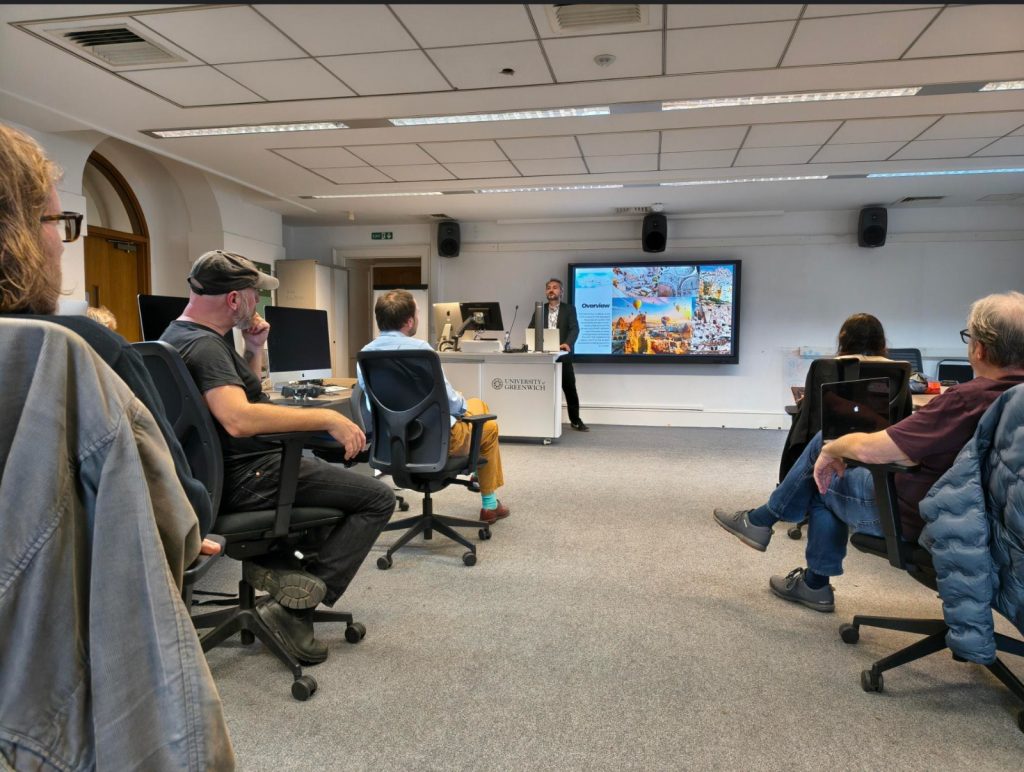
The residency also emphasized exchange through teaching and public presentation. I presented the work during the SOUND/IMAGE Festival 2025 (6–9 November 2025), sharing the project as a cross-disciplinary experiment in digital heritage, 360° moving image, and spatial listening. I further presented at the Faculty’s Centre for Spatial and Digital Ecologies seminar programme, situating Derinkuyu within broader conversations about place, networks, and environmental uncertainty. In addition, I visited Julie Watkins’s animation course to present on AI and motion design, discussing contemporary workflows for time-based image-making and the ethical questions that arise when reconstructing historical sites through computational media.
By the end of the two months, the residency yielded a complete public-facing work: a recreated Derinkuyu 3D environment, a 360° video experience, and a soundscape designed to be felt as much as heard—an invitation to encounter the underground city as both refuge and system, and to consider what it means to build a livable world beneath the surface. This project was also funded by Indiana University’s Presidential Arts and Humanities Program.