
Listening With: Field Recording, Spatial Audio, and More-than-Human Collaboration on Lundy Island
Artist Residency 2025
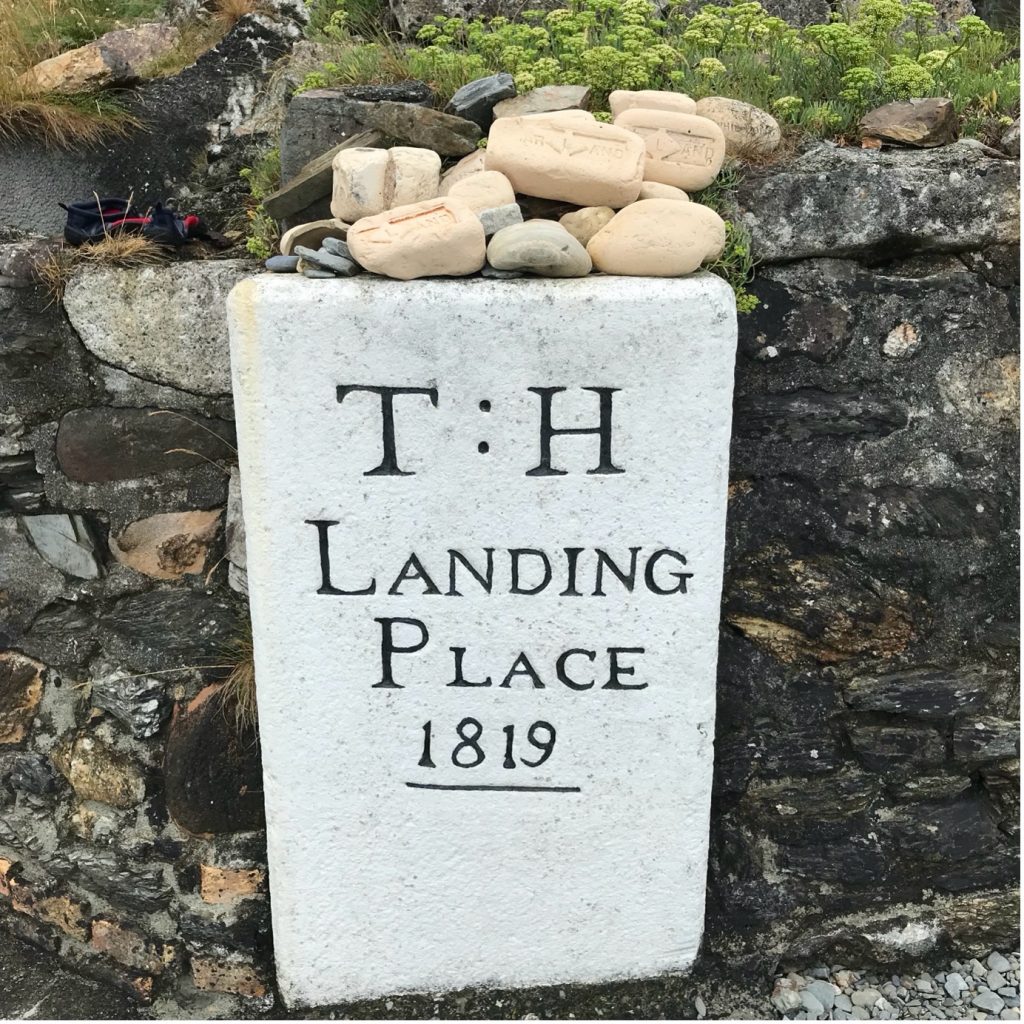
In summer 2025, I joined the residency programme with a clear research objective: to advance my field recording and spatial audio practice as a means of extending my visual and sonic arts research into more-than-human forms of listening and collaboration. Informed by posthuman and critical animal studies, my practice interrogates the contact zones between human and more-than-human encounters and spaces where agency, perception, and composition emerge through relational encounters.
Drawing on the ideas of situated knowledge (Haraway, 1988) and deep listening (Oliveros, 2005), I try to approach listening as a reciprocal and embodied act, one that resists anthropocentric modes of authorship. Having recently completed a PhD at Nottingham Trent University titled, Deep Canine Topography: sensory walking practices with companion species, the residency marked a transition toward investigating how field recording, sonic ecologies, and ambisonic compositional methods build on sensory walking practices and more-than-human collaboration.
The residency kicked off with a two-day trip to the University of Greenwich for an in-depth introduction to their facilities and the chance to get hands on with a spatial audio concert installation at the Cutty Sark, which gave a valuable insight into loudspeaker setup for live spatial audio events. The Sound/Image Research Centre has a strong research culture and are a very open and welcoming community who quickly took me under their wing. They offered support and guidance at every step of the residency, including extensive support with the ACE, DYCP application, in person and remote mentoring and training in field recording equipment and techniques, ambisonics workflows, and soundscape composition. They also provided access to specialist equipment, training, technical support and studio access in the Spatial Audio Lab. In short, they equipped me with everything I needed to confidently experiment with new technologies and techniques both out in the field and in the studio. They also advised on equipment purchase enabling me to put together my own field recording kit. Following the residency they also offered further support and guidance in applying for more funding to experiment further and expand my practice.
Lundy: Situated Listening and Sonic Ecologies
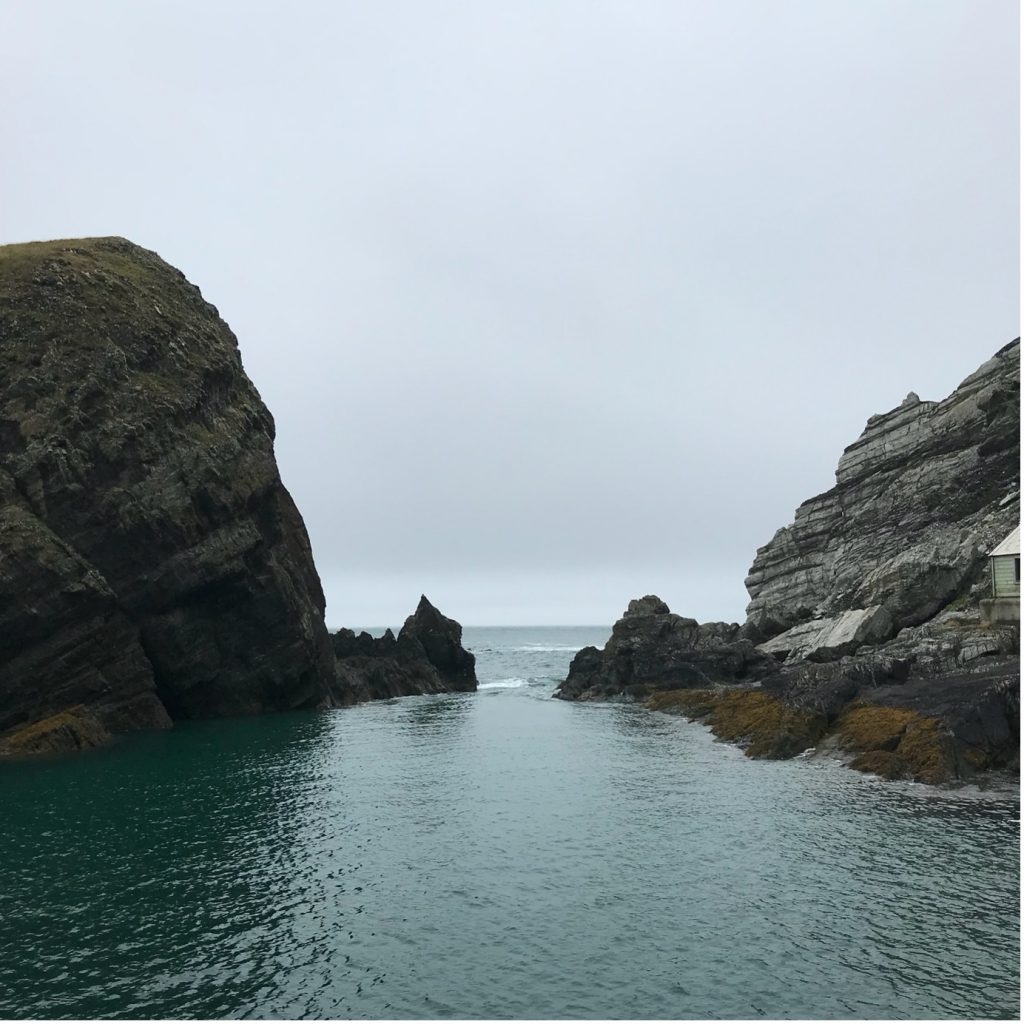
A central component of the residency involved an eight-day field trip to Lundy Island, a remote site in the Bristol Channel off the North Devon coast. Lundy’s distinctive ecological and acoustic properties provided a critical context for exploring how recording technologies mediate, extend, and complicate phenomenological listening (Voegelin, 2010).
During his time on the island, I conducted a series of recording experiments using DPA microphones, contact microphones, and geophones. Rather than capturing ‘objective’ representations of place, I attempted to account for both human and more-than-human forces, with each recording event becoming a collaboration, an act of listening with, rather than listening to, the environment.
Under the expert guidance of composer Dr Brona Martin, working in my home studio and the 32.4-channel Spatial Audio Lab at the University of Greenwich, I have developed two new multichannel compositions; one that lends itself to a gallery-based installation, and another that explores the possibility of live improvisation.
Water Water (working title)
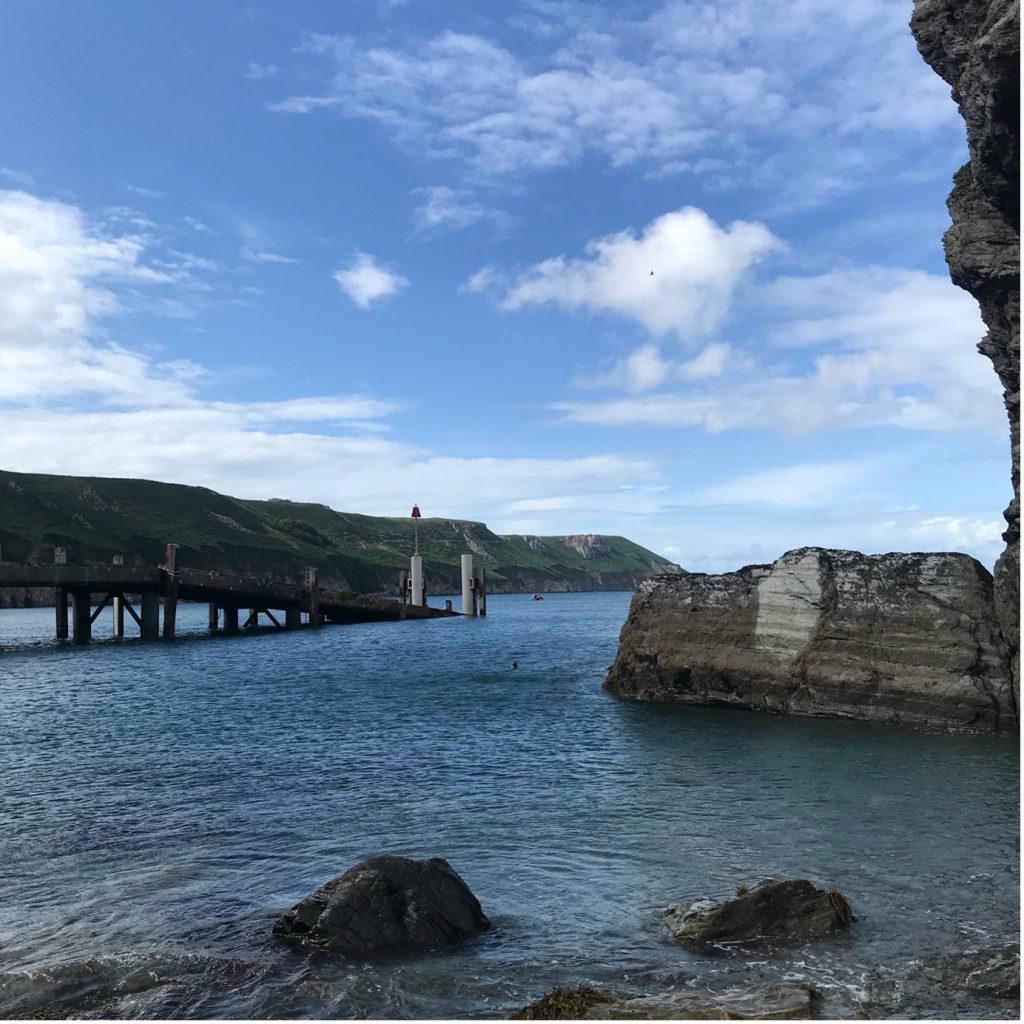
The first work, Water Water, takes the form of an immersive installation that invites audiences to inhabit the tidal rhythms of Lundy Harbour at low tide. Constructed from layered spatial recordings of rockpools, harbour structures and lapping waves, the piece explores rhythm as an ecological and temporal phenomenon. This work can be configured for various loudspeaker arrays.
Lighthouse (working title)
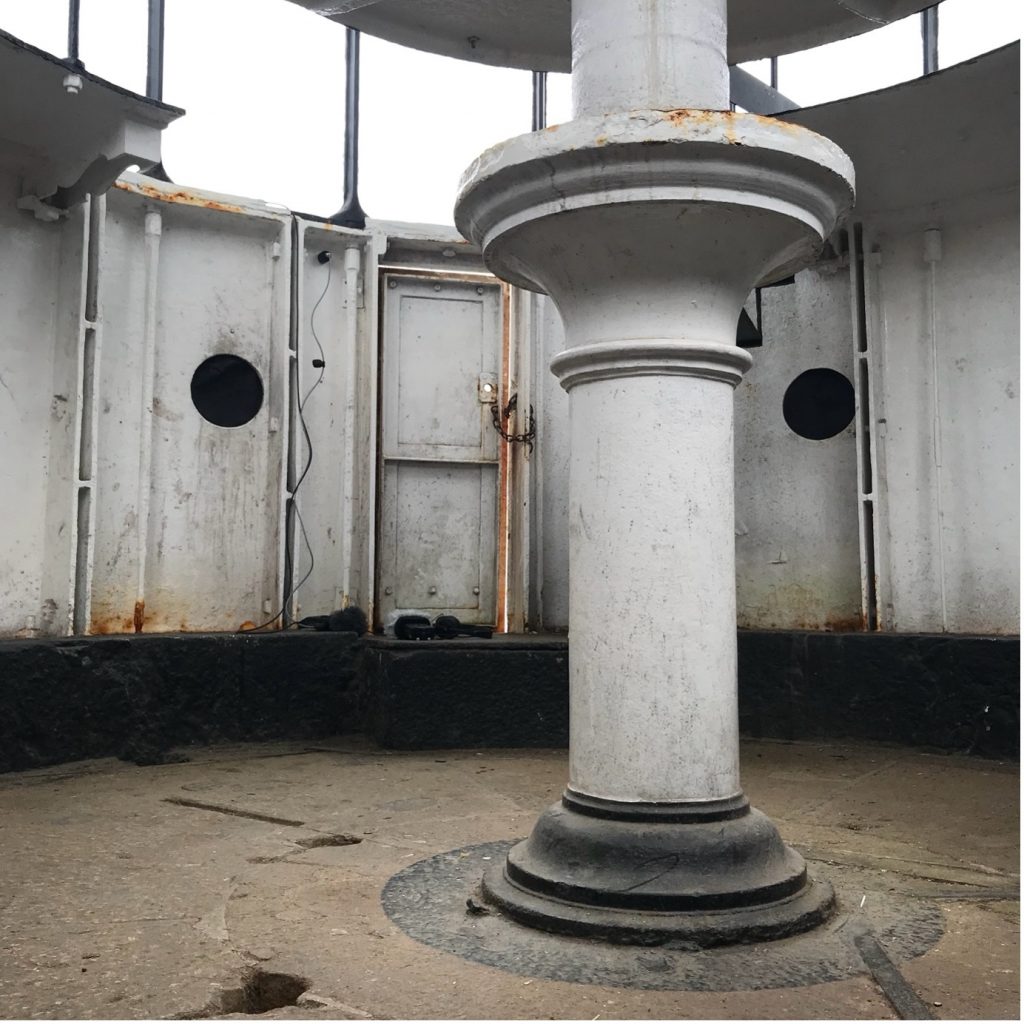
Lighthouse was developed from recordings made inside a decommissioned lighthouse on Lundy Island, where the interplay between architecture, wind, and sea created a resonant and dynamic acoustic field. Using contact microphones and geophones, I treated the structure as both instrument and collaborator, foregrounding its material agency.
Toward Live Improvisation
Building on the Lundy recordings, I am currently collaborating with other musicians to develop a live performance, hopefully utilising a cinema-based Dolby 7.1 system as a performative platform.
Looking ahead, I hope to return to the Sound/ Image Research Centre to further develop this work through live ambisonic performance and 360º video projection within Bathway Immersive Theatre. These future explorations continue my ongoing inquiry into how listening can operate as a collaborative methodology with more-than-human lifeworlds.