

Meet Dennis Ssemwogerere, a social entrepreneur and PhD candidate with NUSC, dedicated to making a real difference, “my research is driven by both professional experience and a personal commitment to creating more inclusive opportunities for disadvantaged young people.”
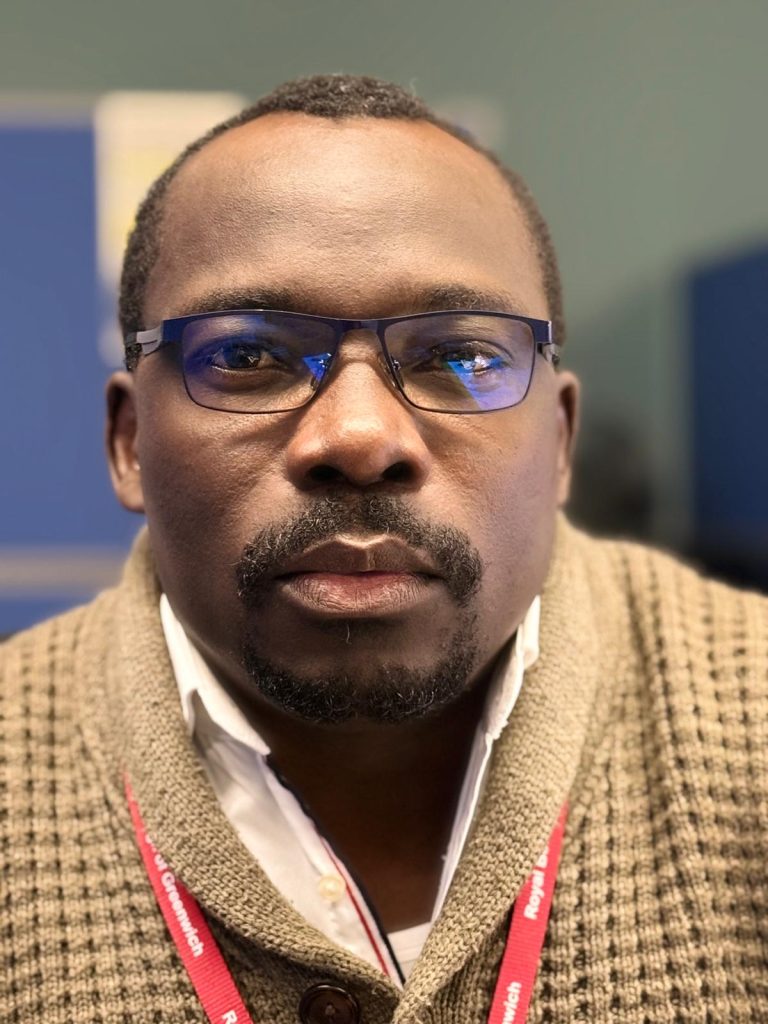
“Throughout my career, I have worked with many young people who possess talent, ambition and resilience but lack the networks, resources and institutional support needed to realise their potential. Among the groups I encountered, care-experienced young people consistently faced some of the greatest structural barriers despite receiving significant public support.”
Recognising the challenges that care leavers experience, Dennis interviewing those organisations that currently support care leavers- from local authorities and charities to employers and education providers. He then also uses social network analysis to understand how these organisations work together – sharing information, resources and support.
Yet, Denis is not just seeking to describe the current support ecosystem that is in place. He is looking for a way to improve it, to make it more comprehensive, cohesive, holistic- and he is a great idea for what mechanism he can use to create this. As he explains,
Vulnerable communities, especially Care leavers, continue to experience poorer outcomes in employment, education, housing and wellbeing despite extensive policy interventions and investment.
Much existing research focuses on improving these outcomes individually. My research instead asks how the public service ecosystem itself can better develop entrepreneurial capability as a supplementary mechanism to Care Leaver transitions, enabling care leavers to create sustainable opportunities throughout adulthood.
Dennis has always been passionate about the idea of entrepreneurship ‘as a means of creating opportunities for individuals and communities‘, understanding entrepreneurial capability as ‘a broader set of capacities that enable people to recognise opportunities, mobilise resources, solve problems and shape their own futures’. Dennis wants to do more than just give care leavers a smoother transition to adulthood – he wants to build in the them the capability to create opportunities for themselves.
Yet, as Dennis has found, previous work on entrepreneurship with care leavers is shockingly sparse: “While there is extensive research on employment, education, housing, and wellbeing outcomes for care leavers, entrepreneurship, particularly entrepreneurial capability development, remains largely unexplored”. More difficult still, whilst Dennis tacitly understands the value of entrepreneurial capabilities, empirically and academically the definition of this is disputed. Whilst many definitions of entrepreneurial capability work well in a business context, they struggle to translate clearly into the context of care leavers. Dennis is addressing this issue however, “One of the aims of my research is therefore to develop a context-specific conceptualisation of entrepreneurial capability that reflects the experiences, opportunities and support systems surrounding care leavers.”
The fact that his work spans disciplines – entrepreneurship, public management, social policy and network science – is one of the most demanding aspects of the work, yet also one of the most rewarding. As per the literature, Dennis understands that capability is not just an individual characteristic but the product of interactions across a much broader network. The next phase of his research involves collecting data on such networks across Greater London. “Governance arrangements, collaboration, relationships and access to opportunities may all play an important role in shaping whether care leavers can develop and exercise entrepreneurial capability. My empirical research will explore these relationships in greater depth.”
This work will have critical implications for practice and policy, helping design and deliver more connected and collaborative support frameworks with the goal of long-term independence for care leavers. Academically, the work will develop new ways of “conceptualising entrepreneurial capability within public service ecosystems, bringing together entrepreneurship, public management and social policy.” He plans to develop the work into clear programme design, policy and collaborative governance. Dennis Ssemwogerere will create community enterprise hubs- working with local authorities, charities and enterprise organisations- to create interventions to improve opportunities for care-experienced young people.
Dennis is supervised by Dr Jingxi Huang (whose name you might recognise from some of our other posts: 1, 2, 3, 4), Professor Jin Chan, and Dr Athena Piterou an experience he’s found both invigorating and enriching, “Without question, the most rewarding aspect of my PhD has been working with my supervisory team. They have created an environment that feels more like a family than a traditional supervisory relationship. Their encouragement, constructive challenge, and genuine investment in my development have given me the confidence to explore ambitious ideas while continually pushing the quality of my research.”
Dennis is also mindful of balance in his life, his time, his perspectives, “Outside my research, I enjoy mentoring young people and aspiring entrepreneurs, particularly those interested in developing careers or starting businesses. I also enjoy reading widely beyond my own discipline, exploring ideas in economics, public policy, innovation, strategy and leadership. Spending time with family and participating in community initiatives help me maintain perspective and remind me why my research matters beyond academia.”
From all of Dennis’ experience, both as a professional and as a researcher, he leaves us with one critical message:
Developing entrepreneurial capability is not simply about teaching entrepreneurial skills or starting a Business; it is about creating public service ecosystems that enable young people to recognise opportunities, mobilise resources and build sustainable futures.
Discover more from Networks and Urban Systems Centre (NUSC)
Subscribe to get the latest posts sent to your email.