

“In today’s globalised world, organisations are becoming increasingly diverse. Understanding how inclusive leadership can foster equity, improve collaboration, and drive innovation is critical for organisational success”
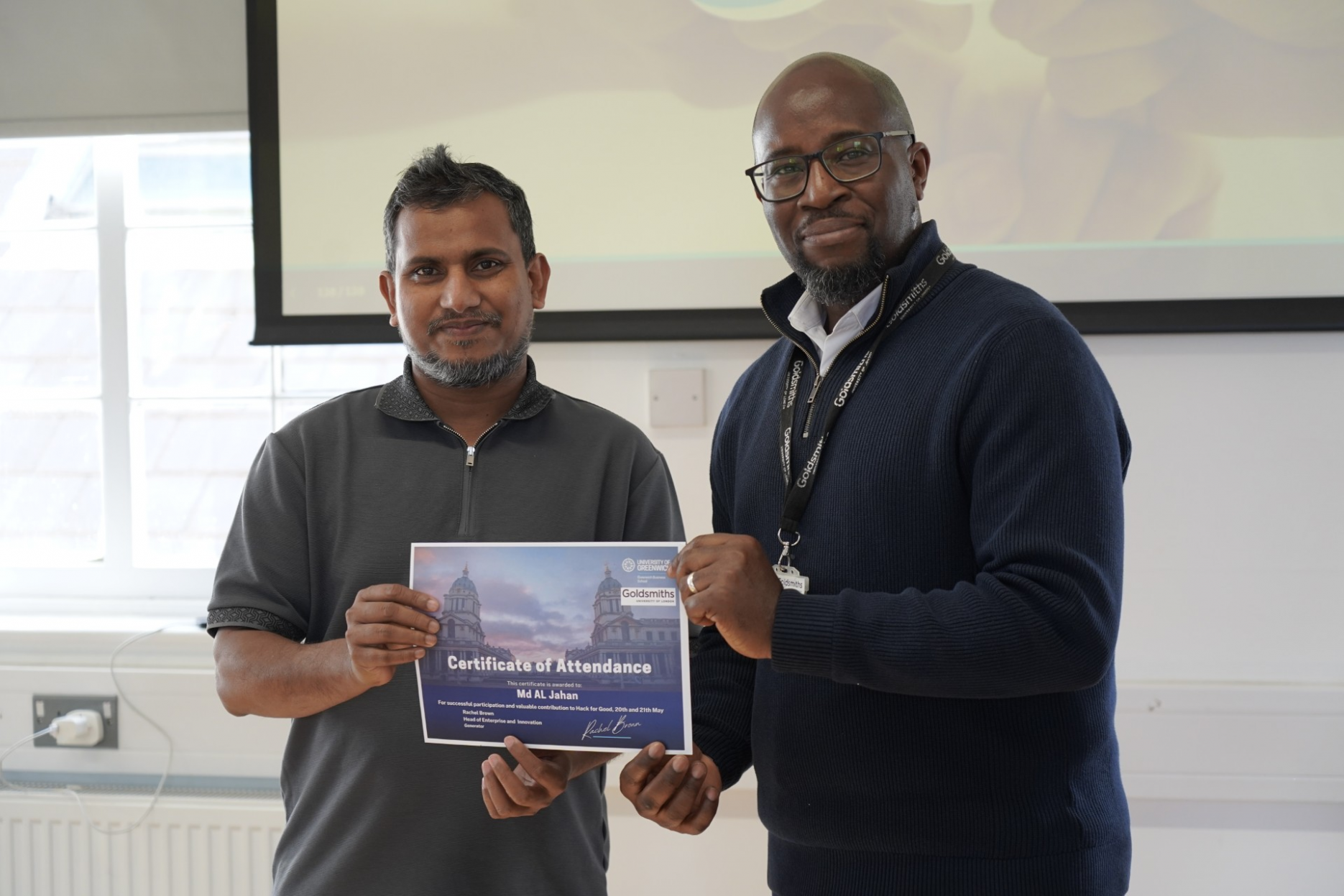
Meet Md Al Jahan, one of NUSC’s newest researchers who began his PhD with us in February 2026. Jahan joins us after working over a decade with Bangladesh bank, working from officer all the way up to joint director.
Reflecting on his professional journey, Jahan explains:
My experience at the central bank exposed me to the inner workings of financial institutions, policy implementation, and organisational dynamics. Over time, I became particularly interested in leadership practices, workplace diversity, and how organisational culture influences performance and innovation.
These experiences shaped the research interests he pursues today, spanning inclusive leadership, cross-cultural management, equity, diversity and inclusion (EDI), and cultural intelligence. His research examines how inclusive leadership operates within multinational financial institutions and influences employees’ innovative work behaviour in culturally diverse environments.
As Jahan explains:
While working in the banking sector, I observed how leadership styles directly influenced employee engagement, collaboration, and performance especially in diverse and hierarchical environments.
I became particularly interested in how inclusive leadership could create more equitable workplaces and encourage innovation. In multinational financial institutions, where cultural diversity is significant, leadership approaches must adapt to different backgrounds, values, and expectations.
These observations motivated me to explore the relationship between inclusive leadership, cultural intelligence, and innovative work behaviour in a more systematic and analytical way.
One of the most innovative aspects of Jahan’s work is his use of social network analysis. He explains that the approach enables researchers to:
Examine relationships, communication patterns, and influence structures within organisations. This method helps uncover how leadership behaviours spread and impact teams at a network level.
However, this fusion of disparate bodies of knowledge is not without its challenges. As Jahan reflects,
One challenge has been integrating theoretical concepts such as inclusive leadership and cultural intelligence with real-world organisational data. Additionally, applying Social Network Analysis in organisational settings requires careful data collection and interpretation.
Despite these challenges, Jahan is currently collecting and analysing data to test his model and identify practical implications for leadership in multinational organisations. He is also keen to collaborate with industry partners interested in inclusive leadership, cultural intelligence, or innovative work behaviour, and welcomes opportunities to explore these topics in practice.
Outside academia, Jahan enjoys spending time with family and friends, exploring new places, and maintaining a healthy work-life balance.
I have two children, a boy and a girl, and a supportive beautiful wife, and spending time with them helps me recharge and stay focused on my academic goals.
Jahan is supervised by NUSC experts Dr Anna Piazza (who authored this recent blog post) and Dr Srinidhi Vasudevan and NUSC director Professor Bruce Cronin. We featured some of Dr Piazza and Dr Vasudevan’s research earlier this year.
Discover more from Networks and Urban Systems Centre (NUSC)
Subscribe to get the latest posts sent to your email.