
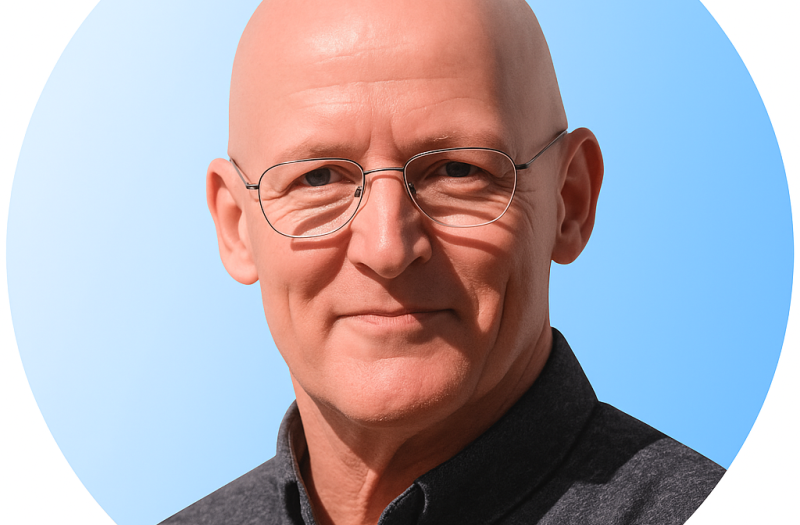

Meet Neal Layton, one of our newest PhD Students. For Neal, pursuing a PhD isn’t just an academic milestone—it’s a meaningful way to round off a dynamic career that’s spanned consultancy, leadership, and even a stint in a banking start-up. “I loved the research during my Master’s” he says. “This felt like a great way to finish working life ahead of retirement.”
With over 25 years in senior leadership roles across manufacturing and financial services, Neal brings a wealth of real-world insight to his academic work. His most recent role at the Bank of London immersed him in the evolving nature of work in a post-pandemic world. “Leading teams through remote, hybrid, and in-person models sparked a deep interest in how these transitions affect engagement, productivity, and cohesion,” he explains.
Neal’s academic journey has been anything but linear. After studying maths and biology at university, he continued learning throughout his career, eventually earning a Master’s in Operations Management and Supervision from Lancaster. Though he planned to return to academia in 2019, a four-year detour into the world of fintech delayed that goal—until now. He’s back, and this time, he’s diving deep into the evolving world of work.
Now undertaking his PhD at the University of Greenwich, Neal is exploring the impact of the return-to-office (RTO) movement in the UK’s banking and tech sectors. “The Employee Relations (Flexible Working) Act 2023 is pushing hybrid work into the mainstream, but most managers haven’t been trained to adapt their leadership styles accordingly,” he notes. His research aims to understand how organisations navigate this shift, and how leadership can evolve to sustain both performance and wellbeing.
Neal’s research is still in its early stages, but his focus is clear: understanding how organisations can evolve in response to new working norms.
“I believe that RTO presents a fundamental change requirement between the traditional management practices and what will be seen as the new norm moving forward”
He’s particularly interested in the intersection of management practice, psychological safety, and organisational culture—drawing inspiration from researchers like Thomas Roulet, Almuth McDowall, and Julian Birkinshaw.
Neal’s doctoral work is still in its early stages, but he’s already seeking to engage with senior executives and professionals who have experienced the RTO transition firsthand. “Your experiences are invaluable,” he says. “They offer a unique perspective on the operational, cultural, and financial implications of these decisions.”
As a new member of NUSC, Neal is looking forward to contributing real-world insights and building camaraderie within the research community. “I’m excited to be part of something that connects academic thinking with practical impact,” he says.
When he’s not immersed in research, Neal enjoys the gym, walking, travelling, and spending time with his family.
Neal’s research touches on one of the most pressing shifts in today’s working world: how we adapt to hybrid and flexible work. Have you experienced the return-to-office transition in your own organisation? Are you exploring similar themes in your research or practice? Why not connect to Neal on Linkedin or drop him an email?
We’d love to hear your thoughts. Join the conversation by commenting below or tagging us on social media (#NUSCResearch) —let’s explore how we can shape more adaptive, inclusive workplaces together.
Discover more from Networks and Urban Systems Centre (NUSC)
Subscribe to get the latest posts sent to your email.






1 Comment
Add Yours →I really enjoyed reading about Neal’s background and career journey. It’s impressive how he is combining years of professional experience with academic research to explore such an important topic. Wishing him every success with his PhD and future research.